
Ultimate Guide : Emergence of Digital Marketing as a Tool for Beginners (2026)
Digital marketing has transformed the way businesses connect with their audiences. Unlike traditional marketing methods such as TV ads, print, or radio, digital marketing allows companies to reach their customers directly through online platforms. The emergence of digital marketing as a tool has completely reshaped the marketing landscape, offering faster, measurable, and more targeted strategies. Today, businesses of all sizes rely on digital marketing to drive growth, engage customers, and stay competitive in an increasingly online world. Understanding how this tool works is crucial for anyone looking to build a career in marketing or grow a business in 2026 and beyond.
What is Digital Marketing?
Digital marketing is the practice of promoting products, services, or brands using digital channels such as search engines, social media platforms, email, websites, and mobile apps. Its core aim is to reach the right audience at the right time, ensuring engagement and conversion. Key components of digital marketing include Search Engine Optimization (SEO), Social Media Marketing (SMM), Email Marketing, Pay-Per-Click Advertising (PPC), and Content Marketing. Together, these components form a comprehensive strategy that enables businesses to grow and adapt in the digital age.
Evolution of Marketing (Traditional to Digital)
Traditional marketing relied heavily on offline channels such as television, radio, newspapers, and billboards to reach potential customers. While these methods could reach a wide audience, they lacked precision, measurability, and real-time engagement. The shift to online platforms began with the growth of the internet and social media, allowing businesses to interact directly with users. Smartphones accelerated this change by enabling access anytime, anywhere. This led to the emergence of digital marketing as a more data-driven and effective tool.
Emergence of Digital Marketing as a Tool
The emergence of digital marketing as a tool started in the late 1990s with the rise of the internet and online advertising. Businesses began to recognize the power of reaching audiences digitally, rather than relying solely on offline methods. Over time, digital marketing became a comprehensive strategy encompassing multiple channels, data analytics, and automation. For businesses, this tool offered cost-effective ways to generate leads, improve brand visibility, and track marketing performance accurately. For individuals, digital marketing opened new career opportunities and allowed small businesses to compete with larger brands on a global scale.
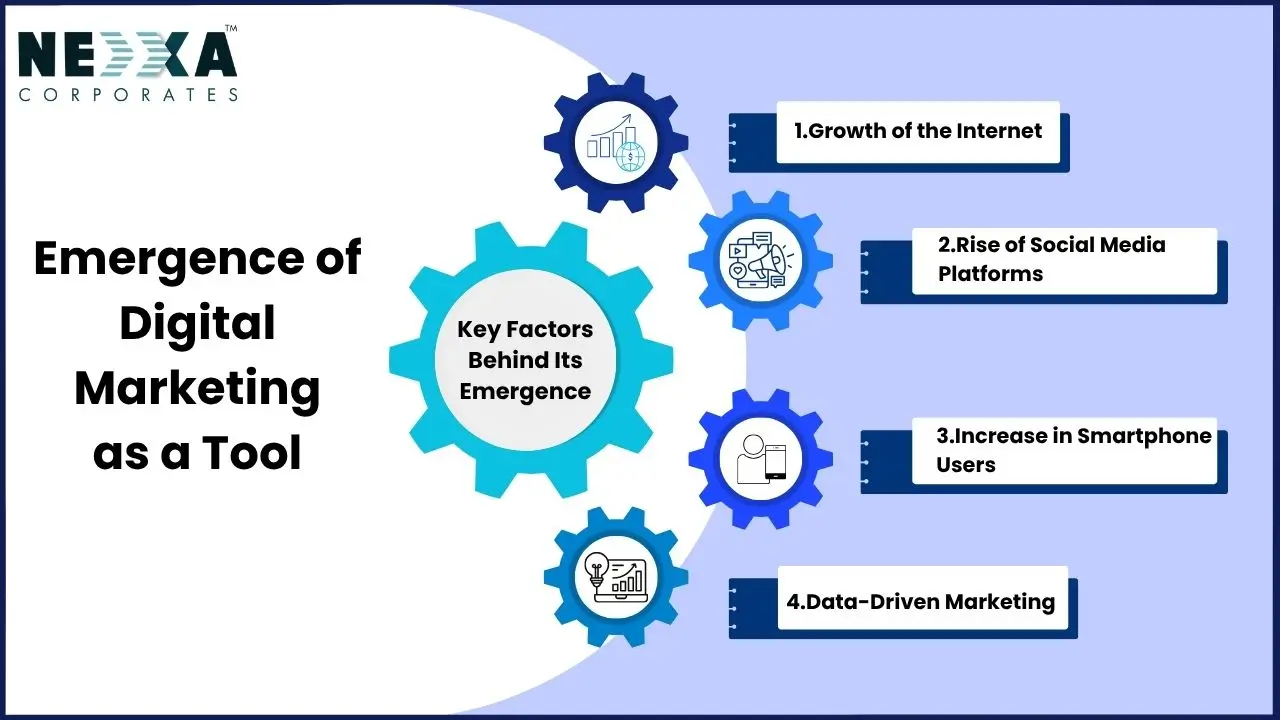
Key Factors Behind Its Emergence
1. Growth of the Internet
The widespread availability of the internet provides a platform for businesses to reach global audiences. Websites, blogs, and online communities allowed marketers to share information and connect with potential customers like never before.
2. Rise of Social Media Platforms
Platforms like Facebook, Twitter, Instagram, and LinkedIn created interactive spaces for businesses to engage with audiences. Social media allowed real-time communication, brand storytelling, and viral marketing opportunities, making it a key factor in the emergence of digital marketing as a tool.
3. Increase in Smartphone Users
Smartphones revolutionized the way people access information, making digital marketing essential for reaching consumers on-the-go. Mobile apps, notifications, and mobile-optimized websites became crucial for maintaining customer engagement.
4. Data-Driven Marketing
The ability to collect and analyze data on customer behavior, preferences, and demographics gave marketers unprecedented insights. This enables personalised campaigns, better targeting, and measurable results, solidifying digital marketing as an indispensable tool.
Benefits of Digital Marketing
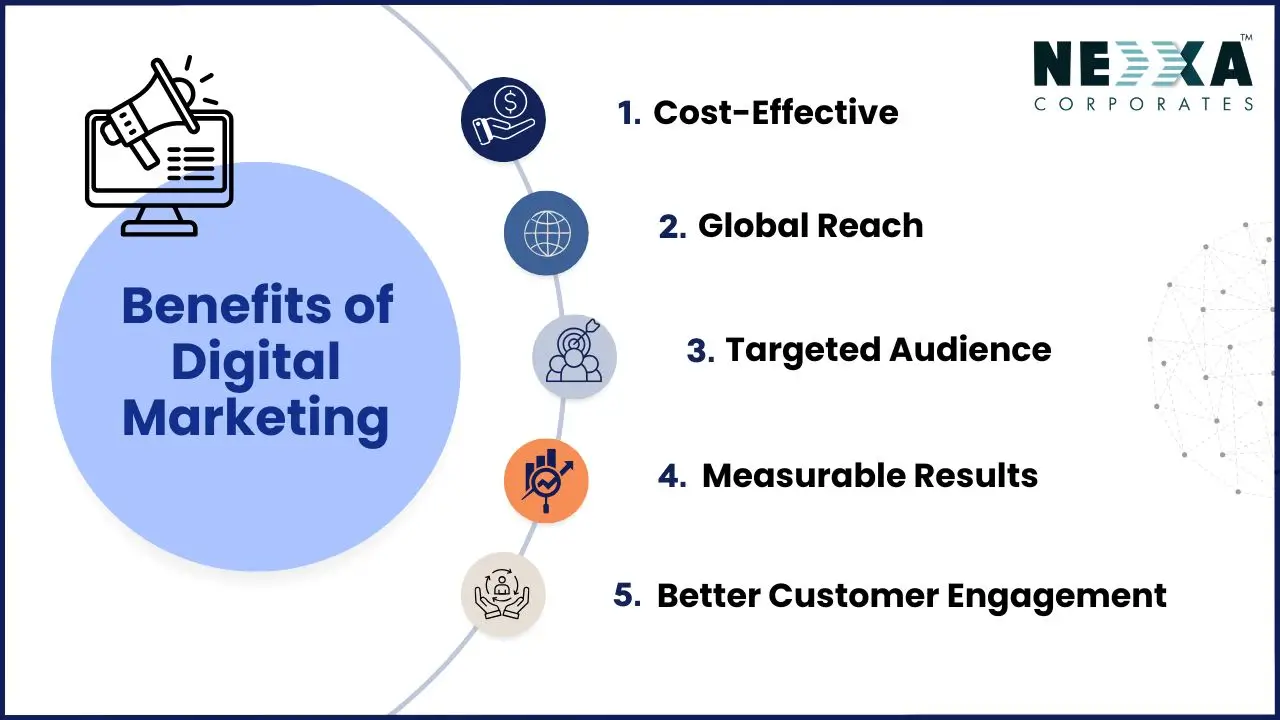
1. Cost-Effective
Digital marketing is generally more affordable than traditional marketing methods. Small businesses can run targeted campaigns without huge budgets, achieving high ROI. It also allows flexible budgeting based on campaign goals. Businesses can scale their spending up or down depending on performance.
2. Global Reach
With digital marketing, businesses can connect with audiences across the world. This breaks geographical barriers, allowing even small companies to expand internationally. Online platforms make it easy to enter new markets quickly. This helps brands build a global presence without physical expansion.
3. Targeted Audience
Advanced targeting options enable marketers to reach specific demographics, interests, and behaviors. This ensures that marketing efforts are focused on people most likely to convert. It reduces wasted ad spend and increases campaign efficiency. Personalized targeting also improves customer experience and satisfaction.
4. Measurable Results
Every campaign can be tracked in real-time using analytics tools. Marketers can measure performance, adjust strategies, and optimize results efficiently. Detailed reports provide insights into user behaviour and campaign success. This data-driven approach helps in making better marketing decisions.
5. Better Customer Engagement
Digital marketing allows two-way interaction with customers through social media, emails, and live chat. This enhances brand loyalty and builds stronger relationships over time. Quick responses improve customer satisfaction and trust. Engaged customers are more likely to recommend the brand to others.
Key Digital Marketing Channels
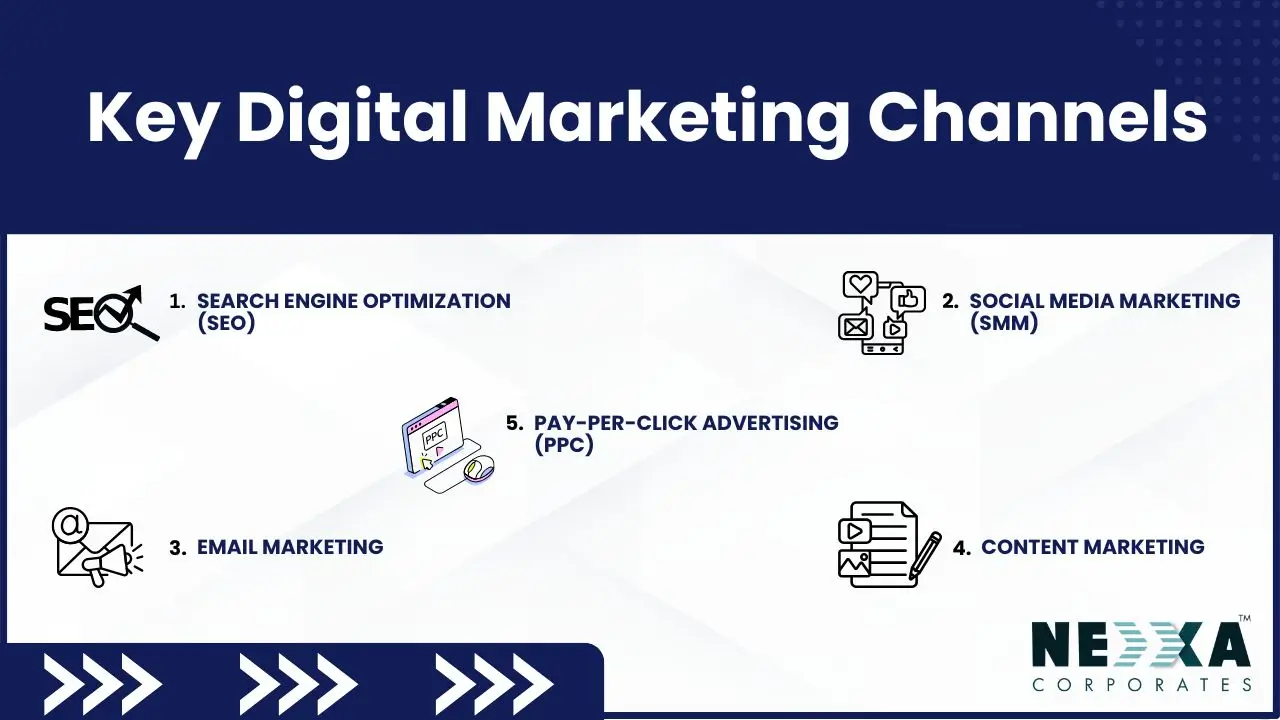
1. Search Engine Optimization (SEO)
SEO improves a website’s visibility on search engines by optimizing content, keywords, and technical aspects. High rankings drive organic traffic, increase credibility, and generate leads. It also enhances user experience by improving site speed and mobile responsiveness. Consistent SEO efforts help businesses achieve long-term online growth and stability.
2. Social Media Marketing (SMM)
Social media marketing uses social platforms to build brand awareness, engage users, and promote products. Businesses can run paid campaigns or share organic content to connect with audiences. It allows direct interaction with customers through comments, messages, and live sessions. Social media insights also help businesses understand audience behavior and improve strategies.
3. Email Marketing
Email marketing nurtures leads and maintains customer relationships. Personalized messages and newsletters encourage repeat purchases and loyalty. It is a cost-effective method with a high return on investment. Automation tools make it easier to send timely and relevant content to the right audience.
4. Content Marketing
Content marketing provides valuable information to educate and engage potential customers. Blogs, videos, infographics, and podcasts help build authority and trust. High-quality content also improves SEO performance and website traffic. It plays a key role in guiding customers through the buying journey.
5. Pay-Per-Click Advertising (PPC)
PPC drives immediate traffic through paid ads on search engines and social platforms. It allows precise targeting and quick visibility for products or services. Businesses can control budgets and measure performance easily. It is ideal for generating quick leads and testing marketing campaigns effectively.
Role of Digital Marketing in Business Growth
Digital marketing plays a vital role in increasing brand awareness, generating leads, and boosting sales. It helps businesses reach the right audience at the right time, making marketing more effective. By tracking customer behaviour and preferences, companies can improve engagement and retention. It also supports long-term growth by building a strong online presence and brand credibility. Overall, digital marketing enables businesses to stay competitive and adapt to changing customer needs.
Challenges in Digital Marketing
Despite its benefits, digital marketing comes with challenges that require careful planning. High competition in online spaces makes it difficult for businesses to stand out. Constant algorithm updates on platforms like Google and social media require marketers to stay updated. Digital marketing also demands specific skills, knowledge, and creativity to run effective campaigns. Additionally, data privacy concerns and regulations require businesses to handle customer information responsibly and ethically.
Future of Digital Marketing
The future of digital marketing is driven by technology, automation, and personalization. Artificial Intelligence (AI) and machine learning will enhance campaign optimization and predictive analytics. Voice search will change how consumers find information, requiring new SEO strategies. Personalization will become more sophisticated, allowing brands to deliver highly relevant content to individual users. Video marketing will continue to grow, becoming one of the most engaging ways to communicate with audiences and build brand authority.
Conclusion
The emergence of digital marketing as a tool has revolutionized how businesses and individuals approach marketing. From its humble beginnings with basic online ads to today’s complex, multi-channel strategies, digital marketing provides cost-effective, measurable, and highly targeted methods to reach audiences worldwide. Businesses that embrace this tool can drive growth, increase engagement, and maintain a competitive edge. As technology evolves, digital marketing will continue to play a central role in business success, making it an essential skill and strategy for the future.
FAQ
1. What is the emergence of digital marketing as a tool?
It refers to the rise of online marketing strategies that allow businesses to reach, engage, and convert audiences more effectively than traditional methods.
2. Why is digital marketing important today?
Digital marketing provides cost-effective, targeted, and measurable ways to connect with customers, making it essential for business growth.
3. What are the key channels of digital marketing?
The main channels include SEO, social media marketing, email marketing, content marketing, and pay-per-click advertising.
4. How does digital marketing help businesses grow?
It increases brand awareness, generates leads, improves customer engagement, and drives sales through online platforms.
5. What are the future trends in digital marketing?
AI, voice search, personalization, and video marketing are shaping the future of digital marketing strategies.