
SEO Content Strategy: A 5-Step Framework for Beginners
If you write blog posts without a plan, you’re not alone. Many new people choose a keyword, write a post then choose another keyword and write another post. This might feel like you are moving forward however It’s not an SEO content strategy. It’s just guessing. A content strategy for SEO is what changes random posts into something that actually keeps growing over time.
Search engines like the consistency, structure and a good idea of what your readers need from your content. All the main SEO sources agree on this basic point even when they describe it in different ways. This guide explains a simple easy to use SEO content strategy plan created for people who are just starting out and want improvements, while preparing for the future of SEO.
What is an SEO Content Strategy?
An SEO content strategy is basically the plan behind your content. It decides what you write, why you write it and how it is organized so search engines and readers both understand it. This is not the same as having a blog. In a SEO content strategy, every post focuses on a specific keyword, matches a clear intent and is placed on a website that search engines can actually read and rank.
Without an SEO content strategy, your content is a group of separate pages fighting for attention. Search engines do not see any link between them and readers have no reason to stay on your site after one visit. With a SEO content strategy, every new post adds to what you already have. Over time this creates authority instead of starting from scratch with each new piece of content.
This is why an SEO content strategy is more important than writing skill alone. You can be a good writer and still get almost no website traffic if there’s no plan connecting your content together. Search engines do not just reward sentences. They reward sites that clearly know what they are about and keep proving it, post after post.
Know Your Audience Before You Build an
SEO Content Strategy
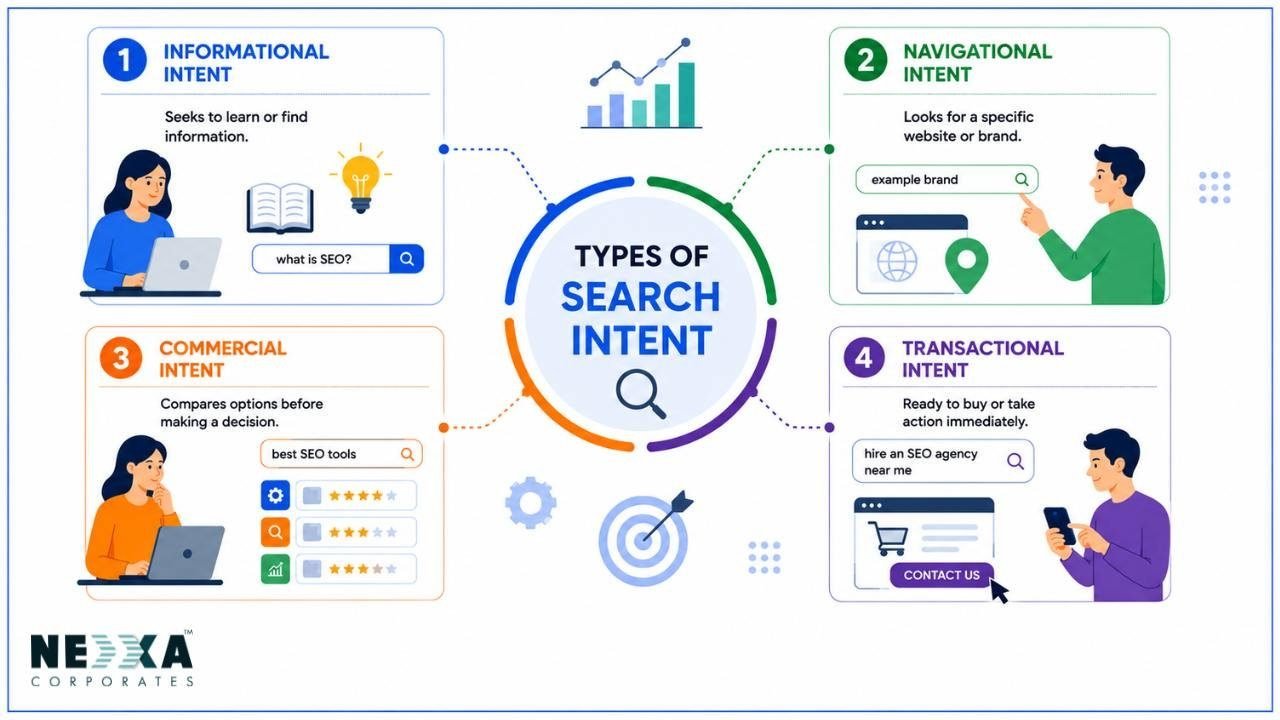
Every effective SEO content strategy starts with your target audience and not a tool for keyword research. Before writing anything you should be aware of the types of intent that drive the search. There are four major types of intent each of which requires a specific type of content.
1. Informational Intent
This happens when someone wants to learn something like searching “what is SEO.” They are not ready to buy anything, they just want a clear simple answer. Content here should be a guide or explainer not a sales pitch.
2. Navigational Intent
This happens when someone is looking for a website like searching a brand name directly. They already know where they want to go so this type of intent matters less for content and more for making sure your own brand is easy to find.
3. Commercial Intent
This is when a person is looking at choices before making a decision like searching for “best SEO tools.” They are almost ready to decide but have not made a choice yet. Posts that compare things, reviews and lists that show the top options are very effective for this kind of intent.
4. Transactional Intent
This is when a person is prepared to buy something or take action immediately like searching for “hire an SEO agency near me.” The content here should help them move forward easily whether that is a page, about a service or a contact form.
Two search results may appear similar at first glance, but require entirely different information. Anyone looking for “what is SEO” wants an easy, concise explanation. A person looking to “hire an SEO agency” is looking for prices, services as well as proof of outcomes. Getting the types of intent wrong can lead to one of two problems, that your site doesn’t rank in any way or it does rank but it doesn’t convert once they get there.
The right types of intent with your content is among the most neglected aspects of a beginner’s SEO content strategy. However, it’s one of the most simple to master once you know how. An easy way to determine the intention is to look up the keyword yourself, then examine what’s being ranked on the first search page. If you’re seeing a lot of guidebooks and explainers, then they’re informational. If you find pages for comparison or listing of products the content is either transactional or commercial and your content needs to reflect that.
Build a Simple Keyword Research Process for Your SEO Content Strategy
After you’ve identified the intention then the next step of your SEO content strategy is to conduct proper keyword research. This transforms your intuition about the content you want to write into an SEO plan that is backed by actual data.
Begin by creating a simple keyword research checklist. It should at a minimum contain the desired keyword as well as the volume of searches for it, intent type, what’s already ranking for it as well as whether it’s relevant to your company. This keyword research checklist does not require complex or costly software just a single page or spreadsheet will suffice to help you stay organized.
A keyword research checklist is the core of any effective SEO content Strategy since it keeps your choices based on facts rather than speculation. Each topic you’re thinking about should be filtered through this simple process before you write a lengthy essay about it.
Do not overlook long-tail keywords when making the keyword research checklist. These more specific, longer terms typically have smaller search volumes than broad phrases, however they usually attract users who are aware of what they are looking for and tend to act after they discover your website’s content. If you’re a small-scale business who is just starting out with a few well-chosen long-tail keywords could outperform one huge, competitive keyword that hundreds of established websites are engaged in.
It’s also beneficial to revisit the checklist of keywords you research each time you make plans for new content instead of making it a habit of just once and then not thinking about it. Trends in search change as new competitors are introduced and what was successful in the past may need new eyes today.
Two Sides of Your SEO Content Strategy
Excellent content requires the appropriate technical setup in order to be discovered, yet many beginners become confused between two related but distinct ideas: technical seo and on page seo.
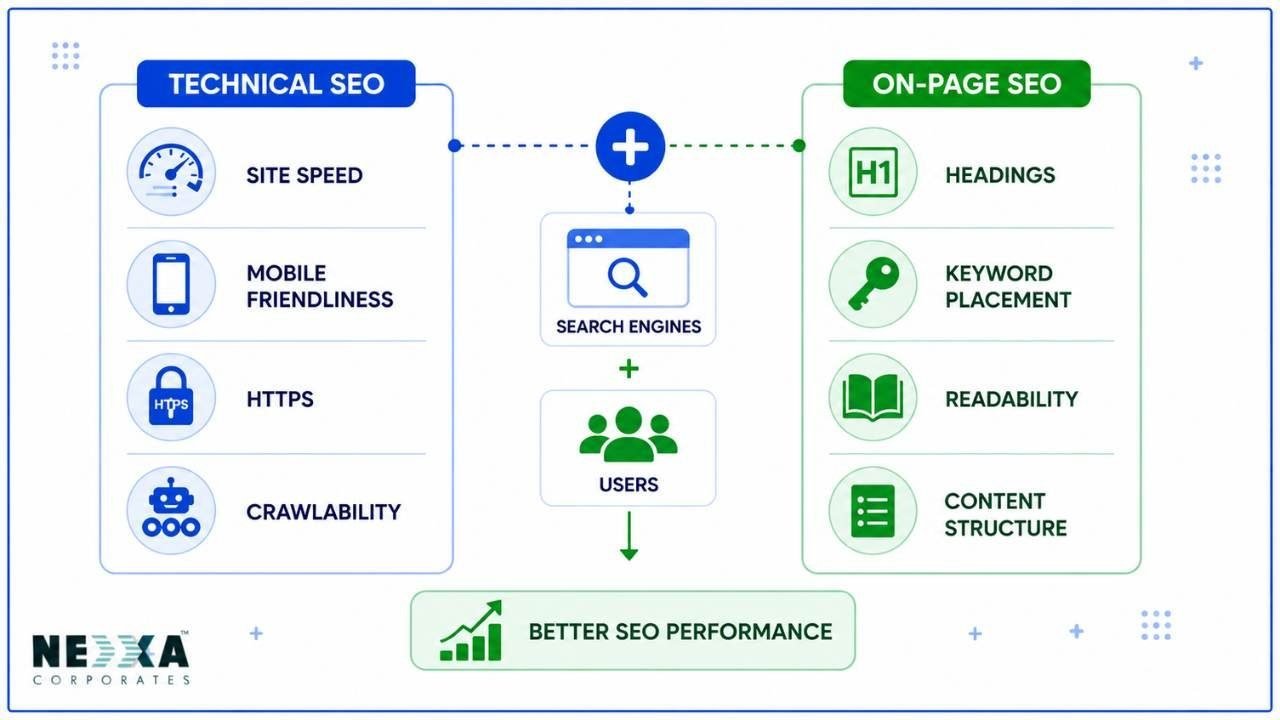
Technical SEO refers to how easily search engines access, crawl, and read your entire website in its entirety – think site speed, mobile friendliness, and secure connections. On-page SEO addresses what’s written directly onto a single page — headings, keyword placement, readability of text etc.
Here’s an easy way to remember technical seo vs on page seo: technical SEO ensures search engines can read your site at all, while on-page SEO ensures searchers understand each individual page once they arrive there. Neither method works effectively alone – an effective SEO content strategy requires both working together as part of a unified effort.
Understanding technical SEO vs on page SEO clearly can also make troubleshooting faster down the line. If your content is well-written but still not ranking, oftentimes the problem lies with its technical infrastructure rather than with any individual writer – great writing on a slow, broken website won’t rank, just like great writing with no depth on a fast, well-built site won’t rank either!
Many beginners focus entirely on writing without considering any technical considerations, then wonder why nothing improves. By understanding technical seo vs on page seo, you’ll know exactly where to turn when something doesn’t seem right – and be able to speak more confidently to developers or agencies regarding which problems fall under which category.
A Quick Health Check for Your SEO Content Strategy
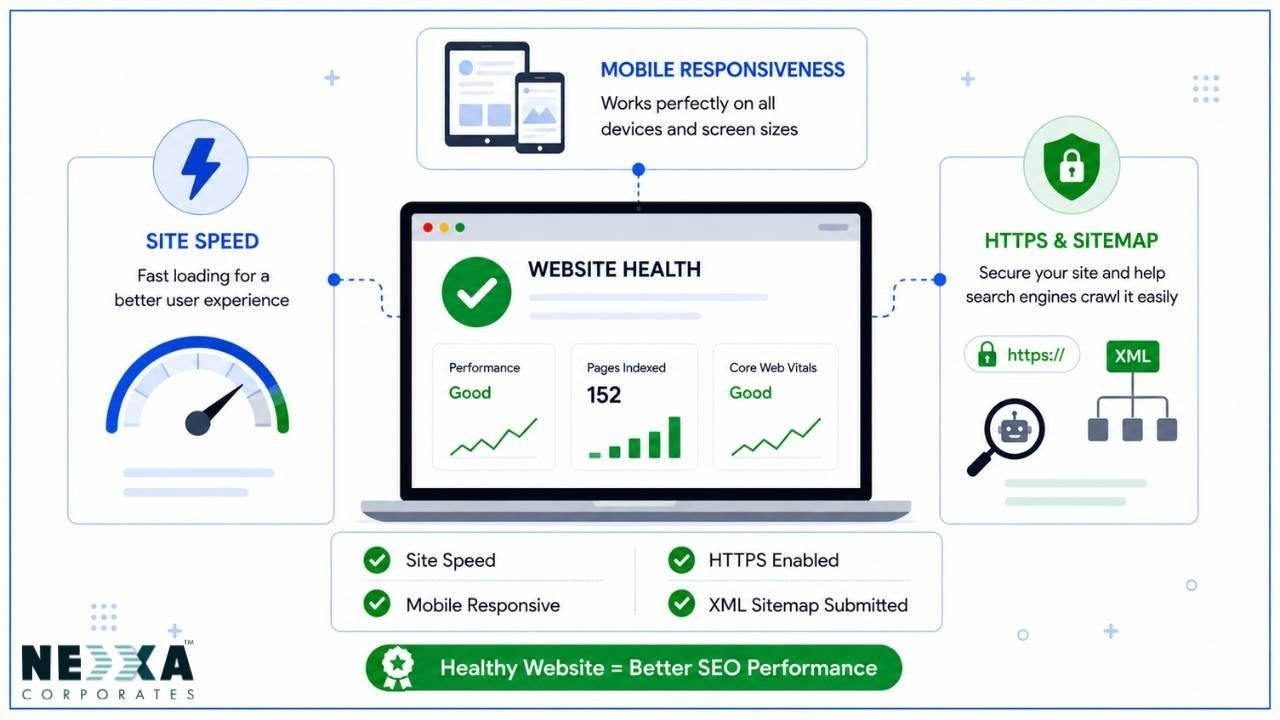
Technical health plays an integral part of SEO content strategy, so it’s worth routinely inspecting it rather than taking for granted that everything is fine and ignoring it altogether.
Create a basic technical seo checklist and run through it every couple of months using free tools such as Google PageSpeed Insights and Search Console to make this easier for everyone, even those without any prior technical experience.
1. Site Speed
A slow website frustrates both visitors and search engines alike, so use PageSpeed Insights to check how fast each of your pages load, and to identify and address any major issues it might flag.
2. Mobile Responsiveness
Most searches today occur on phones; therefore, your technical SEO checklist should ensure your site looks and functions perfectly on mobile, not only desktop computers.
3. HTTPS and Sitemap
Make sure that your website is using HTTPS encryption, and has submitted a sitemap via Google Search Console so search engines can easily index all its pages.
Escaping from your technical SEO checklist is one of the primary causes of an otherwise effective SEO content strategy underperforming without an obvious explanation. No one notices when traffic stops growing without being noticed until traffic slowly declines; so performing regular checks saves you from wondering what went wrong months down the line.
Keep Your SEO Content Strategy's Momentum Going
No matter how carefully and thoroughly you complete each task, SEO content strategy requires consistent work over time to yield success. Pausing efforts often costs more to fix later than staying consistent from the very start.
Maintain a regular habit of revisiting keyword research, reviewing types of intent, and running through technical seo checklist on a regular schedule. Consistency is truly the cornerstone of successful SEO content strategy versus short spurts of activity followed by months without progress being made.
Small improvements made over time tend to outshone big bursts of content followed by long periods of nothingness, regardless of whether you’re starting from scratch or have years of marketing experience under your belt.
Conclusion
An effective SEO content strategy goes far beyond publishing more content merely for the sake of it — it requires understanding your audience’s intent, conducting proper keyword research and understanding the difference between technical SEO and on-page SEO, all the while keeping website technical health under control along the way. These components should function together seamlessly as one integrated system rather than as independent tasks you perform whenever there’s time available to you.
Start small and stay consistent. Select one keyword, carefully consider its intent, create your keyword research checklist, and review your technical checklist before deciding what content to publish next. Taking this approach will always beat rushing out random posts without an organized plan – and will compound nicely as your site expands and search engines learn to trust it more over time.
Nexxa Corporates SEO and content team stands ready to assist with developing an SEO content strategy from scratch, and are here for any assistance that they can give in getting it underway today.
FAQ
1. What Is an SEO Content Strategy?
An SEO content strategy is a plan for creating, structuring, and disseminating the right type of content so it meets search visibility objectives.
2. What are the different search intents?
Informational, navigational, commercial and transactional searches all serve different functions – matching content to each of them will ensure optimal rankings and conversion rates for both.
3. What Should Be in your Keyword Research Checklist?
Your checklist for keyword research should contain information such as your target keyword, its search volume and intent as well as any keywords already ranking well and whether they pertain to your business or not.
4. What's the Difference between Technical SEO vs On-Page SEO?
Technical SEO refers to your entire site’s speed and accessibility while on-page SEO involves what’s written and structured on one page.
5. What Should Be Included on your Technical SEO Checklist?
Speed, mobile responsiveness, active HTTPS security and submission of sitemap needs to be regularly evaluated and tested without fail.