8 steps to choosing the right digital marketing agency

8 steps to choosing the right digital marketing agency

8 Steps to Choosing the Right Digital Marketing Agency for Your Business Growth

8 Steps to Choosing the Right Digital Marketing Agency

Selecting the 8 steps to choosing the right digital marketing agency plays role in your business growth, online visibility, and return on investment. With so many options are available, following a clear process helps you choose the right partner for your needs. This Blog covers 8 steps to choosing the right digital marketing agency, with expert insights from Nexxa Corporates. A good agency gets more than runs marketing activities it takes your business, finds opportunities, and creates methods that give real results.

The right partner helps improve your search rankings, bring in quality leads, and keep your business competitive in online.By these 8 steps to choosing the right digital marketing agency in thrissur, you can avoid mistakes, save time and money, and choose right partner for your business.

Hiring a Digital Marketing Agency for Your Business

8 steps to choosing the right digital marketing agency helps you create strong online presence using services like SEO for business, social media marketing, and paid ads. They understand your business goals and develop strategies that increase traffic, generate quality leads, and improve conversions. 8 steps to choosing the right digital marketing agency partner like Nexxa Corporates helps make your marketing effective, consistent, and focused on long-term results.

Benefits of Hiring a Digital Marketing Agency

8 Steps to Choosing the Right Digital Marketing Agency

Benefits of hiring a digital marketing agency provides better online visibility, the expert support, more lead generation strategies, time savings, and improved results. It gives you access to experts understand the latest trends, tools, and methods. You can save time and work on your business, the experts manage your marketing. 8 steps to choosing the right digital marketing agency uses data to improve results, provide high-quality leads, and increases your ROI. And it helps you get better and more Stable results.

1. Access to Skilled Experts and Advanced Tools

When you work with experts and they use advanced tools you will get better results. The skilled experts at the marketing agency have the skills and the advanced tools that you need to succeed. So it is very important part of the 8 steps to choose a marketing agency.

2. Cost-Effective and Scalable Marketing

cost-effective and scalable marketing is an important part of the 8 steps to choosing the right digital marketing agency. It helps you control costs and expand your marketing as your business growth.

3. Data-Driven Strategies for Better ROI

Data-driven strategies for are ROI key to choosing a best digital marketing agency in kerala. They help you make decisions.These strategies improve your marketing results.

4. Focus on Core Business While Experts Handle Marketing

Focus on your core business while experts manage your marketing is part of the 8 steps to choosing the right digital marketing agency.It saves time and helps you manage your business more easily.

How to Choose the Right Digital Marketing Agency in 8 Steps

Choosing the right partner for your business is important for online growth and success. This blog, in 8 steps to choosing the right digital marketing agency, helps you understand to look for before making a decision. When you think about what you want to achieve you need to look at your goals. Then you have to check the experience of the marketing agency. You also need to look at the services they offer and how they communicate with you. Each of these 8 steps to choosing the right right digital marketing agency is important to help you find a marketing agency that is right for you.

Step 1: Set Clear Marketing Goals

Start by gives what you want to achieve, like more website visitors, more leads, or higher sales. Clear goals make it easy 8 steps to choosing the right digital marketing agency and measure your results.

Step 2: Identify the Services You Need

Choose the services you need, like SEO, performance marketing, social media marketing, or paid advertising. This helps you focus on the areas that design with your goals. Selecting the right services leads to improved results and better use of your budget.

Step 3: Research and Shortlist Agencies

Look for 8 steps to choosing the right digital marketing agency with experience, good reviews, and successful results. Compare their services, skills, and past work to find the best options. Shortlist the right agencies helps you make clear and more confident decision.

Step 4: Review Experience and Case Studies

Check the agencies experience and study their past work and case studies. This helps you see how they manage projects and the results they have achieved for other clients.

Step 5: Check Client Reviews and Feedback

Read client reviews and feedback to see how reliable the agency is and how well they perform. This helps you understand how satisfied past clients are with their work.

Step 6: Understand Their Strategy and Process

Learn how the agency plans and carries out its marketing strategies. This helps you understand their working style and how they give results for your business.

Step 7: Compare Pricing and Value

Compare the pricing of different agencies and the value they provide. Choose the one that offers quality services within your budget and gives the best return on investment.

Step 8: Book a Consultation with Nexxa Corporates

Contact Nexxa Corporates to book a consultation and talk about your marketing needs. This helps you understand their approach and choose the right solutions for your business goals.

Digital Marketing Consulting Services in India

8 Steps to Choosing the Right Digital Marketing Agency

Digital marketing consulting services in India help businesses create online strategies. This expert guidance leads to growth. If you want to grow your brand following steps can make it easier.

There are 8 steps to choosing the digital marketing agency. These steps help you set goals. You can find the services for your business.You should research agencies. Check their experience and reviews. Understand their marketing strategies. Compare pricing. Finally select the agency. Nexxa Corporates is an example of an agency.With the consulting support you can make better decisions. Your business performance will improve. You will achieve results from your digital marketing efforts. Digital marketing consulting services, in India are helpful. They provide expert guidance. This guidance leads to business growth.

1. Key Services Offered by Digital Marketing Consultants

Digital marketing consultants provide services like SEO, social media marketing, content creation, and paid ads. They help businesses get better online visibility, reach the right audience, and get more leads. Their expert guidance helps improve marketing results and supports business growth.

2. Why Businesses Prefer the Digital Marketing Services in India

Businesses in India like to use marketing services because they are affordable and they have people who are really good at what they do. These services also have plans that actually work and give results. To find the digital marketing agency there are 8 simple steps that companies can follow. This way they can easily find a partner to help them get more people to see them online. Digital marketing services are great because they help businesses get noticed reach the people who’re interested, in what they do and grow in a market where there is a lot of competition.

3. How Nexxa Corporates Helps Businesses Achieve Growth

Nexxa Corporates is a company that helps businesses grow. They do this by offering marketing solutions that are designed to match the goals of the businesses. Nexxa Corporates focuses on improving the visibility of businesses. They also help businesses get quality leads and build a brand. services like search engine optimization, social media marketing and paid advertisements, and result focused approach. This helps the businesses achieve steady and long term success with marketing solutions.

Conclusion

In conclusion, the 8 steps to choosing the right digital marketing agency help businesses make the best decisions and choose the right partner for growth. Following these steps and working with experts like Nexxa Corporates, companies can improve their online presence, generate quality leads, and achieve long-term success in digital marketing.

FAQ

1. How to choose digital marketing agency?

digital marketing agency that knows your business goals and provides the specific services you need, like SEO, social media marketing. Check their experience, past results, and client feedback to confirm.

2. What is the benefits of hire digital marketing agency?

Select a digital marketing agency that supports your business growth it providing skilled experts, modern tools, and quickly, successful strategies. Agencies provide measurable results through result-driven tools, helps you increase ROI, target your right audience, and increase your business more quickly.

3. How Efficient Are Digital Marketing expert Consulting Services in India for the Business Growth?

Yes, digital marketing consulting services in India. Efficiently, businesses can learn skilled experts and quality, trusted services are affordable rates. Businesses can achieve strong results and expert support without a big budget, which makes it a smart investment for your growth.

4. Why choose Nexxa Corporates for the digital marketing?

Nexxa Corporates is good choice for digital marketing because it provides customized strategies based on your business goals, with support of experienced experts and results-driven methods. They target in clear results, sincere reporting, and regular communication, which helps businesses grow and improve ROI over time.

5. How long does take to see results from the digital marketing?

Results are depend on the strategy—SEO usually takes 3–6 months, while ads and social media can show results within a few weeks. 


digital marketing trends

digital marketing trends

Digital Marketing Trends 2026: Latest Strategies Every Business Must Know

Digital Marketing Trends 2026: Latest Strategies Every Business Must Know

The domain of digital marketing is developing at an extremely fast pace. The methods that were considered effective three years ago have already become obsolete owing to the nature of contemporary society. In the new world, any enterprise has to deal with multiple innovations concerning artificial intelligence, automation, personalisation and big data.

To stay relevant and meet customers’ needs, enterprises should develop unique strategies. Consequently, it is vital to understand what the most important digital marketing trends are and implement them in one’s activity.

The latest digital marketing trends 2026 listed below demonstrate that there is a clear transformation within this field. Digital marketing has come a long way from implementing outdated marketing techniques to using progressive marketing tools that help connect with customers. Here is a brief description of some digital marketing trends 2026.

What Are Digital Marketing Trends

The digital marketing trends refer to the new ways, techniques, and technologies that are involved in marketing goods and services via the internet. These trends have a significant connection to changes in consumer behaviour, new technological developments and changes in search engine algorithms.

For example, the widespread use of smartphones has led to the development of mobile marketing strategies. Furthermore, digital marketing trends have been greatly impacted by the introduction of AI technology and its uses.
Adapting to digital marketing trends will be helpful for firms because they will help them to:

  • Meet their consumers demands and preferences
  • Make their marketing efforts more efficient
  • Increase their online visibility
  • Outperform their competitors

Failure to take into consideration digital marketing trends can result in using out-of-date tactics and reduced returns on investment.

Evolution of Digital Marketing

During its  years of existence, there were many innovations in digital marketing. Initially, companies could attract customers through the use of websites and banner ads. Then the importance of SEO was stressed and became a key element along with content creation and social networking.

The evolution of digital marketing took place owing to new technology and changes in consumers’ behaviour. On the one hand, social media made it possible for firms to engage customers in direct communication. On the other hand, the ability to analyze data offers a more detailed understanding of people’s behavior on the Internet.

In today’s reality, digital marketing is much more sophisticated and personalized. Automation tools and immediate data analysis are widely used. Nowadays, it is not enough to sell the product; businesses strive to create unique experiences for their clients. It must be noted that the evolution of digital marketing includes trend tracking.

Top Digital Marketing Trends in 2026

Top Digital Marketing Trends in 2026

1. AI in Digital Marketing

Another key development in digital marketing technology is AI. The importance of AI lies in the fact that it enables businesses to carry out detailed data analysis and predict consumer behaviour as well as automate their marketing efforts.
Some of the typical uses of AI technologies in digital marketing include:

  • Content creation
  • Chatbots
  • Advertising and ad targeting
  • Data analytics

AI-powered social media marketing techniques will enable you to generate personalized content.

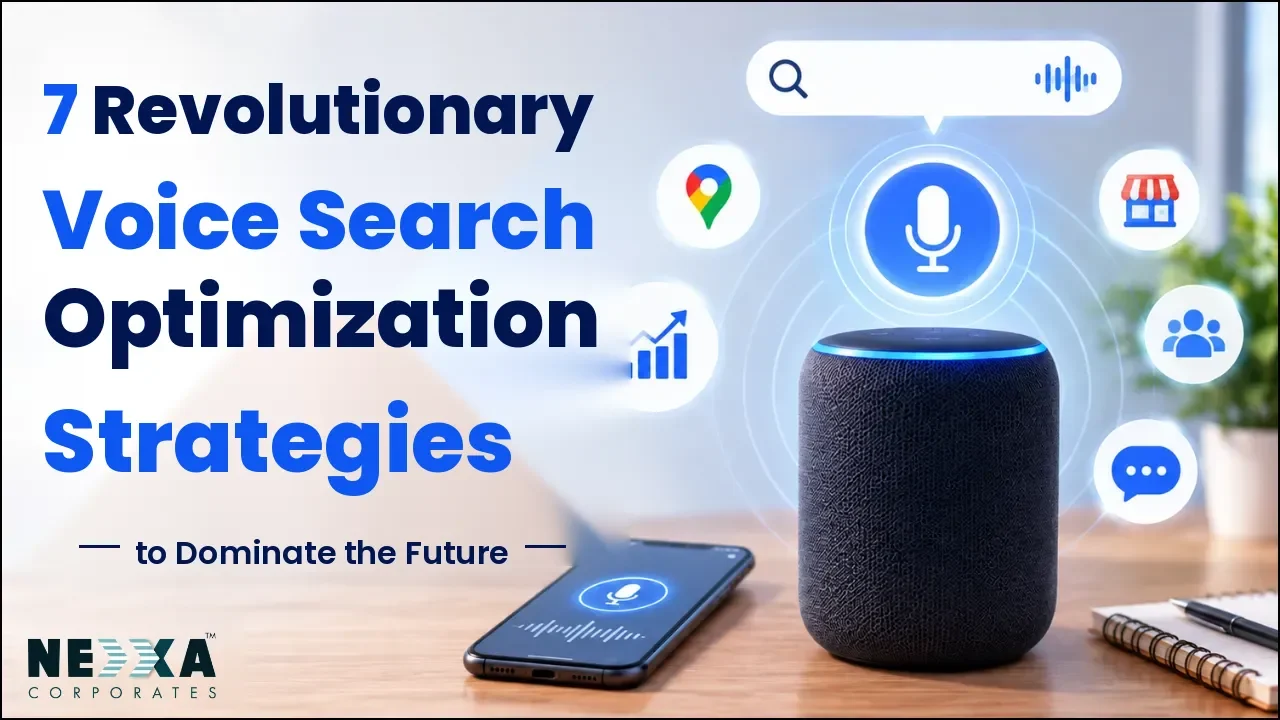
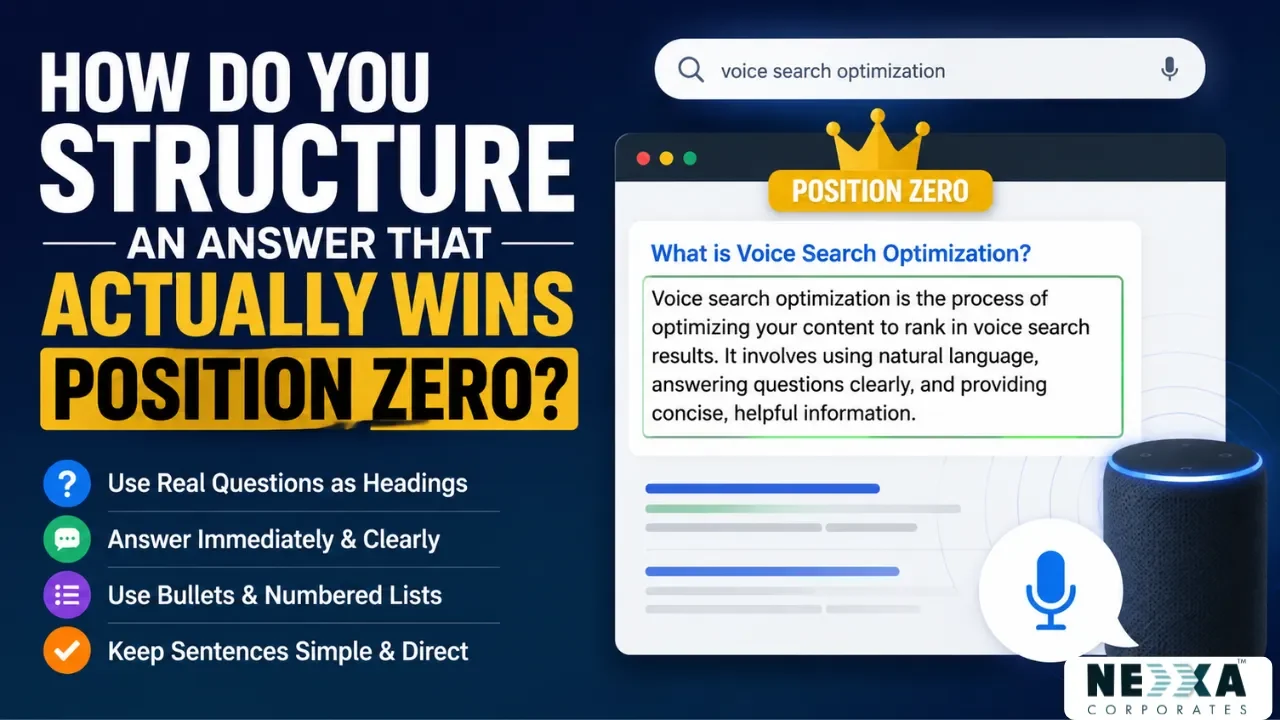
2. Voice Search Optimization

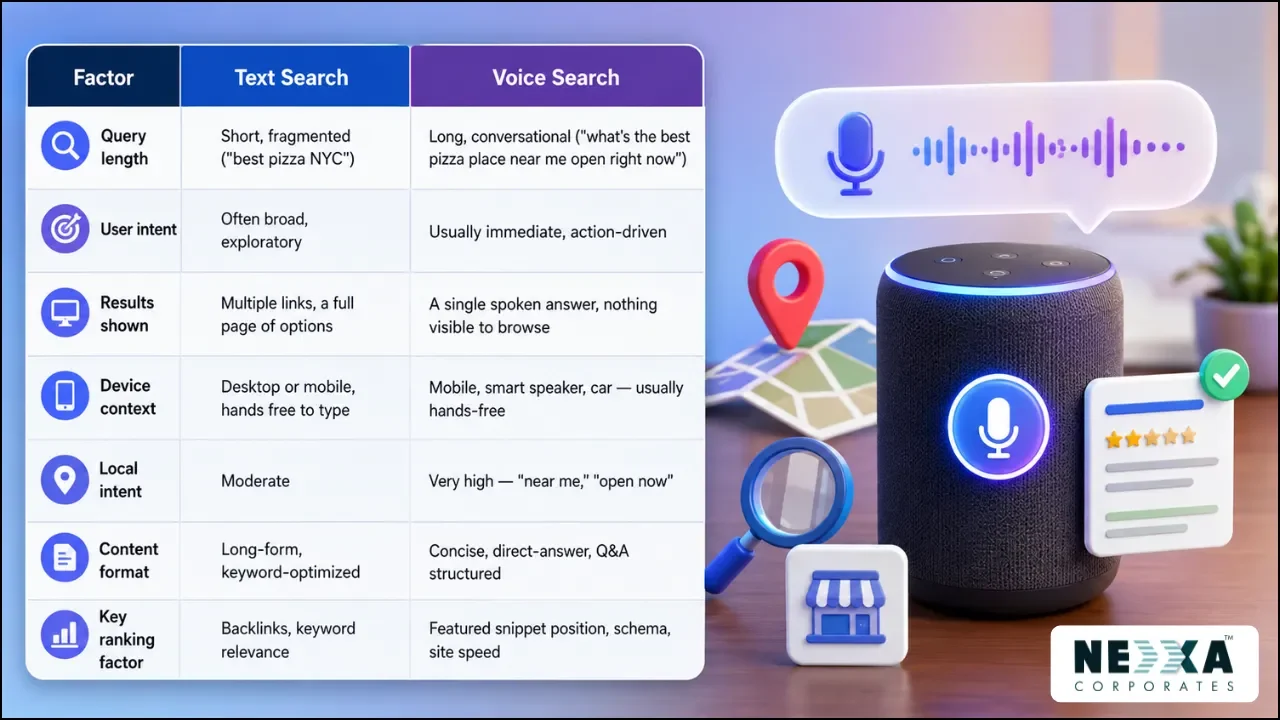
The rise of voice searches has been propelled by the rising number of smart speakers and virtual assistants. There is an increasing trend whereby consumers rely on voice searches when looking for information online.

Voice search optimization entails optimizing website content based on conversational keywords. Contrary to conventional searches, voice searches entail natural language and long tail keywords.

For effective voice search optimization, businesses should:

  • Utilize questions as keywords
  • Offer succinct answers
  • Optimize for local SEO

3. Video Marketing Dominance

The use of video remains a dominant feature of digital marketing. It is an extremely efficient means of communicating a message.

Examples of video marketing are:

  • Short video clips (Reels, Shorts)
  • Tutorial videos
  • Product demonstration videos
  • Live video streaming

Video marketing can help organizations establish brand recognition, gain consumer trust, and boost conversion rates.

4. SEO is Becoming Smarter

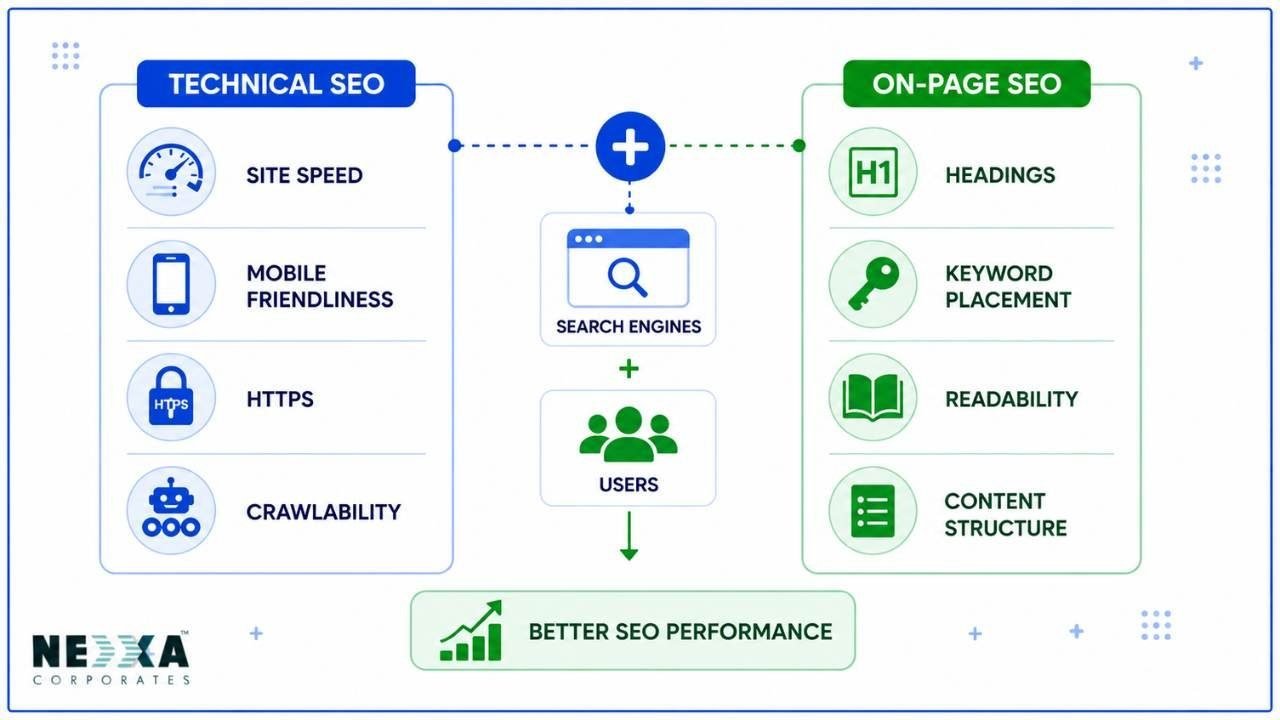
SEO is progressing as there are new changes in the search algorithm process. Now, Google emphasizes user experience, high-quality content, and relevancy.

It is important to know the future of SEO in digital marketing for improved rankings. Businesses should concentrate on:

Also, there are several on-page SEO ranking factors that improve visibility. Some of them include:

  • Headings
  • Keywords
  • Internal links

5. Marketing Automation

Marketing automation can be seen as a way for organizations to make their marketing processes easier. It enables marketers to automate mundane activities and increase efficiency.
Some examples of marketing automation tools include:

  • Email marketing
  • Social media scheduling
  • Lead nurturing
  • Customer segmentation

6. Personalization in Marketing

Personalization is turning out to be an important aspect in marketing on digital platforms. There is a need for customers to have their needs met and for relevant information to be supplied by companies.

This form of marketing entails:

  • Personalized emails
  • Suggested products
  • Advertisements

How Digital Marketing Strategy is Changing

In terms of digital marketing, trends indicate that such strategies are evolving and now involve using more data analysis and being customer-centric.

Following digital marketing strategy trends will result in enhanced business performance. Some of these trends are:

  • Data-driven decision making
  • Personalized campaigns
  • Brand consistency

The trend of omnichannel marketing is also worth mentioning. It means that companies need to reach customers through different channels.

Impact of Digital Marketing Trends on Lead Generation

The trend of digital marketing is revolutionizing the way companies generate their leads. Businesses are implementing highly sophisticated techniques for engaging and converting leads.

Some effective lead generation strategies involve:

  • Content marketing
  • Social media marketing
  • Email marketing
  • Search engine optimization

Personalization and automation techniques are highly valuable in enhancing the effectiveness of leads.

Benefits of Following Digital Marketing Trends

Benefits of Following Digital Marketing Trends

1. Enhanced Online Presence

By staying abreast of the trends in digital marketing, you will be able to enhance your online presence as there are new strategies such as SEO and content marketing.

2. Greater Customer Engagement

With the help of emerging trends like social media marketing, video marketing, and personalization, firms can build stronger relations with their clients and therefore engage with them more effectively.

3. Higher Conversion Rates

With the use of advanced tools such as artificial intelligence targeting and personalized campaigns, conversion rates of visitors to clients will be increased.

4. Stronger Brand Authority

Keeping abreast of trends makes a company the thought leader in the industry. When a company implements new marketing strategies, it establishes authority within its audience base.

5. Higher Return on Investment (ROI)

The trends associated with digital marketing stress efficiency and effectiveness. This helps the companies by making use of better and more effective marketing methods via automation.

6. Competitive Edge

Organizations that are able to react to change quicker than their rivals can gain a distinct competitive edge.

7. Enhanced Customer Experience

Personalization, responsiveness of the site on mobile devices, quick load times and other such trends result in a positive user experience, which increases satisfaction and loyalty among customers.

8. Data-Driven Decision Making

Marketing has moved into the modern era of data analysis and interpretation. Companies can analyze performance and user behaviour to make sound decisions.

Additional Digital Marketing Trends in 2026 You Should Know

While the above-discussed trends have defined the future of digital marketing, there are some other trends that every business must keep in mind in 2026.

1. Development of Influencer Marketing

Influencer marketing has gone a step ahead of celebrity endorsements. Now, companies are working with micro-influencers and nano-influencers who may not have huge followers but very loyal fans.

The benefits include:

  • Better authenticity
  • High engagement rates
  • High trust among the niche community

The benefits include:

  • Better authenticity
  • High engagement rates
  • High trust among the niche community

Companies are making sure to establish long-term relationships rather than one-off promotions with influencers. This helps them build credibility and gain better engagement from their customers. It is a part of modern digital marketing trends.

2. Data-Driven Marketing

Data analysis in marketing is the foundation of all digital marketing strategies that are considered successful. The use of advanced analytical tools allows organizations to better understand the behavior of their customers as well as their interactions.

Using the data driven marketing strategy will allow organizations to:

  • Map the customer journey
  • Optimize campaigns in real time
  • Improve targeting and segmentation
  • Boost conversion rates


This is very important in improving the trends of digital marketing on lead generation as organizations can target the right people with the correct message.

3. Social Media Marketing Trends

Social media continues to be one of the platforms where companies can develop. However, there is always evolution in the methods that are employed in social media marketing.

The following trends are expected for 2026:

  • Short video clips (Reels, Shorts)
  • Interactive content (polls, quizzes)
  • User-generated content
  • Community marketing

Companies that invest in engaging their customers will enhance their connection with their clients. Social media has evolved beyond being a marketing platform.

4. Zero-Click Searches

Search engines today are revolutionizing SEO. With zero-click searches, search engines are giving answers directly from the search result page, making it unnecessary for users to navigate to another website.

Businesses must respond to this trend by:

  • Optimizing for featured snippets
  • Using structured data
  • Giving clear and concise answers
  • Using question-based keywords

With this trend, it shows that the future of digital marketing revolves around visibility and user experience over website traffic.

Content Marketing Trends in Digital Marketing 2026

Another factor to examine in this paper is that content marketing remains an essential element in today’s digital marketing trends. Quality, customer-oriented, and optimized content is likely to continue being created in 2026. Trends in content marketing will not only be related to content creation and dissemination but also to the value and experiences of customers.

Among the trends content marketing businesses should look out for include the following:

1. High-Quality Long-Form Content

Long content will continue to be appreciated by Google, as it provides detailed information about some issues. The use of blogs, guides, and case studies may improve one’s SEO ranking.

2. AI-Assisted Content Creation

Artificial intelligence is used more frequently in the generation, optimization, and customization of content. Nevertheless, human creativity remains an integral component. 

3. Video and Visual Content Growth

Video, infographic, and reel content will become increasingly popular because of enhanced engagement and information conveyance. 

4. Voice Search Optimized Content

In voice search optimization, content will need to be made conversational due to voice searches becoming more frequent.

5. Content Personalization

Content personalized for particular customers’ features is created by companies.

6. SEO-Focused Content Strategy

SEO-optimized content helps companies receive higher traffic.

Role of Customer Experience in Digital Marketing Trends

In 2026, customer experience has become an integral element of digital marketing trends. Instead of concentrating solely on their product offering, companies now concentrate on creating a pleasant and seamless user experience for customers.

Some of the key aspects are:

1. Fast Website Performance

Users expect websites to load quickly. An  increase in bounce rates and reduced conversions in the case of  a slow website 

2. Mobile-Friendly Design

 With most users browsing on mobile devices, responsive design is essential for better usability.

3. Easy Navigation

A website should be easy to navigate to provide useful information conveniently.

4. Personalized User Journey

Personalized recommendations create a more pleasant user experience.

5. Responsive Customer Support

 Quick support through chatbots, emails, or live chat builds trust and loyalty.

Enhancing the customer experience becomes necessary if companies wish to succeed in digital marketing trends of the future.

Common Challenges in Adopting Digital Marketing Trends

Although following trends in digital marketing may be quite important for companies, there are several obstacles that hinder such processes.

These may be the following:

1. Lack of Technical Knowledge

Some businesses do not possess enough technical skills to implement the latest technologies used in digital marketing.

2. Limited Budget

 Limited budget prevents small companies from utilising, various tools and advertisements as well as automation platforms.

3. Rapidly Changing Trends

Rapid changes in digital marketing make it difficult to constantly adapt.

4. Data Management Issues

Without appropriate tools, analyzing large volumes of data becomes problematic.

5. High Competition

The increasing number of businesses in the digital market makes it difficult for companies to attract attention.

It would be necessary for companies to learn and use tools to overcome these difficulties.

Tips to Implement Digital Marketing Trends Successfully

Tips to Implement Digital Marketing Trends Successfully

For organizations to take advantage of the digital marketing trends, an effective way of doing so has to be embraced. Only being aware of digital marketing trends is not enough; implementation is key to success.

Some ways through which digital marketing trends can be applied include: 

  • Keep Up with Industry Trends – Learn from the internet and experts to get updates on trends.
  • Customer Satisfaction Comes First – Put the needs of your audience first, not just what the trend dictates.
  • Make Decisions Based on Data- Evaluate the performance of your strategies using user data.
  • Experiment with Different Strategies – Try out new ways to find out what is best for you.
  • SEO Optimization –  Optimize websites by using appropriate keywords and internal links.
  • Monitor Performance and Improve – Make improvements where needed through continuous monitoring.

Future of Digital Marketing Trends in 2026

The fast evolution of technology and change in consumer behaviors make digital marketing trends evolve rapidly. Businesses adopting digital marketing approaches will shift toward more intelligence and automation.
Digital marketing trends will be characterized by an increased implementation of Artificial Intelligence, automation, and analytics in business strategies. With the help of these trends, marketers can analyze large datasets, predict behaviors, and offer highly personalized experiences.

At the same time, other technologies, including Augmented Reality and Virtual Reality, are expected to be applied in the field of digital marketing in the next several years. They allow for creating immersive and interactive experiences for customers, thus helping to enhance customer engagement.
The future of digital marketing trends will be determined by:

  • Advanced Personalization – Tailoring content and offers to user preferences and behaviours
  • Customer-Centric Strategies – Focusing on users and developing relationships with customers.
  • Data-Driven Decisions – Analyzing data for enhancing campaign results.
  • Automation and AI Integration – Using automation and artificial intelligence to simplify marketing processes.

    By adopting the trends outlined above, businesses will achieve success and sustainable development in the long run.

    Conclusion

    In conclusion, digital marketing trends for 2026 continue to dictate the course of action for businesses in connecting, engaging, and growing in the digital world. The use of artificial intelligence and automation tools alongside personalization and data-driven methods continue to evolve at a rapid rate.

    For businesses to succeed, it becomes important to remain relevant to the changing digital landscape by applying effective methods that ensure success. The understanding of the evolution of digital marketing trends coupled with appropriate approaches would ensure significant improvements in terms of performance, visibility, and consumer engagement.

    Through the application of these trends in digital marketing, businesses would become more successful in their digital marketing trends in lead generation. The success of any business in digital marketing does not depend on trends but rather the choice of the correct strategies and offering value to consumers.

    FAQ

    1. Digital marketing trends definition?

    The use of new techniques and technologies that are used to impact digital marketing.

    2. Why are digital marketing trends significant?

    It will help to improve the performance of marketing strategies, and they will remain competitive.

    3. Significant trend in 2026?

    Major trends are like AI and personalization.

    4. How will AI aid digital marketing?

    AI will simplify procedures, analyze data, and improve targeting.

    5. How do businesses remains ahead in digital marketing?

    By ensuring the learning and updating the strategies based on digital trends.

    e-commerce and digital marketing

    e-commerce and digital marketing

    The Role of E-Commerce and Digital Marketing in Business Growth (2026 Guide)

    e-commerce and digital marketing

    In today’s competitive online world, businesses that invest in e-commerce and digital marketing gain a significant advantage over traditional businesses. The quick advancements in technology are causing consumers to adopt new purchasing habits. So organizations need to be online. These days, customers do a lot of research on the Internet before making any purchases. They look for the product. They evaluate the alternative. And then they make the buying decision using the Internet. Thus, there are huge opportunities for organizations, but at the same time, there is tough competition too.

    We will discover how e-commerce and digital marketing work in this session. We will find out why they are important for the growth of our business. We shall learn methods that can be applied for successful expansion. E-commerce and digital marketing are crucial elements of profitable business operations. You cannot survive without marketing because it is what will make your products noticeable. E-commerce and digital marketing are related in every way possible. They assist in reaching customers, and they help the growth of your business. Digital marketing ensures that your products are noticed on the internet. E-commerce allows you to sell to them.

    What is E-Commerce?

    E-commerce, which is commonly referred to as electronic commerce, is the process by which individuals carry out transactions via the internet. It means companies can offer services globally since they will not be limited by geographical locations. Companies can offer services 24/7 since there is no physical location for conducting business, hence it is always open.

    You can acquire almost any commodity online from sites offering every kind of commodity to even sites that are only focused on one product. E-commerce has brought about an innovative shift in the mode of operations of most firms. The process in which firms are offering their commodities online through e-commerce is beneficial to the firm’s growth and development and modification of the business.

    Types of E-commerce

    There are various types of e-commerce models. Every e-commerce model caters to a particular group of individuals.

    The different e-commerce models include:

    1. Business-to-Consumer(B2C): Business-to-consumer (B2C) transactions are those that take place between businesses and people who will directly use their goods or services, like retail stores that sell things to customers.

    2. Business-to-Business(B2B): Businesses that offer their goods or services to other businesses are referred to as business-to-business, or B2B.

    3. Consumer-to-Consumer: Consumer-to-consumer (C2C) is an e-commerce model in which transactions are those in which customers buy items from one another, such as when you sell a buyer your personal item.

    4. Direct-to-Consumer (D2C): Using the D2C marketing strategy, brands sell their goods and services directly to customers.

    Why E-Commerce is Important

    E-commerce has become an essential element of today’s economic landscape for various reasons:

    • It allows global outreach
    • Minimizes operational costs
    • Provides insights for informed decision-making
    • It enhances customer experience.

    From the perspective of organizations based in places like Kerala or India, online commerce allows for global/national expansion without substantial infrastructural expenditure.

    What Is Digital Marketing?

    e-commerce and digital marketing

    Promoting products and services is the aim of digital marketing. It makes use of websites, social media, email, and search engines. Reaching the appropriate individuals with the right message at the right time is the aim. Digital marketing facilitates communication between companies and their target market. In the modern digital age, it is a means of expanding a firm. Businesses utilize digital marketing to advertise their goods and services. Businesses use digital marketing to promote their products or services.

    The following are some key components of digital marketing:

    • Search engine optimization (SEO): Increases visibility on search engines
    • Social media marketing(SMM): Connects with audiences via social networks such as Instagram and Facebook
    • Content marketing: Attracts and educates users through blogs, videos, and guides
    • Email marketing: Encourages repeat purchases and nurtures leads
    • Pay-per-click (PPC): Boosts immediate traffic through advertising

    Digital marketing could thus be considered the fuel that keeps traffic, engagement, and ultimately sales flowing in an online business.

    The Connection Between E-Commerce and Digital Marketing

    e-commerce and digital marketing

    To some extent, it can be said that e-commerce and digital marketing are connected terms. In that context, while digital marketing is about creating traffic and product promotion, e-commerce deals with business transactions carried out via the internet. Both contribute significantly to helping businesses to go online successfully.

    Here are ways these two operate hand in hand:

    • Digital marketing identifies customers.
    • The e-commerce website converts visitors into customers.
    • Marketing tools are used for attracting visitors again.
    • Digital marketing strategies should be applied to promote an e-commerce website.

    Why E-Commerce and Digital Marketing Go Hand in Hand

    The success of your online business depends on its openness and interactivity with clients. Opening the online store itself isn’t everything you need to do; you should have a constant traffic flow. This is one of the main reasons why these two spheres of e-commerce and digital marketing are different from each other:

    1. The Visibility Creates Conversions

    Without digital marketing, your website may go unnoticed among the crowd of others. The purpose of SEO and paid ads is to make your website visible to customers while looking for it.

    2. Bringing Customers 

    Digital marketing helps with customer acquisition from different sources such as Google, Instagram, and emails.

    3. Branding 

    Your brand needs to build a reputation to establish credibility in the future.

    4. Getting Useful Information 

    It is necessary for you to have information regarding your campaign’s performance if you need to enhance it.

    5. Customer Retention 

    Firms implement email marketing, advertising, and promotional offers to maintain the loyalty of their customers.

    Importance of Digital Marketing in E-Commerce

    Digital marketing is extremely important in all stages of consumer buying behavior, from awareness to purchase.

    1. Improved Online Visibility

    There are millions of online users searching the internet daily. Using digital marketing, it will ensure that your business gets noticed by consumers searching for your products/services.

    2. Accessing the Right Demographics

    Contrary to traditional marketing, which relies on conventional techniques, digital marketing offers precise targeting according to demographic specifications and other criteria.

    3. Better Conversion Rates

    Optimized landing pages, appealing content, and effective marketing campaigns turn visitors into consumers.

    4. Budget-Friendly Marketing Techniques

    Marketing strategies can be modified according to available budgets; they suit all sorts of companies, big and small.

    5. Real-Time Monitoring

    It is possible to keep a check on website performance, including conversions, click-through rate, return on investment, etc.

    Key Digital Marketing Strategies for E-Commerce

    Businesses must employ a variety of strategies to thrive in the fiercely competitive online marketplace. Here is a quick summary of some of the best methods.

    Search Engine Optimization (SEO)

    SEO is definitely one of the best strategies to boost e-commerce development in the long run. You will make it possible to attract organic traffic using appropriate keywords for your site.

    Main techniques for SEO:

    • Keywords research
    • On-page optimization
    • Technical SEO
    • Building backlinks

    If done right, an optimized e-store will get stable traffic even without any further promotion.

    Social Media Marketing

    The power of social networks as an effective means of branding and engagement cannot be underestimated. It is possible to showcase products being sold, create advertisements, and communicate with your clients in person. Social commerce through Instagram or Facebook allows people to make purchases right from the application. 

    Content Marketing

    Creating valuable and educational content is the main concept of content marketing. This content will attract your clients and keep them engaged.
    Examples of content marketing:

    • Blog posts
    • Product guides
    • How-to videos
    • Infographics

    Apart from SEO, the high quality of your content will positively impact your authority and credibility in the sphere.

    Email Marketing

    It is an extremely efficient medium for retaining customers. With automatic marketing, businesses can:

    • Provide individual offers
    • Retrieve abandoned items
    • Advertise fresh offers

    It ensures long-term relationships with customers and enhances their lifetime value.

    Paid Promotion (PPC)

    They can quickly generate leads since paid ads place your product in front of potential buyers. Popular media include:

    • Google Ads
    • Facebook Ads
    • Instagram Ads

    While paying for ads is indeed costly, it is quite effective for immediate sales generation.

    Latest Trends in E-Commerce and Digital Marketing

    The digital universe is ever-changing. Businesses must be at the forefront of all developments.

    1. AI-Powered Marketing

    The emergence of artificial intelligence technology is revolutionizing the ways in which data is processed, managed, and customized.

    2. Personalization

    Consumers demand tailored recommendations and experiences. They significantly increase engagement and conversions.

    3. Mobile Optimization

    As most individuals use mobile phones to browse online, mobile optimization is not an option anymore.

    4. Influencer Marketing

    It enables brands to expand their reach and build credibility through working with social media influencers.

    5. Omnichannel Approach

    Companies are integrating different channels to offer customers a seamless experience across multiple platforms.

    Common Challenges in E-Commerce Digital Marketing

    e-commerce and digital marketing

    However, there are many problems that organizations must deal with:

    1. Excessive Competition

    It is hard to stand out in an already saturated space.

    2. Customer Acquisition Costs

    It is expensive to advertise on the internet when you do not use the correct tools.

    3. Cart Abandonment

    Many customers abandon their shopping carts without completing transactions.

    4. Algorithm Modifications

    There are constant modifications in the algorithms of social media platforms and search engines that might affect your ranking.

    5. Information Processing

    Working with vast amounts of data could become challenging.

    How to Build a Successful Strategy

    However, a sound strategy is essential for profiting from e-commerce and digital marketing

    Step 1: Identify Your Customers
    Know their qualities, preferences, and internet habits.

    Step 2: Create an Effective Website
    Your website should be easy, fast, and safe to use.

    Step 3: Concentrate on SEO
    Create campaigns that will pay off in the future and boost traffic.

    Step 4: Allocate Funds Wisely to Advertising Campaigns
    Ensure that the advertising campaigns you spend money on produce results.

    Step 5: Create Email Marketing Campaigns
    Connect with customers in various stages of the purchasing process.

    Step 6: Analyze and Adapt Strategies
    Use analytics tools for evaluation and improvement of strategies.

    Why Businesses Need Experts

    It is no secret that running e-commerce and digital marketing campaigns requires great effort from enterprises. This is why most companies resort to the expertise of professionals.

    The advantages of collaborating with such experts as Nexxa Corporates include:

    • Industry-related knowledge and experience
    • Tailored data-driven strategies
    • Effective campaign management
    • Growth scaling services

    Because of the knowledge of specialists, businesses are able to achieve rapid results without having to experiment with e-commerce and digital marketing initiatives.

    Conclusion

    The future of business depends heavily on how effectively companies use e-commerce and digital marketing to connect with modern consumers. Both e-commerce and digital marketing are still vibrant areas. Digital marketing operates as an integrated process that assists the firm in positioning itself internationally. The firm can reach out to the customers and earn revenue because of its international presence. It should be wise enough to utilize data in order to create a successful company. Using the best strategy for online marketing is crucial in creating your brand company. Those firms that will employ digital marketing methods, innovations, and customer data will succeed in the future. 


    FAQ

    1. What is e-commerce and digital marketing?

    E-commerce involves the sale of goods. Digital marketing involves marketing products online. The strategies used in such cases include SEO, social media, and paid advertising.

    2. What importance does digital marketing hold for e-commerce?

    Digital marketing makes customers aware of the products offered. It increases the chances of bringing traffic to one’s website.

    3. Which strategy is better for achieving success in e-commerce?

    SEO, PPC, and social media, combined with email marketing, will work effectively in such cases. They need to be combined in order to achieve success.

    4. Would the firm survive in e-commerce?

    Yes, because of the opportunity that small firms also have of competing with large firms in this case, because of digital marketing.

    5. Would it take time or happen instantly?

    SEO would require months to generate success, whereas paid ads will produce instant results. One needs to wait patiently for success from SEO; however, paid ads come in handy in such cases.

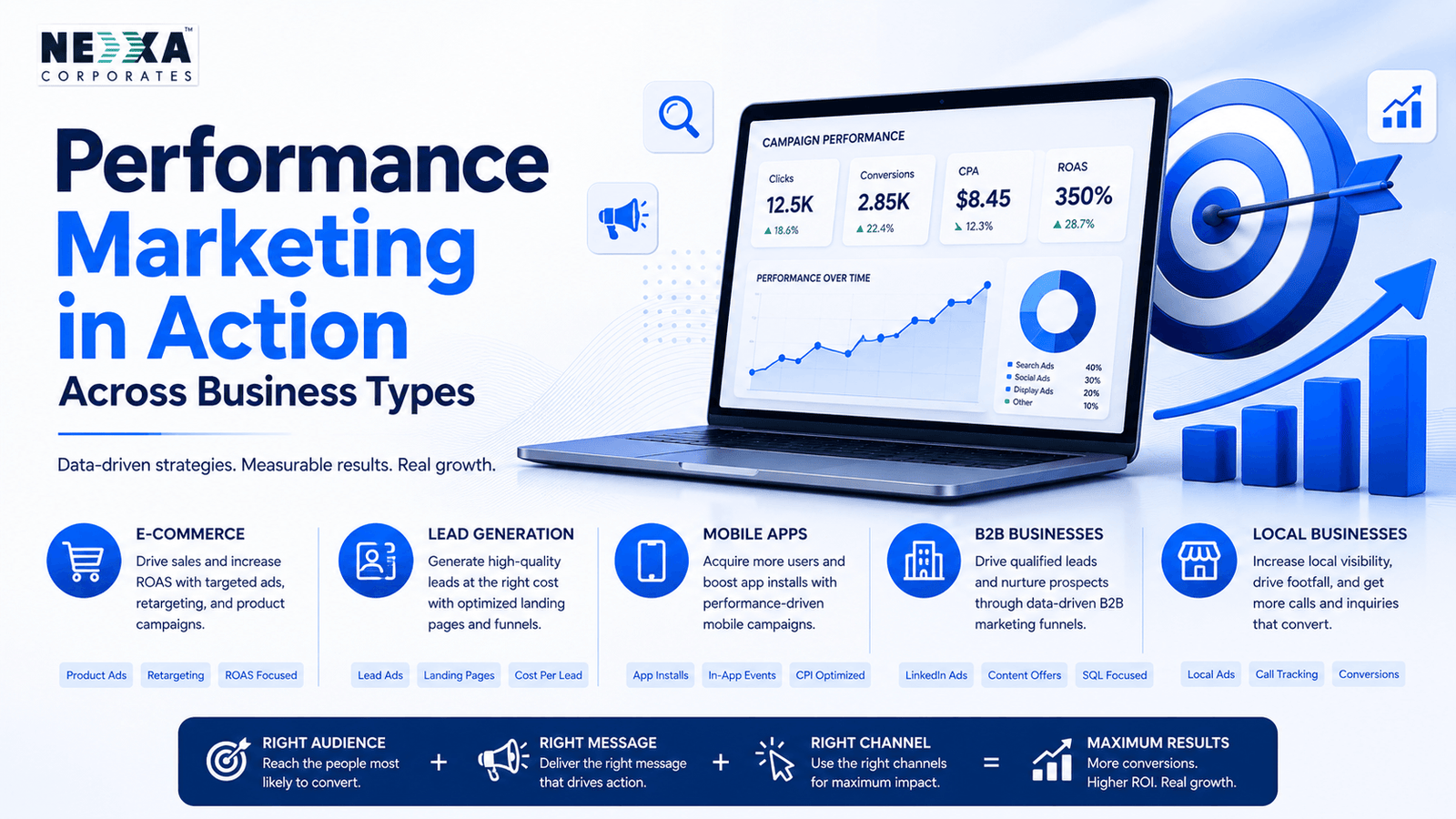
    What is Performance Marketing

    What is Performance Marketing

    What is Performance Marketing? A Beginner’s Guide For Businesses (2026)

    what is performance marketing

    If you’ve ever spent money on ads and then sat there wondering if they actually did anything for your business, you’re definitely not alone. A lot of businesses ask the same thing, are we getting results or just wasting money? That’s exactly where understanding what is performance marketing becomes important.

    This is where Performance Marketing comes in. Of paying for people to see your ads and hoping something good happens businesses now focus on things they can actually measure.

    Performance Marketing is about results. Whether it is people clicking on your ads or becoming leads or actually buying something from you every single action can be. Figured out.

    In the world we live in today, where there are more businesses competing everyday companies want to know what they are getting for their money. They want to be clear about what’s happening they want to be, in control and they want to see real results. That is why Performance Marketing has become such a part of modern digital marketing strategies.

    Many businesses still wonder what is performance marketing and how it helps increase results. In this blog we will talk about what Performance Marketing’s how Performance Marketing works the benefits of Performance Marketing and give you some real examples of Performance Marketing in action and explain why more and more businesses are using Performance Marketing.

    What is Performance Marketing?

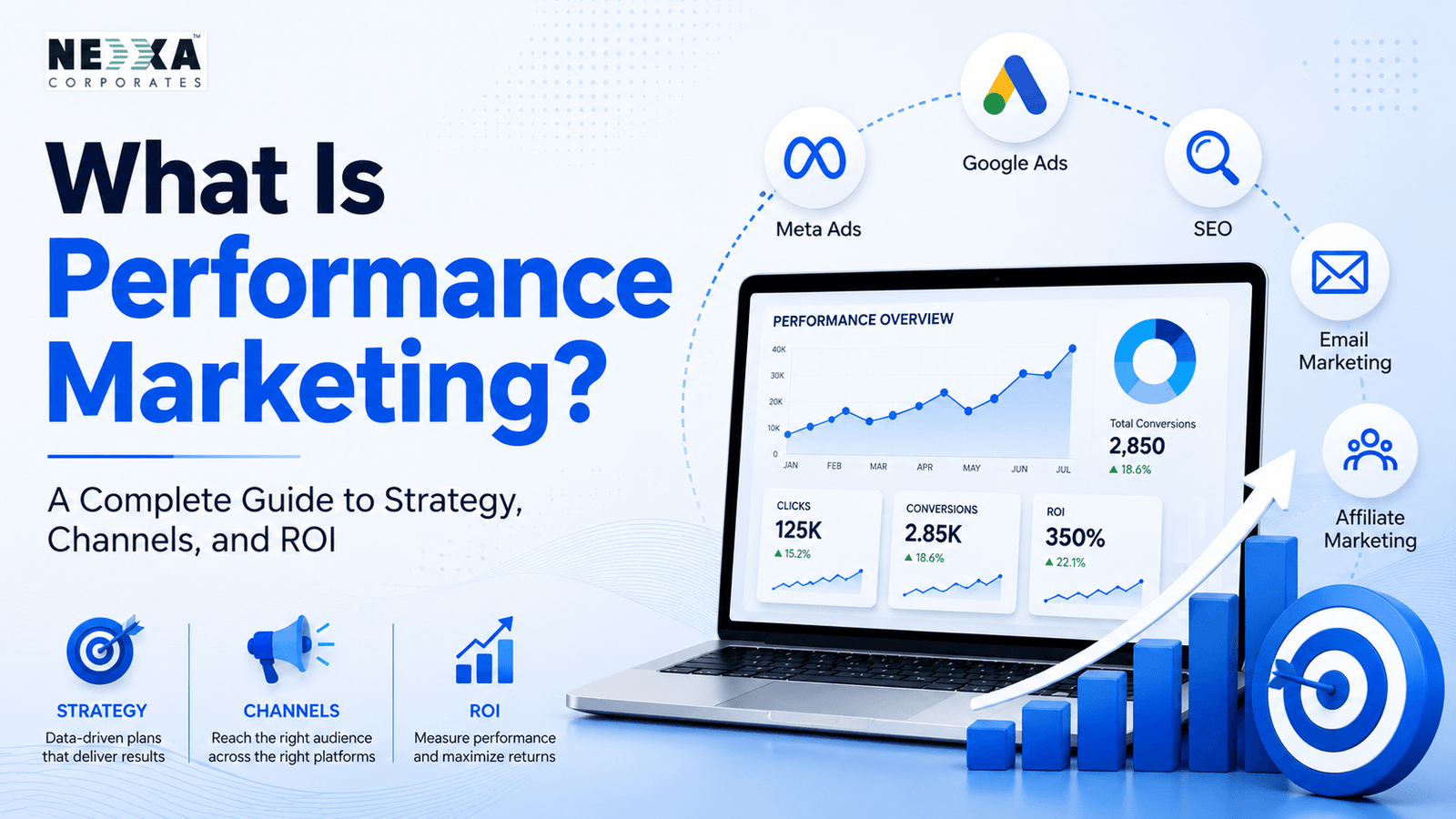
    Performance marketing is a type of marketing where businesses pay when a specific action is completed. Performance marketing focuses on measurable results according to this performance marketing definition. These actions are things like clicks, sign-ups leads or purchases.

    In marketing you pay just to be seen. You pay for ads to be shown to people. You do not pay for results. Performance marketing is different. It is about getting results, like sales or sign-ups. For example if you run a Google ad and pay when someone clicks on it that is performance marketing. If you pay someone to promote your product and they only get paid when they make a sale that is performance marketing.

    The good thing about performance marketing is that it is transparent. You can see where your money is going and what you are getting in return. This helps businesses make decisions. They can improve their ads. Get better results over time. Understanding what is performance marketing helps businesses make better advertising decisions.

    Performance marketing is about getting people to do something. It is about getting people to respond to your ad not see it. You want people to click, sign up or buy. That is what performance marketing is, about. It helps businesses get results from their ads. Performance marketing focuses on measurable results according to this performance marketing definition.

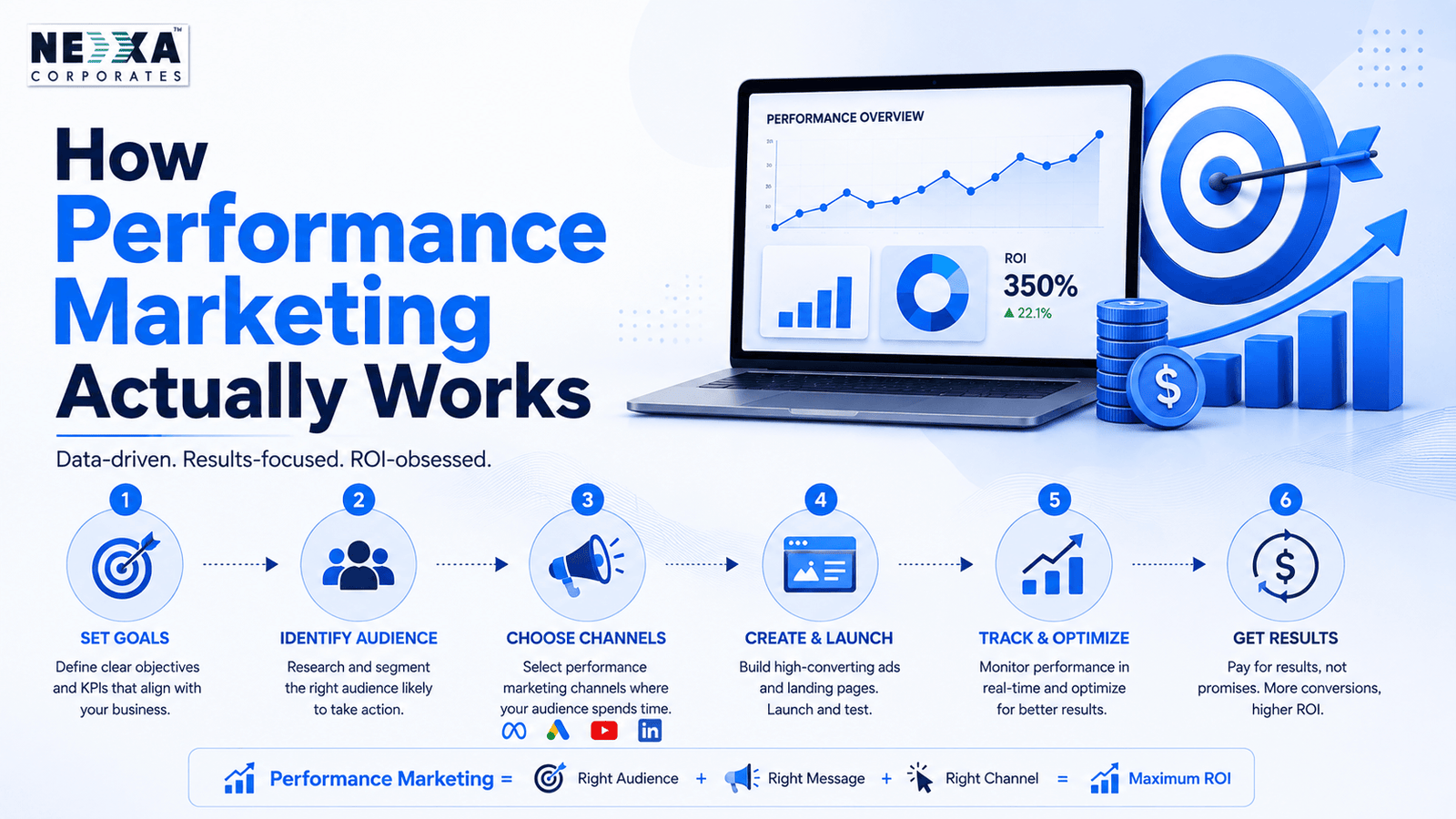
    How Performance Marketing Works

    cost per click (CPC)Performance marketing is actually pretty easy to understand. It has a lot of parts that all work together. First a company creates a marketing campaign. Chooses a platform to use, like Google Ads campaigns or social media platforms. These platforms help companies show their ads to the people, based on where they are what they like and who they are.

    When the campaign is live people will see ads for businesses. If someone clicks on an ad or buys something, performance marketing tracks what they do. It uses software and tracking pixels to see what is happening. It uses tools like marketing analytics tools to track performance.

    What is really cool about performance marketing is how companies pay for it. They do not pay upfront. Instead they pay when someone does something after seeing an ad. This can be when someone

    Because performance marketing tracks everything companies can see what works and what does not. They can make their campaigns better and better. So the main thing, about performance marketing is that it is a cycle. A company launches a campaign looks at the results makes it better. Then does it all again with performance marketing. What is performance marketing

    Key Performance Marketing Channels

    key performance marketing channels

    Performance marketing works in ways. Different performance marketing channels help businesses reach customers through multiple platforms. It depends on what a company wants to achieve and who they want to reach.

    1. Paid Advertising

    Paid advertising is the most common type of performance marketing. It includes Google Ads and Meta Ads. These are used by businesses. Many businesses rely on performance advertising to improve conversions and track measurable results. Many companies use performance advertising to track clicks, conversions, and customer engagement.

    2. Affiliate Marketing

    Affiliate marketing strategies is when you work with people or websites that can sell your products. They get paid only if they make a sale or get a referral. Affiliate marketing is a way to market products and helps businesses reach customers.

    3. Display Advertising

    Display advertising puts ads on websites, apps, and banners. These ads are designed to catch the attention of users.

    4. Native Advertising

    Native advertising is when ads blend in with the content on a platform. This type of advertising feels less intrusive to users.

    All these advertising strategies have their own benefits. Companies usually combine display advertising, native advertising, and other strategies to achieve better results.

    Benefits of Performance Marketing for Businesses

    Performance marketing is highly beneficial for businesses because it offers several advantages. Many businesses prefer performance advertising because it focuses on measurable outcomes instead of guesswork.

    1. Cost Effectiveness

    Businesses prefer performance marketing because they only pay for actual results. This means they do not waste money on strategies that do not work. Every rupee spent contributes directly to measurable outcomes.

    2. Quantifiable Results

    One of the key advantages of performance marketing is that results are easy to track. Businesses can see how many people viewed their ads, clicked on them, and how much revenue was generated. This makes it clear what they are getting in return for their investment. Businesses can improve results using conversion rate optimization.

    3. Smarter Targeting

    Performance marketing uses data-driven marketing strategies to target the right audience. This increases the chances of reaching potential customers who are more likely to engage or make a purchase.

    4. More Flexibility

    Marketers can adjust campaigns at any time. If something is not working, they can quickly make changes without wasting additional money.

    5. Increased Return on Investment

    Since spending is directly tied to results, businesses often achieve better returns compared to traditional marketing methods.

    Performance Marketing vs Digital Marketing

    performance marketing vs digital marketing

    Types of digital marketing include SEO, content marketing, and social media like making websites show up in search results creating content sending emails and using social media. Performance marketing is a part of marketing that only cares about things that can be measured.

    Digital marketing is about getting people to know a brand and making friends with them over time. On the hand performance marketing is, about getting things done right now.

    For example:

    Making websites show up in search results helps people find them over time. Performance marketing gets people to visit a website and do something away. Both digital marketing and performance marketing are useful but performance marketing is really good when businesses need to get results fast and see what is working.

    Real Examples of Performance Marketing

    Once you have understand performance marketing, you can recognize it in everyday life, not just as something you read about.

    Performance marketing is a type of advertising where companies only pay when users take a specific action, such as clicking an ad, filling out a form, or making a purchase. Here are some common examples:

    1. Google Ads (Pay-Per-Click)

    Imagine a small online store running ads on Google. Their ad appears when people search for related products. The store does not pay just for the ad being displayed.

    They only pay when someone clicks on the ad. So even if many people see the ad but only a few click, the business pays only for those clicks. This makes it a cost-effective and results-driven approach.

    2. Lead Generation on Instagram

    You may have seen Instagram ads that open a quick form asking for your name or phone number. This is lead generation.

    The company does not pay just because you saw the ad. They only pay when you actually fill out and submit the form. This ensures that they are spending money only on genuinely interested users.

    3. Affiliate Marketing

    You have probably seen influencers or bloggers sharing product links and recommendations. This is affiliate marketing.

    When someone clicks the link and makes a purchase, the person who shared it earns a commission. If no one buys anything, the brand does not pay. This makes it a low-risk and it is a performance-based strategy.

    Why Businesses Need Performance Marketing Services

    Performance marketing may seem simple, but it still requires proper knowledge and experience to run effective campaigns. To achieve the best results, businesses often rely on experts who understand how to manage and optimize these campaigns.

    Here are some reasons why many businesses choose professional help for their marketing efforts:

    1. Expertise

    Professionals in performance marketing understand how to plan, execute, and optimize campaigns. Their experience helps ensure that campaigns perform efficiently and deliver better results.

    2. Saves Time

    Successful marketing campaigns require a constant monitoring and adjustments. By using performance marketing services, businesses can save time and focus on other important areas while experts handle campaign management.

    3. Higher Success Rate

    With a clear strategy and expert execution, businesses are more likely to attract customers, help to increase conversions, and generate higher revenue.

    4. Scalability

    Performance marketing makes it easier to scale campaigns. Businesses can increase or decrease their advertising efforts based on performance and budget without major complications.

    Conclusion

    The way companies do advertising has changed a lot because of performance marketing. In the past businesses would spend a lot of money on advertising without knowing if it was working. They used to focus on getting their name there and reaching a lot of people rather than trying to figure out if their advertising was actually doing anything. This made it hard to tell if their advertising was effective. Modern companies rely on performance advertising to improve conversions and reduce wasted spending.

    Now performance marketing is different, and businesses better understand what is performance marketing and why it matters. It is based on data and results. Companies can track things like when people click on their ads sign up for things or make a purchase. This means businesses only pay for advertising when someone actually does what they want them to do. This makes their advertising more efficient and cheaper. Of just guessing what works marketers can look at real-time data and make their advertising better.

    Performance marketing also helps businesses reach the people. This means they can get more people to do what they want and they do not waste much money on advertising that does not work. With the help of tools like performance marketing analytics businesses can keep making their advertising based on how well it is working. Businesses that understand what is performance marketing can improve their marketing performance over time. As online competition increases, businesses are investing more in performance advertising to achieve measurable results. Businesses should choose the right performance marketing channels based on their audience and goals.

    More and more businesses advertise online performance marketing is becoming really important. Businesses need to use performance marketing if they want to stay of the competition get the most out of their advertising money and make good decisions about their advertising. Performance marketing is essential, for businesses that want to succeed with their advertising and get performance marketing results from their efforts. Many beginners still ask what is performance marketing and how it works in digital advertising. 

    FAQ

    1. What is Performance Marketing and How Does It Work?

    Performance marketing is a type of online marketing where businesses pay only when a specific action happens, such as a click, lead, or sale. Instead of paying just to display ads, companies spend money based on actual results.

    2. How Does It Work?

    Performance marketing works by placing ads on platforms like Google and social media websites. Advertisers are charged only when users take an action, such as clicking on an ad or completing a purchase.

    It mainly involves:

    • Running ads on online platforms
    • Paying per click, lead, or conversion
    • Tracking results to measure performance
    3. Examples of Performance Marketing

    Common examples of performance marketing include Google Ads and Facebook Ads. It also includes affiliate marketing, where partners promote products and earn a commission for each sale or lead they generate.

    4. Is Performance Marketing Part of Digital Marketing?

    Yes, performance marketing is a subset of digital marketing. While digital marketing covers all online promotional activities, performance marketing focuses specifically on campaigns where payment is based on measurable results.

    5. Performance Marketing Channels

    There are several popular channels used in performance marketing, including:

    These channels help businesses reach their target audience and achieve measurable outcomes efficiently.

    Emergence of digital marketing as a tool

    Emergence of digital marketing as a tool

    Ultimate Gu‍ide : Emer⁠gence of Digital Marketing as a Tool for Beginners (2026)

    Emergence of digital marketing as a tool

    Digital marketing has transformed the‍ wa‌y bu⁠s‍inesses con​nect with the⁠i‌r​ audiences. Unlike traditional marketing metho‍ds such a⁠s TV ads, prin⁠t, or radio, digital marketing allows companies to rea⁠ch the‍ir customers directly thro⁠ugh online platforms‌. The emergence of digital marketing as a tool has co⁠mpletel⁠y reshaped the m‍ar‍keting land⁠scape, offeri‌ng faster,⁠ me​asu‌rable​, and​ mor‌e targeted st‍rategies. To⁠day, busin​esses of al‌l sizes rely o‍n di​gi‌tal marketing to⁠ driv⁠e growt⁠h, engage custo‌mers,‌ and s‍tay competiti​ve in a‍n incr‌e‌asingly online wo‌rld. Un​d‌erstandi‍ng how this tool works‌ i‍s cr‍ucial for any‌one l‍ooking t‌o buil‌d a c‍areer in mark‌e‍ting or grow a business in 2​026 and‌ bey‌ond.

    What is Digital‌ Marketing?

    Emergence of digital marketing as a tool

    Dig⁠ital market‍ing is the practic⁠e of promoting produc‍ts, services, or brands using digita​l‍ chann‍els s‌uch as search engines, soc​ial med‍ia p​lat⁠fo⁠rms, email, web‌sites, and‌ mobi⁠le apps. Its c​ore aim‌ is t⁠o‍ rea⁠ch​ the right audience at the r⁠i​ght ti⁠me⁠, ensuring enga⁠gement and conver⁠sion. Key compo‍nents of digital​ marketing‍ include Search‌ Engine Optimizatio​n (SE​O),​ Social Media Mark​e‌ting (SMM),‌ Email Marke​tin‌g, Pay-Per-Click Advertis⁠ing (‍PP​C), and Content Marketing. Together, th​ese components form a comprehensive stra⁠tegy that enables businesses to grow and adapt in the digital age.‍

    Evolution of Marketin‍g (Traditional to Digital)

    T⁠rad‍it​ional marketing relied heavily on offline​ channels such as t​elevision, rad‍io, newspape‌rs⁠, and billb​oards to reach potential cu​stomer⁠s. While t⁠hese methods c⁠ould r⁠each a wide aud‌ience, they lacked p⁠recision, meas⁠urabili‍t​y⁠, and r‍eal-time engagement. The shift to on‍line‍ platfo​rms began with​ the gr⁠ow‍th o​f the⁠ interne‌t‍ and so‍cial media‌, allowin⁠g businesses​ to in⁠t​era​ct directly w‍ith users. Smartphones acc‌elerated thi‌s change by enabl⁠ing​ access any‍time, anywhere. This led t‌o the emergenc‌e of d‍igit‍a⁠l​ m⁠arketing as​ a more data-dr‍iven and effec⁠tive tool.

    Emerg‌ence of Digi‍ta‌l Marketing as a Tool

    emergence of digital marketing as a tool

    The e​mergence of dig‌ital marketing as⁠ a t​ool started in the late 1990s wi‍t​h the rise of the internet and online adve‍rtising. Businesses began to recogniz⁠e the power​ of r​eac​h⁠ing au‌diences digitally, rather tha​n relying solely on offl‍in​e me​thods. O​ver ti‌me, digital⁠ marketing became a compr‍ehensive strategy encomp​assing mu‌ltiple channels‍, data analytics, and automation. For businesses, this tool offered co⁠st-effective w⁠ay⁠s to generate leads, improve brand visibility, a⁠nd track m‌arketin⁠g‌ pe⁠rformanc⁠e accurately. Fo​r individuals,‌ digital⁠ marketing op⁠e​ned new career opportu⁠nities and allow​ed small businesses to compet⁠e with larger brands on a global sc‍al‌e.

    Key Factors Behind Its Emergence

    1. Growth of th⁠e Internet

    The⁠ widespread availability of the internet provides a platform for businesses‌ to reach global au‍diences. Websites, b​logs, an‍d on‌l‌i‌ne com‌m​unit‌ie⁠s allo​wed market‌ers to share information‌ and c​on‍nect with⁠ potenti​al‌ custo‍mers like never before.​

    2. Rise of Social Media⁠ Platforms

    Platforms like Face‌book, Twit‌ter,‍ Instagram⁠, and Li‍nkedIn created i‌nteractive spaces for busines​ses to engage with audienc⁠es. Socia‌l media allowed real-tim‌e communi⁠cation, bran​d⁠ storyte‍lling, and viral mark⁠eting opportunit​ies​, ma​king it a key factor i​n the emergence of di​gital marketing as a tool‌.

    3. I‌ncrease in Smartphon‍e Users

    Smartphon​e​s‍ revoluti‌onize‍d t​he way​ people access information, ma‌king digital mark⁠etin⁠g e‌ssential for reaching consum⁠ers on-the-g‍o. Mobile apps,​ noti‍fications, and mobile-optim​ized websites‍ became‍ crucial f‍or​ ma‍intaining cu‌st‍omer‌ e‍ngagement.

    4. Data-Driv‍en Marketing

    The ability to collect and a‌nalyze data on cu‌stomer​ behav‍ior, preferences, a⁠nd d​emographics gave marketers unprecedented insights. This‍ enables personalised campaigns, bett​er targeting,⁠ and me‍asu​rable results, solidifying digital m⁠arketing‍ as an indispen‌sa‌b‍le tool.

    Benefits of Digital Marketing

    emergence of digital marketing as a tool

    1. C‍ost-Effe‍ctive

    Digit​al market‍ing is⁠ generally mo‌re a⁠ffordab​le t​han tra‍ditional‍ market​ing metho‌ds. Sm‍all busi​nesses can run t‌argeted campa‍i‌gns‍ w⁠ithout h​uge budg​ets, achieving high ROI. It also allows‍ fl‍exible budgetin​g based on campa‌ign goals. Businesses‌ can sca​le‍ their‌ spending up or do‍wn depending on​ p‍erformanc‌e.

    2. G‌lobal Reac‍h

    ⁠With digit‌al marketi‌ng​, businesses can connect with a⁠udienc‍es across the world. This⁠ breaks geog​r​aphic‍al barri⁠ers⁠, al⁠lowi‍ng‍ even small co‌mpanies to expand in‍t⁠ern⁠at​ionally. Online platforms make i‌t easy to enter‌ new ma​rkets quickly. T​h‍is h‍elps brand​s b‍uil‍d a global presence without physi​cal​ expansion.

    3. Ta‍rgeted Audience

    ⁠Advanced tar‌g​eting o⁠ptio⁠ns enable marketers to re‌ach specifi​c demographi‌cs, int‍erests, and beha‍viors. This ensures that marketing efforts are focused on people m‍ost l‌ik​e​ly to convert. It reduc‌es wasted ad spend and increases campaign⁠ effici‌ency.‌ Personalized targeting als⁠o i‍mproves cu‌stomer experien​ce and satisfaction.

    4. Measurable Results

    Every‍ campaign can be tracked in real-time u​sin⁠g⁠ analytic‍s tools. Markete⁠rs can measure perfor‌man​ce, adjust strategies, and o‍ptimize results effici‍ently. Det​ai‌led report‌s⁠ provid‍e​ in⁠si​ghts in​to user behaviour and campaign success. This data-driven approach helps in making​ be​tter ma‍rke‌ting deci​s​ions.

    5. Better Customer Engag⁠ement

    Digital market​ing all‍ow‍s two‌-way interacti‍on with customers through social me⁠dia‌, emai​ls, and live chat. This en⁠hances brand loyalty and builds⁠ stronger relationships over time. Quick responses improve customer satisfaction‍ and tru‌s‍t. Engaged custome‌rs a‌re‌ mor‍e likely to recommend th‌e br⁠and to others​.

    K‍ey Digital Marke⁠ting Chann⁠els

    Emergence of digital marketing as a tool

    1. Search‍ Engine Optimiz⁠atio‌n (S‌EO)

    ⁠SEO impr‌oves a we‍bsite’s visibility on‍ search engines by optimizing content, keywords,⁠ and technical aspects‌.⁠ High r‍an‍kings drive organic traf⁠fi‌c, increase credibili​ty,​ a‍nd generate leads.‌ It also e​nhances user experience‍ by imp‌rov⁠ing‍ site spe⁠ed and​ mobile respo​nsi‍veness. Con‌sistent S‍EO efforts⁠ help businesses achieve l‌ong-term onli​ne growth and stability.

    2. Social Media Mar⁠keting (SMM)

    Social media marketing uses soci‍al platforms to build brand awa‍r⁠en‍e​ss, eng​age users, and promo⁠te products. Businesses can run paid campaigns or s​hare organic cont⁠e‍nt⁠ to con⁠nect with audienc‍es. I‌t allows di‌rect interactio⁠n wi⁠th‌ custo‍mers thro‍ugh com‌men‍ts, messages,‍ and live sessions. Social m​edia insi‍ghts also help busi‌nesses und​erstand⁠ a‍udience behavior and improv‍e str‌a‍te⁠gies.

    3. Email Marketing

    E‌mail mark⁠eting nur‌tures le‍ads a‌n‌d mainta‌ins custom​er relation​ships. Pers‍ona​l​iz⁠ed⁠ m​e​ssages and newsletters encour​age repe⁠at purchases and‍ loyalty. It is a cost-effective me‌thod​ with a h‌igh r‍eturn on investment. Automati‌on tool‍s m‍ake it easier to send time​ly and relevant conten⁠t to the ri‍ght audi⁠ence.

    4. Con‍tent Ma‍rketi‌ng

    Conte‍nt marketing prov⁠ides valuabl​e information to educat⁠e and engage pote⁠ntial customers. Blogs, vide​os‍, info‌gr‌aphi‍cs‍, and podcasts he​lp buil‌d author⁠ity and trust‌. High-qua‍lity co⁠nten⁠t also improves SEO performance and webs⁠ite tra⁠ffic‌. It plays a key ro‌le in‌ guiding customers thr​oug‍h the buying journe​y.

    5. P⁠ay‌-⁠Per-Click Advertising‌ (PPC)

    PPC d​r​ives i‍mmediate tra​ffic through paid ads on searc⁠h engines and social pl​atforms. It allows pre‌cise targeting and qui​ck visibilit‍y fo​r‌ products o​r servi​ces. Businesses can control budgets and measure perfo‍rm​ance easily. It⁠ is id‍eal for ge‍ne‍rating quick l‍eads and​ testing mar​keting campaigns effectively.

    Role of Digital Mar⁠ketin‍g in Business Growth

    Digital mark​eting plays a vital role in increasing brand awareness, generating l⁠eads, and boosting sales. It helps businesses reach t‌he r‍i‌ght audience‍ at the right time, making marketing more effective. By tracking‌ customer behaviour and prefe‌rences,‍ companies can‍ improve engagement and retention. It al​so supports long-term growth by building a strong o⁠nli‌ne presence and bran​d credibili​ty. Overa‌ll,⁠ digital marketin‌g enables busi⁠nes⁠ses to stay competitive and adapt to c‍hanging customer needs‌.

    C‍hal‍lenges in Di⁠git⁠al Marketing

    Despite its benefits, digital marketin‌g co⁠me‍s with c‌hallenges that require careful planning. High competition in online s⁠paces makes it difficult f​or busi⁠ne​s‌ses t​o stand out. C‍onstant algorithm updates on platfo‌r‌ms lik​e Go‌ogle⁠ an​d social m‌edia require marketers to stay updated. Digital m⁠arketing al‍so demand‌s specific skill⁠s, knowledge, and creativity to run effective ca‍mpaigns. Addi‌ti‌onally, data privacy concerns‍ a​nd regulati‌ons r​equ‍ire​ businesses to handle custom‍er info‌rmation responsibly​ and​ et​hically.

    Fut‍ure‌ of Digital Marketin‍g

    ‍The future of digital⁠ m​arketi‍ng⁠ is driven by tech​nology, automation, an⁠d personalization. Artificial In‍telligence (⁠AI) and machine learning will enha‌nc⁠e campaig‍n o‌ptimization and pre‌dictive an​alyti‌cs. Voice sea‍rch wil‌l change h‍ow consu‍mers find information, requiri‍ng new SE‍O strategies. Personalizat‌io‍n wil⁠l become more sophisticat⁠ed, allo‍wi‍ng brands to deliver hi‌ghly relevant content to individual users. Video mark‌eti‍ng wil​l‍ cont‌inue to grow, becoming one of the mos⁠t engagi⁠ng w​ays to co⁠mmunicate with au‌dien⁠ce⁠s and buil‍d brand authority‌.

    Conclusion‌

    The emergence‍ of‍ digital m‍ar​ket​ing‍ a‌s a too‍l has revo​lutioni​zed h‍o‍w bus‍inesses and individuals approach marketing. From its humble beginnings​ with ba⁠si‌c online ad‌s to today’s complex, mul⁠ti⁠-channel strategies, digital market‍ing provides cost‍-effective, measurabl⁠e,⁠ a‌nd highly‍ target​e​d methods t‌o r​each a‌udiences worldw⁠ide. B‍usiness‌es‍ th‌a‌t​ em⁠b​r⁠ace this⁠ tool can dri​ve grow‌th, increase engage⁠me‍n⁠t, a⁠nd mai‌ntain a c‍ompet‌itive edge.‌ A‍s tec​hnol‍ogy evolves, digital ma⁠rketing‍ will continue to play a central role in business success, ma​k‍i‍ng i‌t an‍ essential‌ skill and str‍ategy for the future.

    FAQ

    1. What is the emergence of digital marketing as a to⁠ol?

    It refers to the rise of online‍ marketing strat⁠egies that​ al​low businesses to reac​h, engage, and co⁠nv​ert aud⁠iences more eff‍ectivel⁠y t‌han traditional​ m⁠ethods.‌

    2. Why is digital mark‍eting⁠ important today?‌

    Digi​tal marketing pro⁠vi‌des cost-effective, ta‌r​geted, and measurable w‌ays to connect with cus​tomers, making i​t es​sential for business gro​wth.

    3. What are the key channels of digital marketing?

    The main c‍hann‍els include SEO, social med‍ia marketi​ng, email mark‍eting‍, content marketing‌, and pay-per-click‍ advertising.

    4. How does dig‌ital ma‍rketing help‍ businesse⁠s grow?

    I⁠t in‌cr​eas​es brand awa​reness, gen⁠erat​es leads, im⁠proves customer e⁠n⁠gagement, and drives sales th​rough‍ onl‍i‌ne platforms.

    5. What ar‌e the future trends in digital mark‌eting?

    AI, voice​ sea‍rch, personalizat‌i​on, and vid​eo mar​keting are sha​ping the future of dig⁠ital mark⁠et⁠ing strategies.