
Table of Contents
Difference Between Branding and Marketing: A Complete Guide for Businesses(2026)
Many businesses do not grasp the difference between branding and marketing. It is not uncommon to see businesses spending money on advertising, social media posts, and promotions. It is quite another matter not to see any customers. They create traffic, but not trust. To achieve better results, businesses should understand how to improve website traffic and attract the right audience. It is because they do not look at the bigger picture of all the promo and brand perception.
With Marketing and Branding, businesses can focus on the proper audience, grow trust, and grow consistently by using effective digital marketing strategies instead of relying on short-term sales. Understanding the digital marketing scope in future helps businesses prepare for long-term growth and changing customer behaviour.
Understanding the functions of marketing helps businesses plan the right promotional and customer acquisition strategies.
There is a need to understand the relationship and difference between branding and marketing. It is the confidence of the brand in the market and the trust that the marketing gives to the customers. Knowing how to trust enough to market to customers will save on advertising and create a relationship with the customers that is worth keeping.
What is branding?
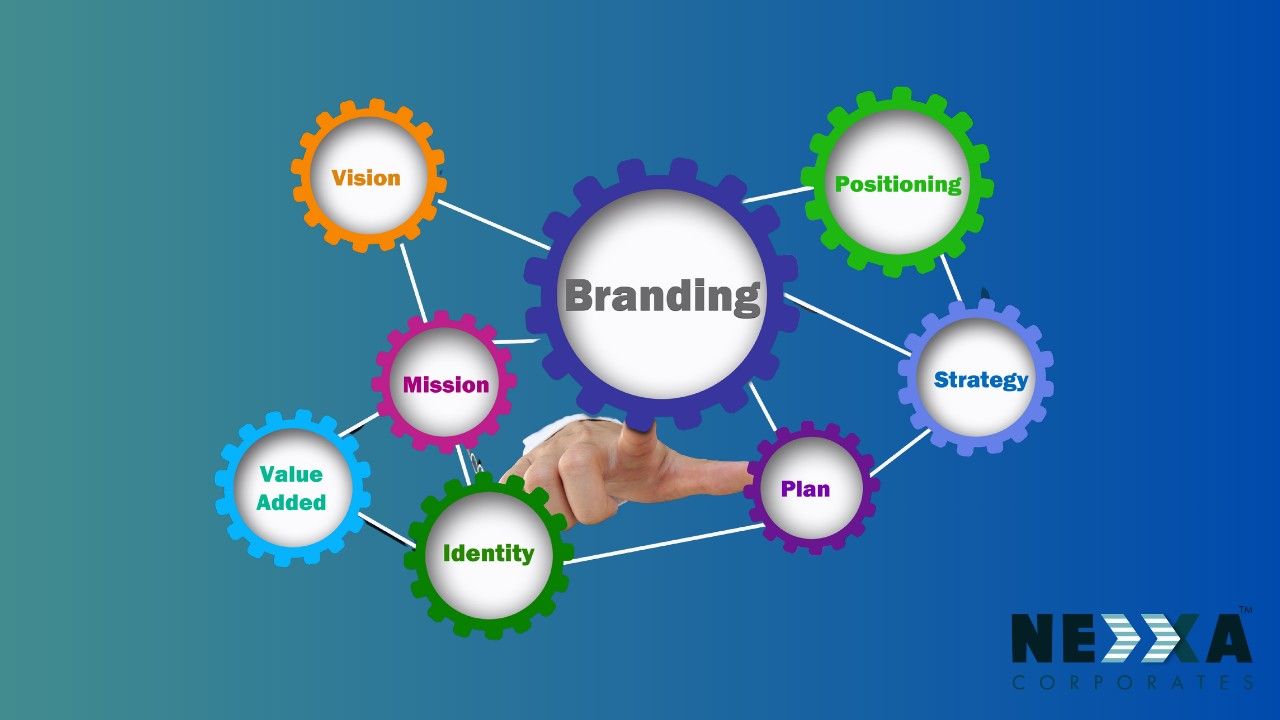
It is all about creating a perception for a business which includes feelings, thoughts, beliefs, and emotions that customers develop towards a business because of their encounters and interactions with their products, services, and experiences, which is so much more than just a logo, tagline, or colors.
Branding is about:
- Brand name and positioning
- Logo and visual identity
- Brand voice and tone
- Mission and core values
- Customer experience
- Reputation and public perception
The beauty of effective and strong branding is that you will be able to develop and cultivate emotions and affection, trust and faith, and loyalty to your brand. Because even your customers feel all of these deep emotions, they will repeatedly choose to do business with you, even though your competitors offer the same services and charge the same prices.
To put it simply, your brand is about the trust and identity that you will give to your customers before any conversation is started about making a sale.
Branding In Business
Branding in business is not just a logo or colours. Branding is how people feel about a business name, its services, or how customers feel about a company’s name when they hear it or when they come into contact with it.
To better understand this concept, you can explore the difference between brand and company.
The importance of branding lies in building Branding builds trust, value, and professionalism long before a customer speaks to someone. Customers love working with companies that are trusted and recognised.
Important Features of Branding
Branding in business builds an emotional connection that increases customers long term business growth. It also helps a business to create a unique identity.
The main features in Branding include:
- Recognition of the business name
- Logo and images
- Voice and communication style of the brand
- Mission and values
- Experience of customers
- Connection on an emotional level
The importance of Branding should be looked at like an investment. In the long run, it will have an unnoticeable impact on the consumer’s choice.
Illustration
Think about two companies offering identical services for the exact same price. Customers will most likely go to the company they recognize. Such is the impact of branding in business.
What is Marketing?
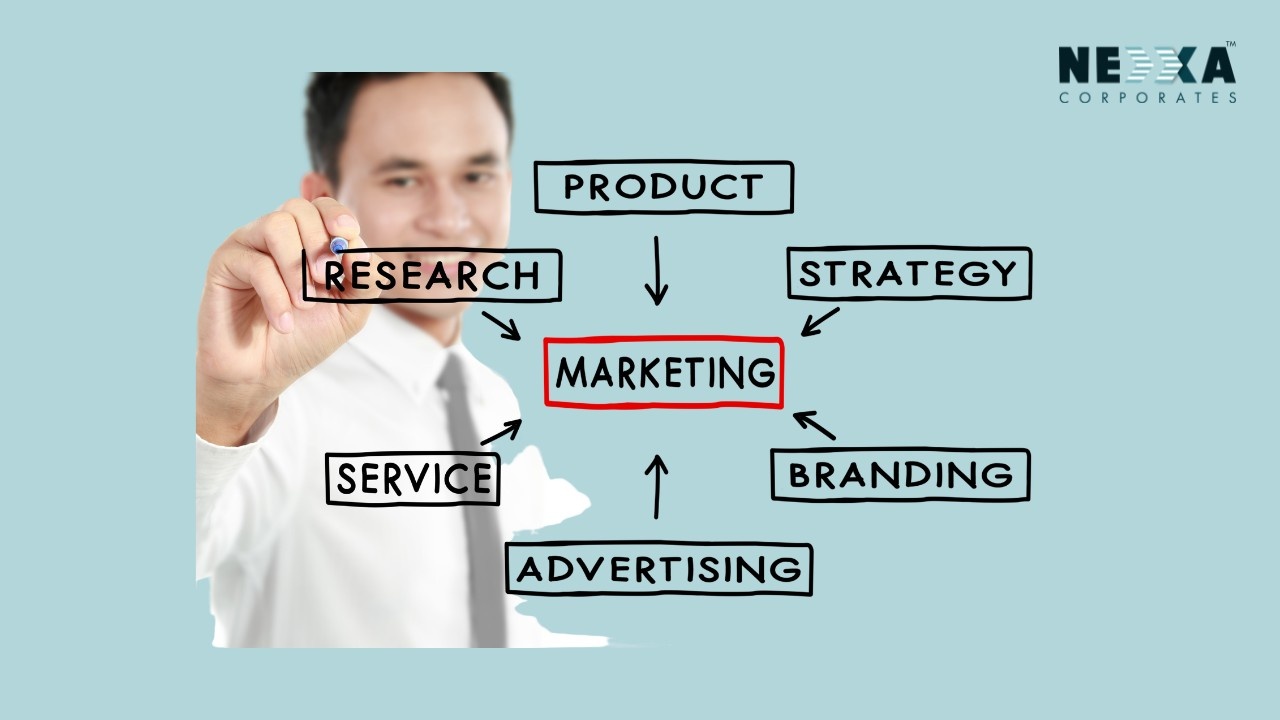
Marketing in business is about creating visibility around your product or service and the activities that get the consumer to spend and buy. Implementing best practices that will improve your digital marketing strategy can help businesses increase reach, engagement, and conversions. Marketing incorporates communication, visibility, and the creation (and capture) of leads, and the measurability of the entire process.
Marketing is about:
“How do we attract customers and turn interest into purchases?”
Marketing Initiatives:
- Search Engine Optimisation (SEO)
- Pay- Per- Click (PPC)
- Social Media Marketing
- Content Marketing
- Email Marketing
- Lead Generation
Marketing for business helps identify gaps in strategy, improve campaign effectiveness, and increase ROI. This is how marketing generates traffic, inquiries and conversions. Implementing the right strategies to increase website traffic helps businesses generate more qualified leads and opportunities. Marketing is about creating a response.
Marketing in Business
Marketing in business consists of the techniques used to promote services or products to entice buyers and to make sales. The focus is on the visibility, the promotion or the communication, and lastly the measurable results.
Immediate results that are generated by marketing services in business include traffic, leads, calls, sales, and closed deals or conversions. Implementing effective lead generation strategies helps businesses attract qualified prospects and turn them into customers.
Why should buyers purchase at this very moment?
Marketing is the answer to this question
Why should buyers buy from you in the first place?
Branding is the answer to this question:
This highlights the clear difference between branding and marketing.
Marketing vs Branding — Fundamental Principle
The confusion between branding vs marketing arises mainly because both deal with business growth. Both are important but distinct.
- Branding establishes trust.
- Marketing prompts behaviour.
- Branding makes the company known.
- Marketing creates awareness.
- Branding affects the choice.
- Marketing affects the focus.
- Without branding, marketing is costly.
- Without marketing, branding is oblivious.
Understanding this difference between branding and marketing helps businesses to grow.
Marketing and Branding: The main difference
1. Definition
- Branding in business primarily focuses on establishing brand identity and recognition.
- Marketing in business focuses on the selling of goods and services.
2. Objectives
- Building trust and loyalty is the objective of branding.
- Generating leads and sales is the objective of marketing.
3. Duration
- Branding is long-term.
- Marketing is tactical and short-term.
4. Orientation
- Branding creates an emotional bond and connection.
- Marketing is about action and response.
5. Approach
- Branding is a positioning strategy.
- Marketing is a promotional strategy.
6. Impact
- Branding creates loyal customers
- Marketing creates new customers.
7. Evaluation
- Branding is evaluated through recognition and reputation.
- Marketing evaluates through ROI and conversions.
Quick Comparison Table
| Branding | Marketing |
| Build trust | Generate leads |
| Long-term impact | Short-term campaigns |
| Emotional Warmth | Promotional Communication |
| Identity creation | Sales generation |
| Customer loyalty | Customer acquisition |
This comparison clearly explains the difference between branding and marketing.
Real Business Example of Marketing vs Branding
Consider two competing businesses online advertising.
Business A places ads, but no identity or reviews.
Business B places ads, but has design, message, and reviews.
Most customers reach out to Business B because customers choose trust over price. Marketing in business makes people, but branding in business makes people into customers.
Consistency in Branding While Marketing in Business
Increased Rate of Conversion
An increase in conversion rates occurs as the number of customers contacting the business increases. If a brand is reliable and consistent, a customer feels comfortable engaging with the brand. The customer is more likely to complete the inquiry forms, call, and buy with little to no hesitation. Overall, the customer will become more familiar with the brand. This will decrease doubt and increase reassurance. The customer will become more comfortable and require less convincing. The customer is also likely to engage more, respond more, and convert more because of the trust. Strong long-term marketing and strong branding will increase the number of visitors to the website. This turns visitors into customers.
Decrease in the Costs of Advertising
Businesses that have become a household name have a higher rate of engagement with a lower cost per click(CPC).
Ads for brands that people know are more clicked than those for brands that people don’t know. This is because people are more likely to click on ads for brands that they trust. Advertising for a brand that people trust becomes cheaper because people are drawn to click on more ads for this brand. More advertising becomes cheaper for everyone personally because advertising becomes cheaper for everyone. Trust increases marketing effectiveness.
Quicker Decision Making
When a brand is well known among customers, the period of decision-making is greatly reduced.
Established brands do not have to face the same amount of questioning and research as upstart brands because their target market has brand recognition. Consumers develop familiarity, which leads to heightened confidence and quicker purchasing decisions. Their evaluation of competitors will be minimal as they will choose established brands. This confidence leads to reduced hesitation and shortened sales cycles. Established brands will have quicker conversions and increased sales efficiency as a result.
Superior Performance in Search Engine Optimization
A brand that is frequently searched by customers will rank higher in search engines. Strong branding also supports SEO for business by increasing brand searches, website visits, and online trust.
When customers look for a particular business name, it means the name is trustworthy and popular, so search engines get positive feedback on the name and search engines prioritize the name for business searches. Websites that branded search engines get higher click-through rates and prove greater customer interest. Long-time customers who frequently visit a site increase the search engine’s perceived authority and relevance in the site. Good strong branding encourages online references that improve search engine optimization and visibility, and therefore better sustain business traffic increase as visibility continues.
Retention of Customers
The primary role of marketing in business is to acquire customers, and the primary role of branding in business is to retain customers.
Good branding makes customers feel something, which makes them trust the brand, which makes them come back. This feeling turns them into loyal customers. Customers who keep coming back buy more and tell their friends and family about the brand. This saves the brand money since they don’t have to advertise as much and don’t have to spend money acquiring customers. For the brand to get more loyal and repeat customers, they have to have great branding. Good branding also saves the company money.
common Mistakes Businesses Make

Believing logos are the same as branding
Branding means so much more than just designing logos, or visual aspects. It is reputation, it is experience. It is the perception of services, the quality of the services, how customers are spoken to, and overall interaction. Many businesses that focus on just the logos and visual aspects are leaving out the emotional side and the trust factor. Good and strong brands focus on the emotional perception rather than just the visual aspects.
Advertising Without Positioning
Ignore the greater brand message, and the ads are simply confusing. An unclear value proposition or an ineffective unique selling proposition (USP), mean the marketing goes to waste. Differentiation explains why a customer would choose one firm over another. When ads lack differentiation, they are an expense.
Communication Inconsistently
Trust can be lost instantly due to a shift in tone or a change in messaging.
When social media messages differ from the website or ads, it creates mixed messages. How can a business be trusted when they place so little effort in making their messages aligned? Using the same tone, voice, and visuals creates brand familiarity and identity. Over time, consistency strengthens credibility and recognition.
Believing branding works instantly
Branding is among the longest and most involved processes that a business undertakes. Many businesses don’t realize that successful branding can’t happen overnight. Most give up way too early. What would be considered a brand failure is often the business’s inability to realize the effort and time needed to develop consumer trust and loyalty. What the business feels is a waste often is just the first of many steps needed to create lasting brand loyalty. Positive consumer interactions, while they may seem unproductive in the moment, will ultimately lead to successful branding.
When Should a Business Focus on Marketing vs Branding?
New Business
Because trust hasn’t been built yet, new businesses might spend a lot of money on general advertising; however, a better approach is to first develop the brand identity, the brand purpose, and the brand credibility.
If customers cannot identify the brand or feel they cannot trust the brand. They become less responsive to general advertising. When the foundation is built properly before running ads, it guarantees better performance.
Growing Business
Branding and Marketing should come together for better scaling.
During this phase, businesses need consistent visibility and a consistent identity. Branding ensures customers. But marketing draws new customers. For consistent and competitive growth, steady integration of both strategies is essential.
Established Business
More Positive AND Repeat Customers Come From Better Branding.
A Positive Recommendation From A Repeat Customer Is Very Valuable. Established companies further solidify their reputations. Loyal customers strengthen brand loyalty and help sustain long-term market dominance by boosting their positive recommendations to other potential customers.
Integrating Branding with Marketing Strategy
- Identify target market and value proposition
- Build coherent brand presence
- Initiate marketing avenues
- Metrics and iterative improvement
Future Trend: Increasing Importance of Branding in business
Consumers investigate companies before purchase. Trust, feedback, and recognition have more weight than ads. Brands that cultivate and promote steady development.
Conclusion
The difference between odds and events is clear: marketing in business pulls customers in, and branding in business keeps customers. Trust and loyalty are the result of branding, while marketing in business is focused on visibility. Shortsighted sales are the focus of marketing. A combination of both strategies, though, advocates for longer-term growth of the business.
Instead of chasing the illusion of exclusivity, good companies use branding and marketing strategies to become more trusted, more authoritative, and more profitably consistent.
FAQ
1. Is there any difference between branding and marketing?
Yes, while marketing develops and implements sales strategies, branding builds trust and recognition and develops the intangible value of loyalty toward the brand.
2. Which comes first branding or marketing?
Branding should come first, because customers need to be able to trust a company before they will respond to any marketing tactics.
3. How does branding assist small businesses?
It enables small businesses to construct a competitive position and gain trust as well as recognition.
4. Does branding lower advertising expenses?
Yes, it does. As branding improves engagement, advertising costs eventually reduce.
5. How long does branding start producing results?
Branding takes time. Businesses experience results once they maintain consistent communication and experience with their customers.