
7 Data-Driven Lead Generation Strategies for Attracting High-Quality Leads

Lead generation is one of the most important parts of growing any business. Without leads, there are no sales. But today, getting random leads is not enough. Businesses need high-quality leads—people who are genuinely interested and ready to buy.
Data-driven lead generation strategies help businesses understand what works and what doesn’t. By using data, businesses can attract the right audience, reduce waste, and improve results. In this guide, you’ll learn simple and effective lead generation strategies that actually work.
What Is Lead Generation?
Lead generation means attracting people who are interested in your product or service and collecting their contact details, like phone number, email, or an enquiry form.
Difference Between Leads and Sales
A lead is someone who shows interest in your product or service by visiting your website, filling out a form, or contacting you. A sale happens only when that person decides to buy and makes a payment. Not all leads convert into customers, but every customer first starts as a lead.
Why Lead Quality Matters More Than Quantity
Getting 100 leads is useless if none of them convert.High-quality leads are people who:
- Need your service
- Have buying intent
- Are more likely to convert
That’s why smart lead generation strategies focus on quality, not just numbers.
Why Lead Generation Strategies Are Important for Business Growth
Good lead generation strategies help businesses grow in a steady and controlled way.
1. Consistent Flow of Potential Customers
With the right lead generation strategy, your business receives inquiries on a regular basis instead of depending on chance. A steady flow of potential customers helps you plan sales activities more confidently. It also reduces slow periods and keeps your sales pipeline active throughout the year. Consistency means your business stays visible and competitive in the market.
2. Lower Customer Acquisition Cost
Targeted lead generation focuses only on people who are genuinely interested in your product or service. This avoids spending money on audiences that are unlikely to convert. By reaching the right users at the right time, your marketing budget is used more efficiently. Over time, this significantly lowers the cost of acquiring each customer.
3. Better ROI on Marketing Spend
When your leads are relevant and well-qualified, conversion rates naturally improve. This means more sales from the same marketing budget. Instead of wasting money on broad campaigns, you get measurable results from focused efforts. Better ROI helps justify marketing spend and supports long-term growth decisions.
4. Scalable Business Growth
Strong lead generation systems are built to grow along with your business. As demand increases, campaigns can be scaled without losing quality. This allows you to expand into new locations, products, or services smoothly. A scalable system ensures steady growth without sudden drops in performance.
Types of Lead Generation Strategies
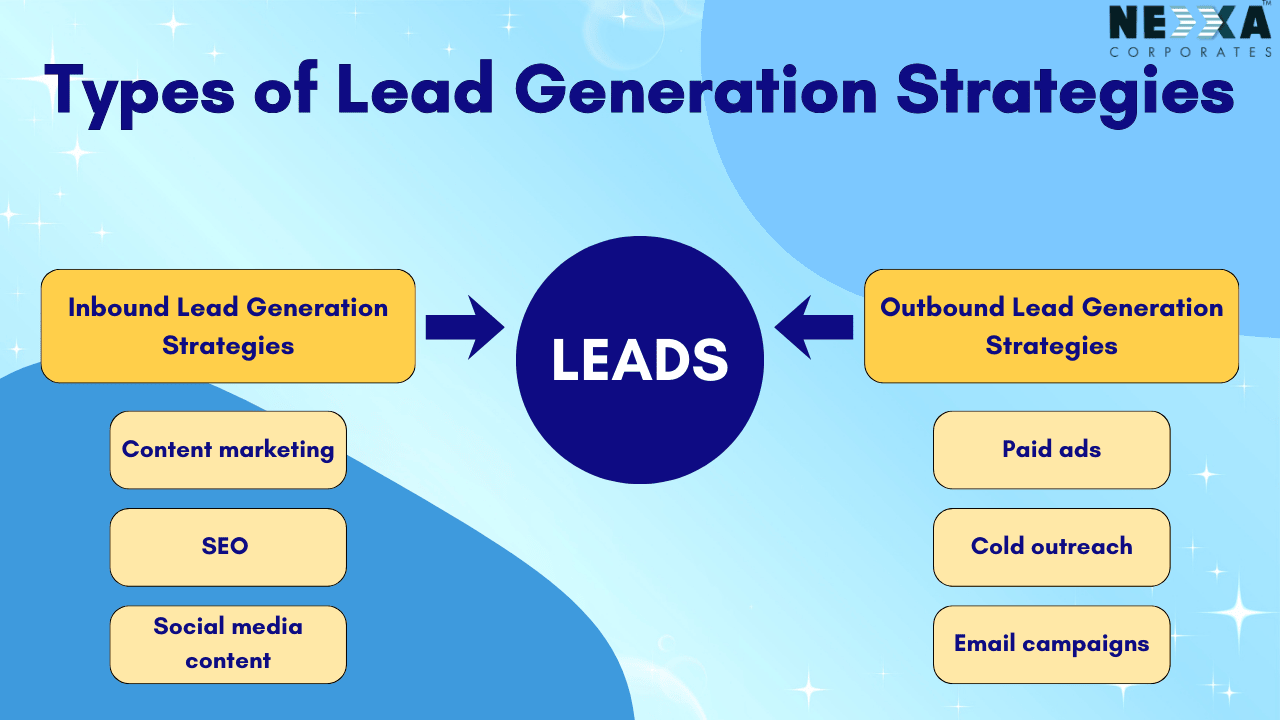
There are different types of lead generation strategies, depending on how you reach your audience.
Inbound Lead Generation Strategies
Inbound lead generation focuses on attracting people naturally.
This includes:
- Content marketing (blogs, guides)
- SEO and organic search traffic
- Social media content
People come to you because they are already interested.
Outbound Lead Generation Strategies
Outbound lead generation means reaching out to people directly.
This includes:
- Paid ads
- Cold outreach
- Email campaigns
These strategies bring faster results when done correctly.
Top Lead Generation Strategies That Actually Work
1. Content Marketing for Lead Generation
Content marketing helps attract people who are already looking for information related to your service. When you answer their common questions through blogs and guides, they start trusting your brand. Helpful content like case studies and checklists shows your expertise and solves real problems. Over time, this brings high-quality leads who are more likely to contact you.
This include:
- Blogs that answer common customer questions
- Free guides and ebooks
- Case studies showing real results
- Lead magnets like checklists and templates
Good content builds trust, improves brand value, and brings long-term leads.
2. SEO-Driven Lead Generation
SEO helps your website appear on Google when people search for products or services you offer. By targeting the right keywords, you attract users who already have buying intent. Local SEO helps nearby customers find your business easily. SEO may take time, but it delivers steady and cost-effective leads in the long run.
Effective SEO lead generation includes:
- Buyer-intent keywords
- Local SEO for nearby searches
- Well-optimized landing pages
- Regular content updates
SEO brings long-term visibility and consistent leads.
3. Google Ads & Paid Search Campaigns
Google Ads help your business show up instantly at the top of search results. These ads target people who are actively searching for your service, making them more likely to convert. Paid campaigns are ideal when you need quick leads or want to promote a specific service. With proper targeting, ads can deliver fast and measurable results.
Best for :
- High-intent traffic
- Quick lead generation
- Service-based businesses
- Time-sensitive offers
4. Social Media Lead Generation Strategies
Social media platforms help you connect with users and keep your brand visible. Lead ads make it easy for people to share their details without leaving the app. Regular posts, reels, and stories help build trust and engagement. Social media works well for both attracting new leads and nurturing existing ones.
Effective platforms include:
- Facebook and Instagram lead ads
- LinkedIn lead forms for B2B
- Organic posts, reels, and stories
Social media supports brand awareness and lead generation together.
5. Email Marketing & Lead Nurturing
Email marketing helps turn interested users into paying customers. Automated follow-ups ensure no lead is missed. Drip campaigns guide leads step by step until they are ready to take action. Regular emails keep your brand fresh in their mind and build long-term relationships.
This includes:
- Automated follow-up emails
- Drip email campaigns
- Regular updates and offers
- Personalized messages
It helps build trust and improves conversion rates.
6. Landing Pages & Conversion Optimization
Landing pages are designed to convert visitors into leads. A clear message and simple form make it easy for users to take action. Clean design keeps visitors focused without distractions. Testing small changes like headlines or buttons can greatly improve results.
Good landing pages have:
- Clear call-to-action
- Simple and short forms
- Clean and focused design
- A/B testing for improvements
Small changes can lead to big improvements in conversions.
7. Lead Generation Through Video Marketing
Videos help people understand your service faster and more clearly. They increase engagement and keep users interested longer. Short videos work well on social media, while longer videos explain details better. Video content builds trust and helps people feel confident before contacting you.
This includes:
- YouTube videos
- Short reels and shorts
- Explainer videos
- Webinars and demos
Videos make your message clear and improve lead quality.
Online vs Offline Lead Generation Strategies
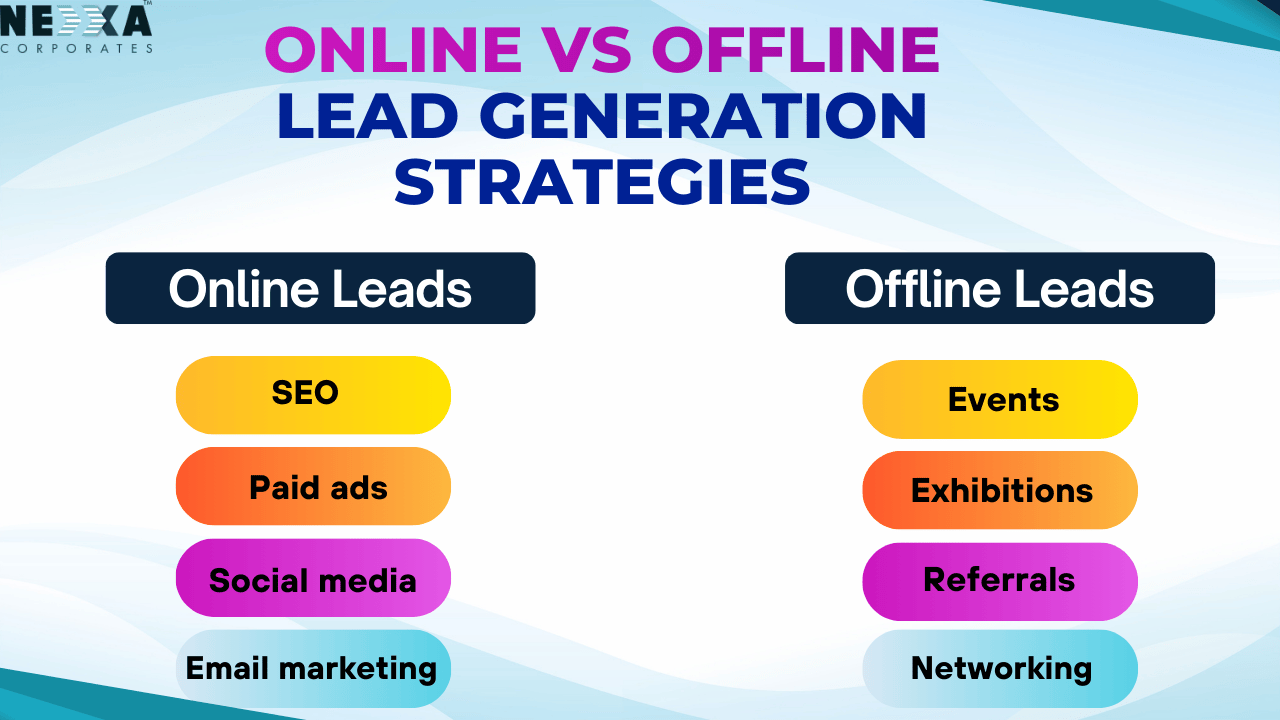
1. Online Lead Generation
Online strategies include:
- SEO
- Paid ads
- Social media
- Email marketing
2. Offline Lead Generation
Offline strategies include:
- Events
- exhibitions
- Referrals
- Networking
When to Use Each
Lead Generation Strategies for Different Businesses
Lead Generation Strategies for Small Businesses
Small businesses need lead generation methods that are affordable and easy to manage. Instead of spending big budgets, they should focus on reaching nearby customers who are already searching for their services. Local visibility and trust matter more than reach. Simple digital tools can bring steady leads when used correctly.
Small businesses should focus on:
- Budget-friendly marketing strategies
- Local SEO to attract nearby customers
- Social media posts and local ads
- Google Business Profile optimization
These methods help small businesses get consistent leads without high costs.
Lead Generation Strategies for B2B Companies
B2B lead generation focuses on building relationships rather than quick sales. Decision-makers need clear information before contacting a company. Educational content and direct outreach work best in B2B marketing, supported by an effective linkedin marketing strategy for b2b. Trust and value play a major role in converting leads.
B2B lead generation works best with:
- LinkedIn marketing to reach professionals
- Email outreach to connect with decision-makers
- Content marketing that explains solutions
- Case studies showing real business results
These methods help small businesses get consistent leads without high costs.
Lead Generation Strategies for Service-Based Businesses
Service-based businesses depend on trust and visibility. People usually search for services when they need them urgently. Being visible on Google and showing real customer feedback helps build confidence. Clear landing pages make it easy for users to contact you.
Service businesses should use:
- Local SEO to appear in nearby searches
- Google Ads for instant visibility
- Customer testimonials to build trust
- Strong landing pages with clear contact options
These methods help small businesses get consistent leads without high costs.
Common Mistakes in Lead Generation
Many businesses fail due to these mistakes:
Focusing Only on Traffic, Not Conversions
Getting visitors to your website is not enough if they don’t take action. Without clear forms, calls, or offers, traffic does not turn into leads. The goal should be quality leads, not just high visitor numbers.
No Follow-Up System for Leads
Many leads need reminders before they decide. Without proper follow-up through calls or emails, interested users may forget your business. A simple follow-up system helps turn inquiries into customers.
Poor Landing Page Experience
If a landing page is slow, confusing, or cluttered, visitors leave quickly. Unclear messages and complicated forms reduce trust. A clean and simple page improves user experience and conversions.
Ignoring Retargeting Ads
Not all visitors convert on their first visit. Retargeting ads help bring back users who already showed interest. Ignoring this means losing warm leads who could have converted later.
Avoiding these improves lead quality.
Tools That Support Effective Lead Generation Strategies
Some tools make lead generation easier:
1. Google Ads
Google Ads is one of the most powerful tools for lead generation. It helps your business appear on Google when people search for products or services like yours. Since users are already searching with intent, Google Ads brings high-quality leads. You can control your budget, target specific locations, and track how many leads you receive.
2. Meta Ads Manager
Meta Ads Manager is used to run ads on Facebook and Instagram. It helps businesses reach the right audience based on age, location, interests, and behavior. With lead form ads, users can submit their details without leaving the platform. This makes Meta Ads a strong tool for fast and affordable lead generation.
3. CRM Tools Like HubSpot and Zoho
CRM tools help you manage and organize leads in one place. They store lead details, track conversations, and show where each lead is in the sales process. CRM tools ensure that no lead is missed and follow-ups happen on time. This improves conversion rates and lead quality.
4. Email Automation Tools
Email automation tools help businesses send emails automatically to leads. These tools are useful for follow-ups, reminders, and lead nurturing. Instead of sending emails manually, businesses can create automated email sequences that build trust and keep leads engaged until they are ready to buy.
5. Landing Page Builders
Landing page builders help create pages that are designed to convert visitors into leads. These pages usually include a clear message, a simple form, and a strong call-to-action. A good landing page improves lead generation by turning traffic into actual enquiries.
These tools help track, manage, and improve leads.
How to Choose the Right Lead Generation Strategy
There is no one-size-fits-all strategy.
1. Based on Business Type
Every business is different, so lead generation strategies should match the business type. A local service business may benefit more from local SEO and Google Business Profile. B2B companies often need LinkedIn and email outreach. Online businesses may focus more on content and paid ads. Choosing the right strategy helps attract better-quality leads.
2. Budget Considerations
Your lead generation plan should fit your marketing budget. Small businesses can start with low-cost options like SEO, content, and social media. Paid ads should be used carefully to avoid unnecessary spending. A balanced approach helps you get steady leads without overspending.
3. Sales Cycle Length
Some businesses take longer to close sales because customers need time to decide. In such cases, regular follow-ups are very important. Email marketing and reminders help keep your brand visible. Lead nurturing builds trust and increases the chances of conversion over time.
4. Target Audience Behavior
Understanding where your audience spends time online is key to success. Some users are active on Google search, while others spend more time on social media. Choosing the right platforms helps you reach people at the right time. This improves engagement and lead quality.
Conclusion
Lead generation is not about collecting a large number of leads, but about attracting people who truly need your product or service. The right leads save time, reduce costs, and improve overall conversion rates. As digital marketing has evolved—from basic websites and email campaigns to advanced SEO, social media, automation, and data analytics—businesses now have better tools to reach the right audience at the right time. When companies use data-driven lead generation strategies, they can clearly understand what works and make smarter marketing decisions.
A strong lead generation system combines SEO for long-term visibility, content marketing to build trust, paid ads for quick results, and consistent follow-ups to convert interested users. This approach reflects the evolution of digital marketing, where multiple channels work together instead of relying on a single tactic. Each channel plays an important role in guiding potential customers through their decision-making journey.
FAQ
1. What are the most effective lead generation strategies?
SEO, content marketing, paid ads, email marketing, and social media are among the most effective lead generation strategies.
2. Which lead generation strategies work best for small businesses?
Local SEO, Google Ads, social media marketing, and referrals work best for small businesses.
3. How long does lead generation take to show results?
Paid ads can show results quickly, while SEO and content marketing take a few months but last longer.
4. Are Facebook ads effective for real estate leads?
Yes, Facebook and Instagram ads work well because they allow targeted audience selection based on location, interest, and behavior — perfect for real estate buyers and sellers.
5. Is paid advertising better than organic lead generation?
Paid advertising gives fast results, while organic lead generation builds long-term trust. Both work best together.