Mastering the 7 Cs of Digital Marketing: A Powerful Framework for Success

Mastering the 7 Cs of Digital Marketing: A Powerful Framework for Success

Mastering the 7 Cs of Digital Marketing: A Powerful Framework for Success

7 Cs of digital marketing

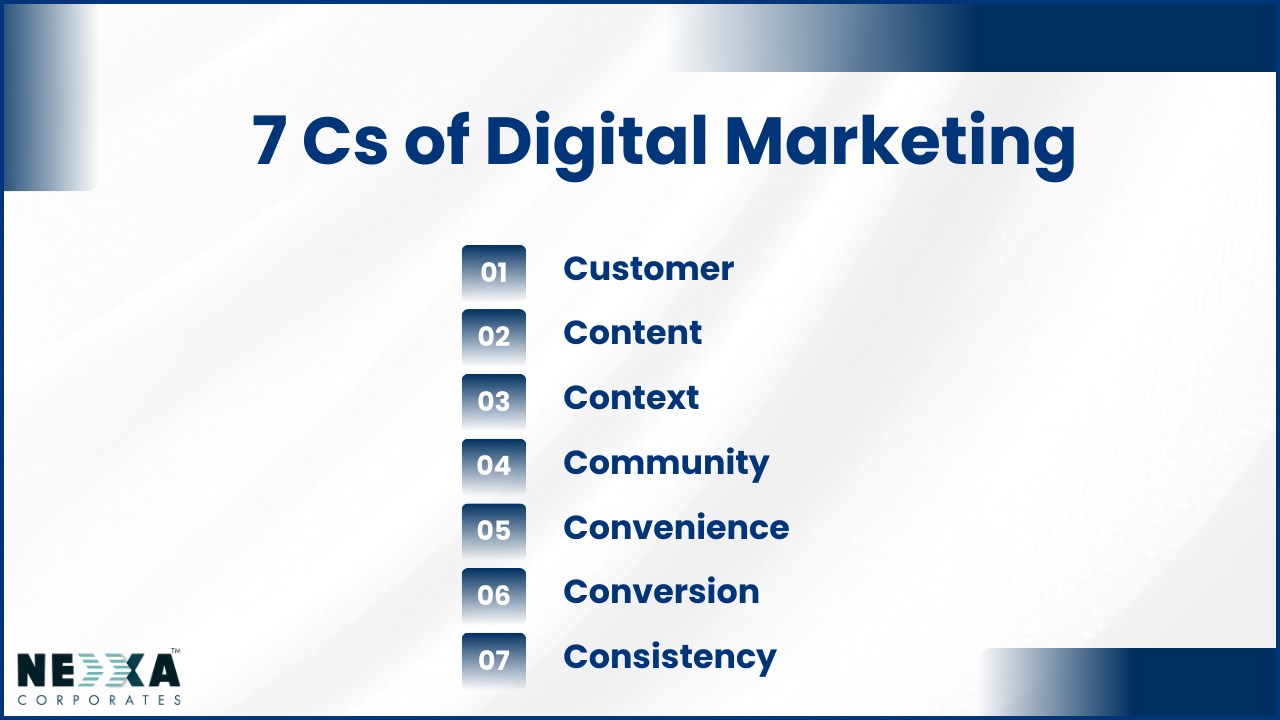
The evolution of digital marketing over the past decade, from simple online promotions to highly structured, as well as data-driven strategies. The 7 Cs of Digital Marketing provide a customer-focused framework- which means the priorities of the customer, or simply the ‘customer’, are put first, which helps businesses align their marketing activities with real user needs and behaviors. With these informations, business need a clear framework to plan and execute, as well as optimize their digital marketing efforts effectively. This is where structured marketing models play a crucial role. The 7 Cs are Customer, Community, Content, Context, Convenience, Conversion, and Consistency.
Instead of focusing only on products, this approach not only emphasizes value creation and engagement but also gives clarity and long-term relationships. For modern businesses competing in crowded digital spaces, the 7 Cs of Digital Marketing offer a practical roadmap. By understanding where to apply this framework, businesses can create marketing strategies that are not only effective but also with measurable results to changing digital trends.

Overview of the 7 Cs of Digital Marketing

The 7 Cs of Digital Marketing consist of seven key components that work together to build a strong and customer-centric digital strategy. In order to understand these concepts first needs to know- what is 7C and how it is important in digital marketing.

What Is 7C in Digital Marketing? A Simple Explanation

Which course is best for fuyure

7 C is a framework developed to assist companies for customer-first digital marketing campaigns. It is based on understanding users requirements, providing relevant experiences, and building trust through meaningful interaction. The genesis of the 7 C framework is rooted in the mindset of marketing from a model that was primarily focused on products, centered around customers. Traditional marketing emphasized features of the product and mass marketing, but digital marketing demands interaction, personalization, and continuous improvement.
In contrast to traditional models, the 7 Cs of Digital Marketing place a greater emphasis on relationships than single-time transactions. The framework encourages companies to make use of data as well as technology and insight to design experiences that resonate with consumers throughout the buyer’s journey.

Understanding the Cs of Marketing in the Digital Era

The Cs of marketing are becoming more important in the digital era since customers now have control over what, when, and where they communicate with brands. With the availability of reviews and other information through a variety of options, customers today expect relevancy to their needs. A customer-centric approach is focused on the priorities of the customer- which means helping businesses align their marketing activities based on user needs and behaviors. This supports the core functions of marketing, including customer needs, communication, and conversion. On the other hand, the product-centric approach is focused primarily on selling products. Digital marketing emerges when companies know these differences, rather than sending out generic messages. 
Another thing to consider is that data, including personalization, plays an important role in this transformation. These data helps in giving an AI powered marketing. This makes the 7 Cs of Digital Marketing very important for businesses that want to stay competitive in today’s digital world.

The 7 Cs of Digital Marketing

Which course is best for fuyure

1. Customer – The Core of the 7 Cs of Digital Marketing

The customer is the foundation of the 7 Cs of Digital Marketing. Only if we can complete the needs of a customer, a business becomes successful. In short, every successful digital strategy begins with a deep understanding of the target audience, or simply the customers. This includes their preferences, online behavior- we may able to understand their interactions in internet, and finally their decision-making process.
By analyzing customer data such as demographics (based on the statistics), the search intent, engagement patterns (how customers interact), and feedback, businesses can create more relevant campaigns. Customer-centric approach improve satisfaction- focusing on clear communication and meeting needs proactively, increase loyalty- focusing on good customer service, as well as, drive higher conversion rates. When brands truly understand their customers, every other element of the 7 Cs becomes more effective.

2. Content – Creating Value Driven Digital Experiences

Content is among the most effective elements of the 7 Cs of marketing. High-quality content educates- By providing valuable information, informs- updates customers with the latest trends, entertains- with content like videos and others for experience, and guides customers through the buying process. Videos, blog posts on social media, email, and landing pages all help build credibility and trust.
Value-driven content is focused on solving problems for users rather than pushing products with ad-hoc zeal. If content is helpful, relevant, interesting, and informative, it naturally attracts and keeps the attention of people. Good content also helps SEO, social sharing, in addition to lead generation, which makes it an essential element of digital success. 

3. Context – Delivering the Right Message at the Right Time

Context refers to delivering relevant messages to the customers. This is done by analyzing –search intent, behavior, location, and timing. To know your audience and make the right purchase as well as other decisions, we should provide a relevant context. Inorder to ensure the customer needs are satisfied, the content must match with their needs. This is done by features like- Personalization where the products, services, or content to individual users based on their data, preferences, remarketing, behavior-based targeting, etc help ensure that users receive content that matches their current needs. Whether it’s a personalized email, a location-based ad, or a tailored website experience, context enhances the effectiveness of digital campaigns and improves user satisfaction

4. Community – Building Trust and Brand Loyalty

Community plays an essential role in the 7 Cs of Digital Marketing by fostering long-term relationships. Forums, social media platforms as well as online groups enable brands to interact directly with their customers.
The creation of a community promotes the exchange of information, feedback and also advocacy. If the customers feel respected and heard, it is more likely be loyal to the brand and suggest it to friends and family. A strong community boosts the brand’s loyalty and improves its online reputation of a brand.

5. Convenience – Enhancing the User Experience Across all Platforms

Convenience focuses on making it easy for users to interact with your business. This includes website usability- how easily websites can be used, mobile responsiveness- helps in automatically adjusting website design to fit into any device, whether it is desktop or mobile, etc, fast loading speeds, and easy to move between different websites or apps, in other words,simple navigation.
In today’s digital era, users expect seamless experiences across devices and platforms. A convenient user experience the same which increases the chances of conversion. Businesses that prioritize convenience gain a competitive advantage in crowded markets.

6. Conversion – Turning Visitors into Customers

Conversion is one of the most important outcomes of the 7 Cs of Digital Marketing. It is the process of guiding users to desired actions like taking a form and making a purchase or even requesting consult.
Optimizing the conversion funnels- the way it takes a customer to visit your website to ultimately resulting in buying the product from the same website, calls-to-action (CTAs), landing pages, and user journeys helps to improve performance. The marketing strategies that are conversion-focused ensure measurable business results rather than just traffic or engagement.

7. Consistency – Maintaining Brand Voice and Messaging

Consistency ensures that the message of a brand (text, tone, or visual) remains uniform across all digital channels. From websites and other social media to emails and ads, consistency helps in building recognition and trust.
We know that if the messages are inconsistent, it can create confusion in users, which leads to weakening of the brand credibility. Therefore, maintaining consistency across platforms gives a strong brand identity, which in turn gives long-term marketing success.

Why the 7 Cs of Digital Marketing Are Important for Businesses

The 7 Cs of Digital Marketing provide numerous benefits to businesses that are of any size. They increase the visibility of brands through constant messaging and relevant content across all channels. By focusing on the needs of customers, they can improve engagement and strengthen connections.
The digital marketing framework also facilitates lead generation as well as retention of customers. The ability to create personalized experiences and efficient interactions improve conversion rates as well as the likelihood of repeat business. Over time, the 7 Cs will help businesses to sustain growth by meeting the expectations of customers along with the marketing input.

How to Apply the 7 Cs of Digital Marketing to Your Strategy

Which course is best for fuyure

Implementing the 7 Cs in Digital Marketing starts with having knowledge of your company’s goals and the target audience you wish to connect with. Before you begin planning any campaign, determine what you are trying to accomplish- whether you want to increase website traffic or improve sales. Also, know your audience- what they want or are looking for online.
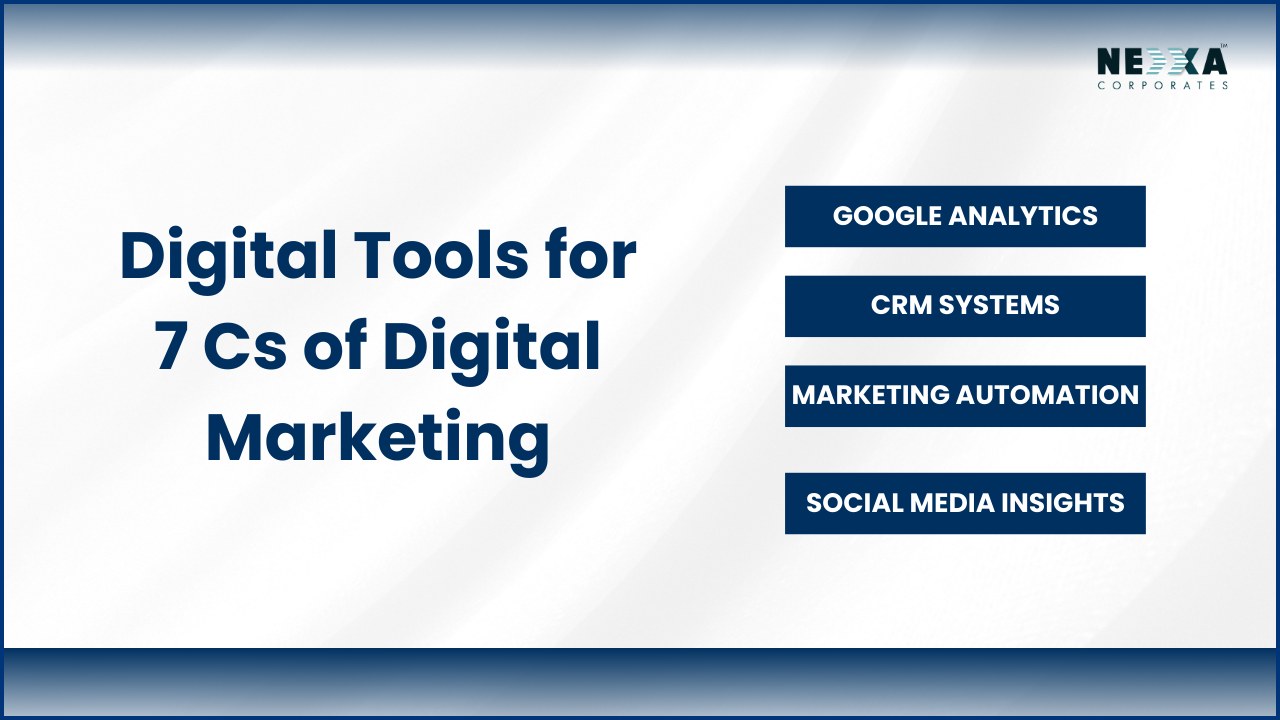
Next, you must look at customer data and trace the buyer’s journey. This will help you discern how people make the transition from looking for the product or service to making a decision. Based on this information, it is possible to create content that matches the user’s needs and is able to deliver through the right channels. There are certain digital tools available to handle each of the seven Cs efficiently. These are-

  • Google Analytics
  • CRM Systems
  • Marketing Automation
  • Social Media Insights

Customer behavior, trends and platforms evolve frequently therefore your approach must be adaptable. The 7 Cs that you align with your business objectives helps transform digital marketing into a single activity into a clear, organized plan that focuses on a better customer experiences and tangible outcomes.

Conclusion

The 7 Cs of Digital Marketing give businesses an easy and efficient approach to plan their digital marketing strategies. In the digital age that customers utilize many websites before they make a choice, having a logical method helps to avoid confusion and wasting time. This framework helps businesses manage their marketing efforts and concentrate on delivering more enjoyable user experiences on the internet.
Utilizing this method helps brands to communicate more effectively and be consistent across websites. Instead of experimenting with random strategies business can adopt a plan that will result in greater engagement and smoother customer journeys. Over the time, this can lead to stronger relationships with customers and better outcomes.
The framework can also help businesses adjust to changing consumer habits and trends in digital world. As tools and platforms evolve an organized structure helps to modify strategies without losing focus. Overall, the 7 Cs of digital marketing offer a simple and effective way for a successful business.

FAQ

1. Are the 7 Cs only for online businesses?

No, offline businesses can also use them for digital promotion.

2. What is 7C in digital marketing?

7C is a marketing framework that explains key elements needed for successful online marketing.

3. How are the 7 Cs of marketing used in digital campaigns?

They guide in planning and the execution as well as optimization across all digital channels.

4. Are the 7 Cs of marketing suitable for all businesses?

Yes, they work well for businesses of all sizes.

5. What is the most important C in the 7 Cs of Digital Marketing?

The customer is the most important, as all strategies revolve around user needs.

What Is the Main Goal of Generative AI? How It Works and Why It Matters

What Is the Main Goal of Generative AI? How It Works and Why It Matters

What Is the Main Goal of Generative AI? How It Works and Why It Matters

What Is the Main Goal of Generative AI

What is generative AI? Generative AI is a type of artificial intelligence designed to help people create new content faster and more efficiently. As digital work continues to grow, relying only on manual creation becomes time-consuming and difficult to scale. What is the main goal of generative AI? The answer is simple: the main goal of generative AI is to generate original content by learning patterns from existing data. By understanding how text, images, code, and audio are structured, generative AI systems can produce new outputs that support creativity, reduce effort, and improve productivity while still requiring human guidance.

Generative AI is a creation-based system, as opposed to traditional AI systems, which are primarily concerned with the analysis or classification of information. This is not to say that the primary goal of generative AI models is to supersede human cognition, but to complement it by eliminating the need to repeat actions and simplifying the process of testing out ideas in a variety of sectors, such as education, business, design, and software development.

What Is Generative AI?

Which course is best for fuyure

Generative AI is a sub-category of artificial intelligence that produces novel and original work by following trends that are observed in huge volumes of existing data. As compared to the traditional AI systems which engage themselves in information analysis, trend identification, or prediction, generative AI generates outputs like text, images, audio, video, and computer code, in response to user input. Simply, the main goal of generative AI is not classification but creation.

The primary goal of generative AI models is to create content that is very similar to the one made by humans and has the logical structure, context, and relevance. These models function on the premise that they examine how data are organized and thereafter apply that knowledge to generate new outputs rather than duplicating content. Generative AI is not able to think, reason, or perceive information in the same way that humans do, but instead it functions as a prediction of probable results based on acquired patterns. The future of AI lies in assisting people with smarter decision making, faster problem solving, and more efficient everyday work across industries.

Such capability renders generative AI applicable to education, business, marketing strategies, design, and software development where speed, scalability, and creative assistance are necessary but human supervision is also required to ensure high accuracy and responsible usage.

What Is the Main Goal of Generative AI?

What is the main goal of generative AI?  The main goal of generative AI is to produce original and content-rich works using learning models of patterns based on the available data and applying the acquired skills to generate meaningful content in the form of text, images, audio, or code. Instead of duplicating information, the generative systems produce new outputs that are based on the structure, context and style of the training data.

Fundamentally, the primary goal of generative AI models is to create content. These are the models which are aimed at facilitating human creativity by generating drafts, ideas and variations which can be further refined. This capability aids in lessening the redundancy of work and enhancing efficiency as well as creative work in industrial fields becomes more effective.

In order to do this, generative AI systems are trained in large datasets where they gain patterns, relationships and probabilities of the data. The system can forecast and create new combinations of words, images, or code elements by learning the general occurrence of word, image, or code elements and how the same elements tend to coexist and be relevant. This pattern-based learning explains what is the main goal of generative AI, not intelligence or decision-making, but the controlled creation of new content under human guidance.

How Generative AI Achieves Its Goal

Generative AI reaches its goal with the help of a systematic learning process that enables systems to generate new material correctly and consistently. Models are initially trained on large datasets which contain examples of text, images, audio or code to support the main goal of generative AI. These datasets assist the system to comprehend the structure of information, flow of language, and also the relationship of elements with each other under various situations.

The pattern recognition is incorporated in the system during the process of training. It does not memorize information, rather it learns the recurring relationships, sequences and probabilities in the data. This style of learning patterns allows the  primary goal of generative AI models, to produce new work that is not only sensible, applicable, but also stylistically akin to human work without necessarily mirroring it.

Generative AI relies on prompt-based generation to produce results after being trained on data. A prompt is a clear instruction or input given by the user that guides the system on what to generate. The model combines learned patterns with user prompts to create new content that fits the requested context. This approach supports key functions of marketing, such as content creation, audience targeting, and campaign optimization, by enabling faster and more data-driven outputs. This process clearly explains what is the main goal of generative AI—to generate useful and original data by learning from existing information and operating under human guidance.

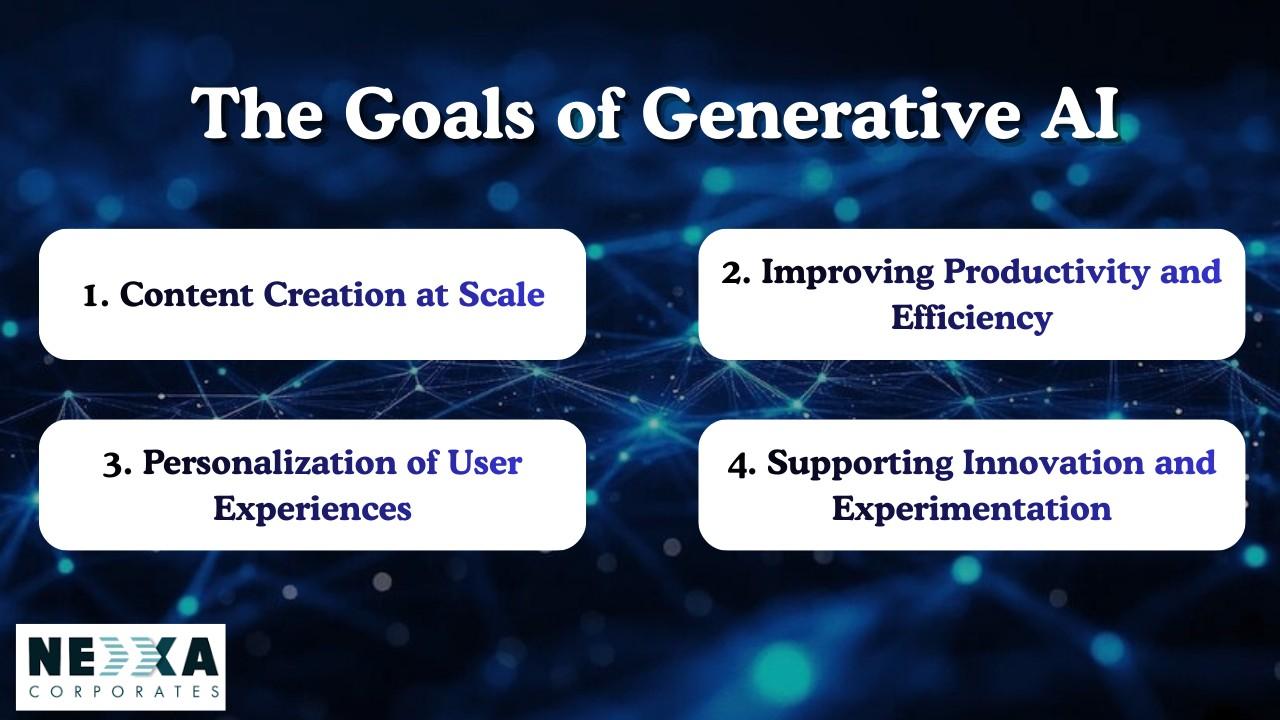
The Goals of Generative AI

Which course is best for fuyure

1. Content Creation at Scale

Among the objectives that promote the  main goal of generative AI is the creation of high volumes of content in an efficient way is the feature to produce large amounts of content through generative AI. The generative AI, through creation of text, images, code, and media saves time wasted on repetitive creativity work yet quality and accuracy has to be checked by a human.

2. Improving Productivity and Efficiency

Generative artificial intelligence can enable people and companies to work more efficiently because it can automate the standard procedures. This helps to support the  primary goal of generative AI models and enables people to do more planning, decision-making, and problem solving rather than manual labor.

3. Personalization of User Experiences

The other critical objective is to provide a more relevant and personalized output. Generative AI integrates the input and context of the user to produce content that feels more personalized and enhances usability and engagement across apps, making it more user friendly.

4. Supporting Innovation and Experimentation

Generative AI allows users to test concepts, experiment with designs and solutions within a short period of time. This is what is the main goal of generative AI, as it can assist individuals to create new possibilities, which might not readily be created using simply manual means.

Conclusion

Generative AI has a distinct mission, which is to produce new and original content through the learning of patterns in available data. In this paper, we have observed that the  main goal of generative AI  is not to substitute human intelligence but to aid creativity, productivity, and innovation in various industries. Through training on a large scale, identifying patterns, and responding to prompts, generative AI systems can generate useful results though they require human assistance to ensure accuracy and responsible usage.

Being utilized properly, generative AI can serve to scale the content creation process, enhance efficiency, make experiences individual, and stimulate experimentation. Knowing its purpose and restrictions will also enable people and companies to utilize this technology in a more efficient and considerate manner so that generative AI can be an effective and valuable tool that brings about the actual value, and not bewilderment or over-reliance.

Frequently Asked Questions (FAQs)

1. What is the main goal of generative AI?

The main goal of generative AI is to create new and original content—such as text, images, audio, or code by learning patterns from existing data. It focuses on producing outputs that feel human-made while supporting productivity and creativity.

2. How is generative AI different from traditional AI?

Traditional AI mainly analyzes data to classify, predict, or make decisions, while generative AI creates new content. Instead of only recognizing patterns, generative AI uses those patterns to generate original outputs.

3. Why is generative AI important today?

Generative AI is important because it helps people and businesses save time, automate creative tasks, and scale content creation. It is widely used in writing, design, education, software development, and research.

4. Does generative AI think or understand like humans?

No, generative AI does not think or understand like humans. It works by predicting patterns based on data and probabilities, not by reasoning, emotions, or real understanding.

5. What are the limitations of generative AI?

Generative AI can produce incorrect or biased information and relies heavily on the data it is trained on. It requires human review to ensure accuracy, ethics, and responsible use.

Influencer Marketing in Digital Marketing: Pros and Cons Every Marketer Should Knowinfluencer marketing in digital marketing

Influencer Marketing in Digital Marketing: Pros and Cons Every Marketer Should Knowinfluencer marketing in digital marketing

Influencer Marketing in Digital Marketing: Pros and Cons Every Marketer Should Know

influencer marketing in digital marketing

Who is an influencer?

In influencer marketing in digital marketing, an influencer is not just a social media user; they are powerful individuals who can significantly shape people’s opinions, preferences, and even their behavior. These individuals create content according to their niche and maintain a strong following across multiple platforms such as Instagram, YouTube, and X. Their influence comes from a raw, genuine approach to content creation, which builds trust, strong connections, and a loyal fanbase making influencer collaborations highly valuable not only for social media promotion by increasing brand visibility, engagement, and traffic across digital channels.

What is influencer marketing in digital marketing?

Influencer marketing in digital marketing is a smart way to promote your product or service by collaborating with social media influencers who have big, loyal followers and strong clout. By leveraging their influence, businesses can reach a highly targeted audience while also supporting SEO for business through increased brand mentions, content visibility, and referral traffic. The ability of influencer marketing in digital marketing to shape the opinions and preferences of their audience is a key factor— the more influential the person, the stronger the impact on sales, brand trust, and long-term online presence. Brands and influencers marketing in digital marketing work collaboratively to create sponsored content, product placements, or endorsements that leverage the influencer’s proven credibility, authentic voice, and trusted relationship with their engaged audience.

Types of influencers for influencer marketing

1. Mega influencers

Celebrities who have a massive online presence, who have the influence to pull a diverse type of audience, and have a significant reach in influencer marketing in digital marketing.

2. Macro influencers

These influencers also have a large audience and clout, but not quite like mega influencers, but people who have hundreds of thousands of followers or maybe even millions.


3. Micro influencers

Influencers with smaller followers, around 10 – 100k, which is still a big audience. But in social media standards, this is considered a smaller reach, but their highly engaged audience, with a niche focus, allows them to have an impact on specific communities.

4. Nano influencers

These content creators have a small but humble loyal fanbase, usually under 10k followers, but these individuals have a greater relationship with the audience because of their smaller follower numbers.

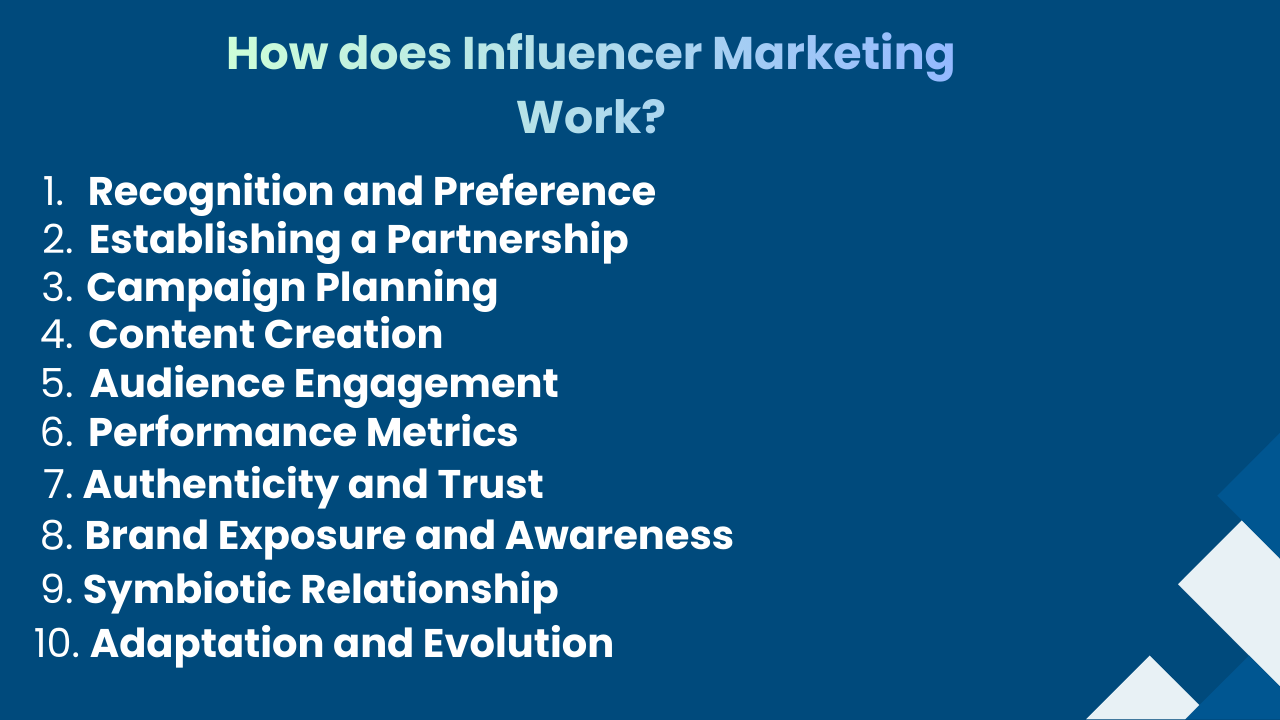
How does Influencer Marketing Work?

Which course is best for fuyure

In today’s digital-dominant world, influencer marketing in digital marketing tools have become one of the elements of advetising method in digital marketing and a powerful off-page SEO strategy to increase leads, sales, and build a brand. By collaborating with influencers who have massive online audiences and presence, your brand can carefully promote through their content to a specific niche market. These are the 10 steps of how influencer marketing in digital marketing works. 

1. Recognition and Preference

Choose influencers carefully whose content and audience are relevant to your brand, and check their ability to engage their followers and the quality of their content.

2. Establishing a Partnership

Collaborate with content creators through contract negotiation and agreement to satisfy both parties. These contracts will determine exactly what is to be delivered, the compensation involved, and the specifics of the campaign.

3. Campaign Planning

Together, brand and influence work hand-in-hand to execute a campaign, making sure the product is seamlessly incorporated into the influencer’s content. The focus is to advertise your product authentically to their audience.

4. Content Creation

Influencers will strategically customise the content to fit your advertisement in their video without looking out of place. This will be a form of videos, stories, or any other interactive media.

5. Audience Engagement

Influencers strategically use their strong relationship with their audience to promote products in a relatable and personal way, so their audience will see their recommendations as legit, which eventually leads to a higher level of audience engagement.

6. Performance Metrics

To measure the performance of your influencer marketing in digital marketing campaign, brands need to be measured such as reach, conversion rate, and engagement rates. These metrics, with the analysis, will allow brands to access the campaign’s impact on their brand awareness, reach, and potential customer acquisition.

7. Authenticity and Trust

The main advantage of influencer marketing in digital marketing is that influencers are relatable to the audience. This will bring more trust, elevating the influencer’s endorsement to irresistible levels for their followers.

8. Brand Exposure and Awareness

When partnering your brands with influencers, your brand will gain entry into their loyal following, boosting visibility and generating sales and leads. Unlike traditional advertising methods, the content is exposed to a wider audience, maximizing reach and impact.

9. Symbiotic Relationship

The partnering of brand and influencers are good for both parties, because there is no loss for both of them, only gain. The brand gains valuable access to a targeted audience, while the influencer can be received compensation for their promotional efforts. This one of the main advantages of influencer marketing in digital marketing

10. Adaptation and Evolution

As the online trends changes and the evolution of influencer marketing strategies should also adapt. Both brands and influencers actively evolve their techniques to remain successful in this dynamic environment.

Why influencer marketing matters in digital marketing

Consumers trust people more than brands and advertisements. The influencer recommendations feel more authentic than paid ads, which helps brands to connect with highly targeted audiences and increase brand awareness across social media platforms they support to help customers to make decisions faster by increasing CTR (click through rate) through social proof. Influencer marketing in digital marketing drives higher engagement and a wider variety of audiences than traditional marketing, and it is also a lot cheaper compared to traditional marketing.

Pros and Cons of influencer marketing

Which course is best for fuyure

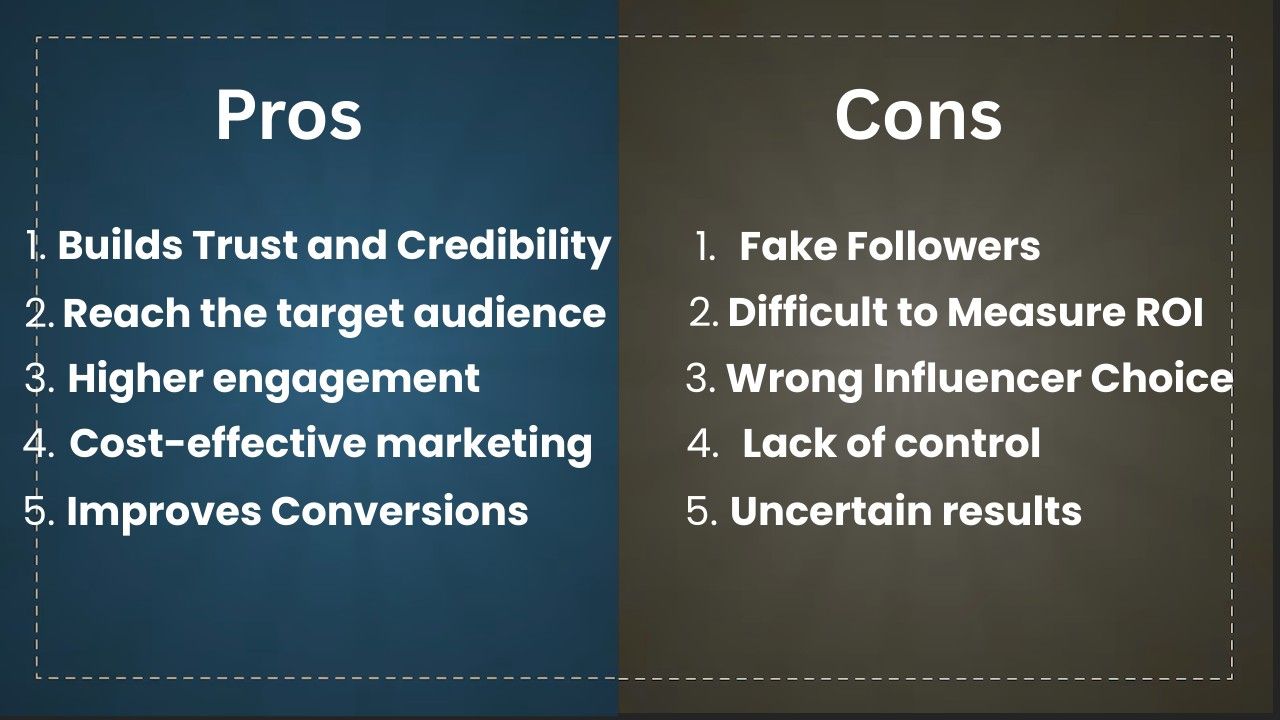
Pros

1. Builds Trust and Credibility

When collaborating with influencers, your brand awareness can expand and reach a wider audience.

2. Reach the target audience

Influencer marketing will allow us to reach specific demographics and niche groups with great success.

3. Higher engagement

Influencers bring more authentic likes, shares, and comments with their influence. Which leads to higher engagement for your brand.

4. Cost-effective marketing

Influencer marketing is more affordable when compared to traditional marketing; micro and nano influencers are very affordable, and they give an overall better ROI(return on investment).

5. Improves Conversions

Influencers’ recommendations are one of the strong points of influencer marketing. They can change people’s opinions and build confidence in products, helping to convert followers into customers.

Cons

1. Fake Followers

When choosing influencers, checking whether their followers are real, authentic, or fake bots is a crucial part. Their engagement and followers may not be legitimate, which will affect the campaign result.

2. Difficult to Measure ROI

Measuring the campaign’s return on investment is one of the main challenges of the influencer marketing; the sales track is not always direct, results may take time, and be misleading.

3. Wrong Influencer Choice

When choosing influencers, your brand doesn’t receive the expected ROI, even if the influencer gave the audience, this is because their audience and content may not be relevant to your brand.

4. Lack of control

When influencers advertise your products, the influencer’s content control style may not be effective, and your message may vary, which will affect your brand consistency.

5. Uncertain results

You know, when doing influencer marketing, the campaign’s success is not guaranteed; it has its limits. If you do everything write you may not get the expected results. But most of the time it works, so invest money wisely.

Conclusion

If you want to have all the benefits of internet marketing, Influencer marketing in digital marketing has become an essential part. It has become one of the most effective ways to build trust and reach the right audience by advertising, especially to the new generation. The ability to create authentic connections that influence purchasing decisions makes it more effective. It will deliver long-term value and sustainable growth in today’s competitive digital landscape.

FAQ

1. Is the influencer marketing effective for small businesses?

Yes, influencer marketing is highly effective for small businesses. By working with micro or nano influencers, small brands can reach targeted audiences at a lower cost while building trust and improving engagement and conversions.

2. How do brands measure the success of the influencer marketing?

Your content goes here. Edit or remove this text inline or in the module Content settings. You can also style every aspect of this content in the module Design settings and even apply custom CSS to this text in the module Advanced settings.

3. What is influencer marketing in digital marketing?

Influencer marketing in digital marketing is a strategy where brands collaborate with influencers to promote products or services to their audience through digital platforms. It focuses on leveraging the influencer’s trust, credibility, and online presence to reach targeted users in an authentic and engaging way.

7 Data-Driven Lead Generation Strategies for Attracting High-Quality Leads

7 Data-Driven Lead Generation Strategies for Attracting High-Quality Leads

7 Data-Driven Lead Generation Strategies for Attracting High-Quality Leads

Lead Generation strategies

Lead generation is one of the most important parts of growing any business. Without leads, there are no sales. But today, getting random leads is not enough. Businesses need high-quality leads—people who are genuinely interested and ready to buy.
 Data-driven lead generation strategies help businesses understand what works and what doesn’t. By using data, businesses can attract the right audience, reduce waste, and improve results. In this guide, you’ll learn simple and effective lead generation strategies that actually work.

What Is Lead Generation?

Lead generation means attracting people who are interested in your product or service and collecting their contact details, like phone number, email, or an enquiry form.

Difference Between Leads and Sales

A lead is someone who shows interest in your product or service by visiting your website, filling out a form, or contacting you. A sale happens only when that person decides to buy and makes a payment. Not all leads convert into customers, but every customer first starts as a lead.

Why Lead Quality Matters More Than Quantity

Getting 100 leads is useless if none of them convert.High-quality leads are people who:

  1. Need your service
  2. Have buying intent
  3. Are more likely to convert

That’s why smart lead generation strategies focus on quality, not just numbers.

Why Lead Generation Strategies Are Important for Business Growth

Good lead generation strategies help businesses grow in a steady and controlled way.

1. Consistent Flow of Potential Customers

With the right lead generation strategy, your business receives inquiries on a regular basis instead of depending on chance. A steady flow of potential customers helps you plan sales activities more confidently. It also reduces slow periods and keeps your sales pipeline active throughout the year. Consistency means your business stays visible and competitive in the market.

2. Lower Customer Acquisition Cost

Targeted lead generation focuses only on people who are genuinely interested in your product or service. This avoids spending money on audiences that are unlikely to convert. By reaching the right users at the right time, your marketing budget is used more efficiently. Over time, this significantly lowers the cost of acquiring each customer.

3. Better ROI on Marketing Spend

When your leads are relevant and well-qualified, conversion rates naturally improve. This means more sales from the same marketing budget. Instead of wasting money on broad campaigns, you get measurable results from focused efforts. Better ROI helps justify marketing spend and supports long-term growth decisions.

4. Scalable Business Growth

Strong lead generation systems are built to grow along with your business. As demand increases, campaigns can be scaled without losing quality. This allows you to expand into new locations, products, or services smoothly. A scalable system ensures steady growth without sudden drops in performance.

Types of Lead Generation Strategies

lead generation strategies

There are different types of lead generation strategies, depending on how you reach your audience.

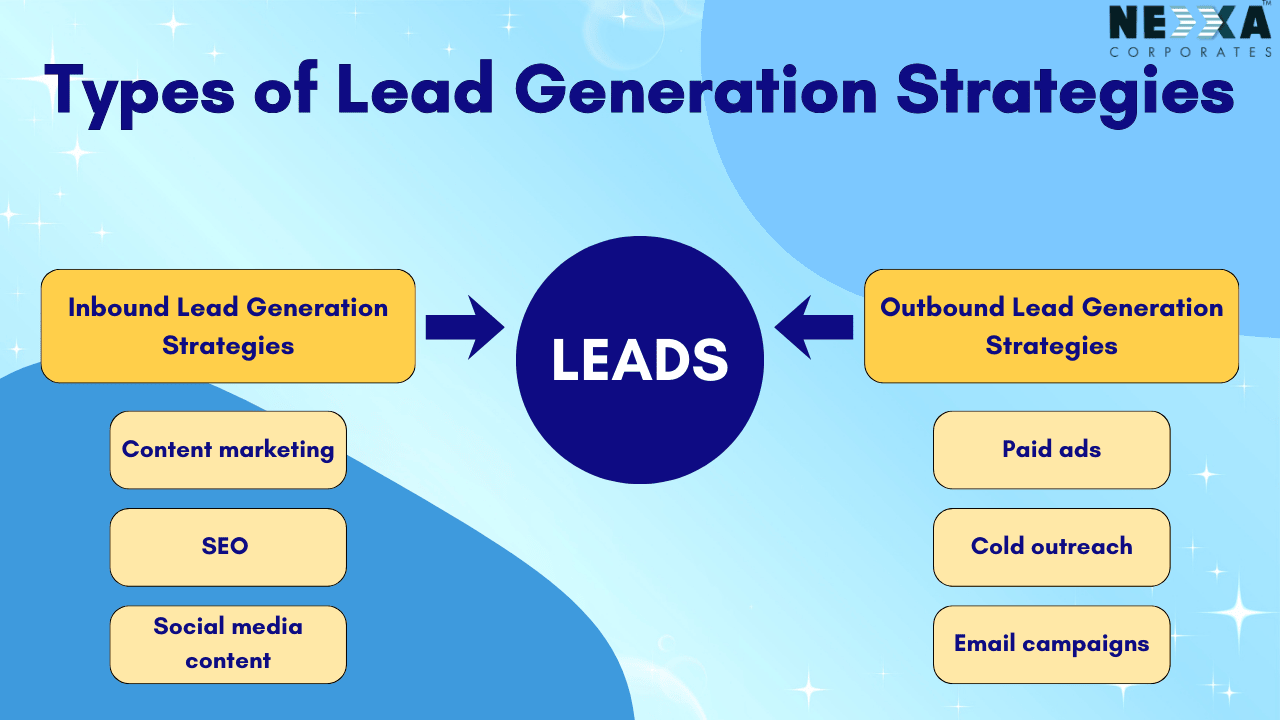
Inbound Lead Generation Strategies

Inbound lead generation focuses on attracting people naturally.


This includes:

  1. Content marketing (blogs, guides)
  2. SEO and organic search traffic
  3. Social media content

People come to you because they are already interested.

Outbound Lead Generation Strategies

Outbound lead generation means reaching out to people directly.


This includes:

  1. Paid ads
  2. Cold outreach
  3. Email campaigns

These strategies bring faster results when done correctly.

Top Lead Generation Strategies That Actually Work

1. Content Marketing for Lead Generation

Content marketing helps attract people who are already looking for information related to your service. When you answer their common questions through blogs and guides, they start trusting your brand. Helpful content like case studies and checklists shows your expertise and solves real problems. Over time, this brings high-quality leads who are more likely to contact you.

This include:

  • Blogs that answer common customer questions

  • Free guides and ebooks

  • Case studies showing real results

  • Lead magnets like checklists and templates

Good content builds trust, improves brand value, and brings long-term leads.

2. SEO-Driven Lead Generation

SEO helps your website appear on Google when people search for products or services you offer. By targeting the right keywords, you attract users who already have buying intent. Local SEO helps nearby customers find your business easily. SEO may take time, but it delivers steady and cost-effective leads in the long run.

Effective SEO lead generation includes:

  • Buyer-intent keywords
  • Local SEO for nearby searches
  • Well-optimized landing pages
  • Regular content updates

SEO brings long-term visibility and consistent leads.

3. Google Ads & Paid Search Campaigns

Google Ads help your business show up instantly at the top of search results. These ads target people who are actively searching for your service, making them more likely to convert. Paid campaigns are ideal when you need quick leads or want to promote a specific service. With proper targeting, ads can deliver fast and measurable results.

Best for :

  • High-intent traffic

  • Quick lead generation

  • Service-based businesses

  • Time-sensitive offers

4. Social Media Lead Generation Strategies

Social media platforms help you connect with users and keep your brand visible. Lead ads make it easy for people to share their details without leaving the app. Regular posts, reels, and stories help build trust and engagement. Social media works well for both attracting new leads and nurturing existing ones.

Effective platforms include:

  • Facebook and Instagram lead ads
  • LinkedIn lead forms for B2B
  • Organic posts, reels, and stories

Social media supports brand awareness and lead generation together.

5. Email Marketing & Lead Nurturing

Email marketing helps turn interested users into paying customers. Automated follow-ups ensure no lead is missed. Drip campaigns guide leads step by step until they are ready to take action. Regular emails keep your brand fresh in their mind and build long-term relationships.

This includes:

  • Automated follow-up emails

  • Drip email campaigns
  • Regular updates and offers
  • Personalized messages

It helps build trust and improves conversion rates.

6. Landing Pages & Conversion Optimization

Landing pages are designed to convert visitors into leads. A clear message and simple form make it easy for users to take action. Clean design keeps visitors focused without distractions. Testing small changes like headlines or buttons can greatly improve results.

Good landing pages have:

  • Clear call-to-action

  • Simple and short forms

  • Clean and focused design

  • A/B testing for improvements


Small changes can lead to big improvements in conversions.

7. Lead Generation Through Video Marketing

Videos help people understand your service faster and more clearly. They increase engagement and keep users interested longer. Short videos work well on social media, while longer videos explain details better. Video content builds trust and helps people feel confident before contacting you.

This includes:

  • YouTube videos

  • Short reels and shorts

  • Explainer videos

  • Webinars and demos

Videos make your message clear and improve lead quality.

Online vs Offline Lead Generation Strategies

lead generation strategies

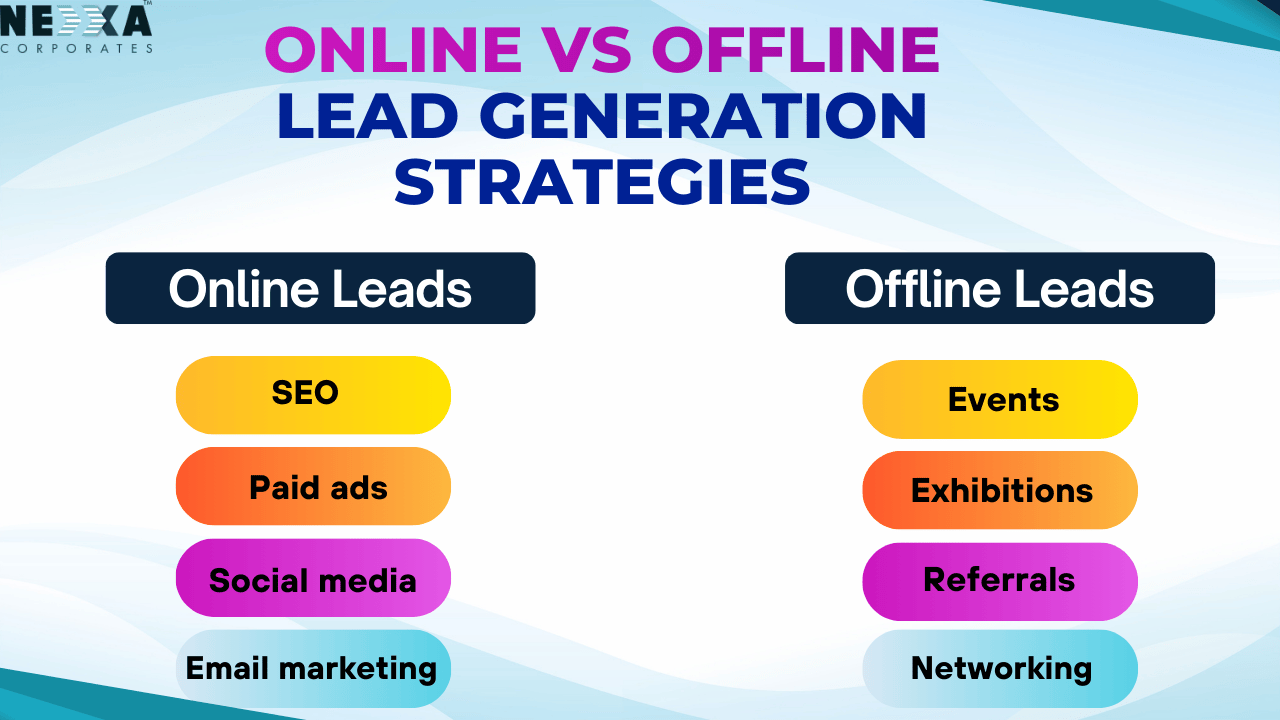
1. Online Lead Generation

Online strategies include:

  • SEO

  • Paid ads

  • Social media

  • Email marketing

Online lead generation focuses on attracting potential customers through digital channels such as websites, search engines, social media, and online ads. It helps businesses reach a wider audience beyond their local area and generate leads 24/7. Strategies like SEO, Google Ads, social media marketing, content marketing, and email campaigns allow you to target specific users based on interests, location, and behavior. Online lead generation is cost-effective, measurable, and ideal for scaling your business quickly while tracking every lead and conversion in real time.


2. Offline Lead Generation

Offline strategies include:

  • Events 
  • exhibitions

  • Referrals

  • Networking

Offline lead generation focuses on building trust and personal connections through face-to-face and local marketing activities. It includes methods like referrals, networking events, seminars, exhibitions, cold calling, flyers, banners, newspaper ads, and word-of-mouth promotion. These strategies work especially well for local and service-based businesses, as people tend to trust brands they meet in person. Although offline lead generation may take more time, it often brings high-quality leads with better conversion rates due to the strong human connection involved.

When to Use Each

Online marketing is best for reaching a large audience quickly, increasing brand visibility, and generating leads at scale through ads, search engines, and social media. Offline marketing, on the other hand, helps build strong trust through personal interactions, local presence, and face-to-face communication. When businesses use both together, online channels attract and inform potential customers, while offline efforts strengthen relationships and help convert leads into long-term customers.

Lead Generation Strategies for Different Businesses

Lead Generation Strategies for Small Businesses

Small businesses need lead generation methods that are affordable and easy to manage. Instead of spending big budgets, they should focus on reaching nearby customers who are already searching for their services. Local visibility and trust matter more than reach. Simple digital tools can bring steady leads when used correctly.

Small businesses should focus on:

  • Budget-friendly marketing strategies

  • Local SEO to attract nearby customers
  • Social media posts and local ads

  • Google Business Profile optimization

These methods help small businesses get consistent leads without high costs.

Lead Generation Strategies for B2B Companies

B2B lead generation focuses on building relationships rather than quick sales. Decision-makers need clear information before contacting a company. Educational content and direct outreach work best in B2B marketing, supported by an effective linkedin marketing strategy for b2b. Trust and value play a major role in converting leads.

B2B lead generation works best with:

  • LinkedIn marketing to reach professionals

  • Email outreach to connect with decision-makers

  • Content marketing that explains solutions

  • Case studies showing real business results

These methods help small businesses get consistent leads without high costs.

Lead Generation Strategies for Service-Based Businesses

Service-based businesses depend on trust and visibility. People usually search for services when they need them urgently. Being visible on Google and showing real customer feedback helps build confidence. Clear landing pages make it easy for users to contact you.

Service businesses should use:

  • Local SEO to appear in nearby searches
  • Google Ads for instant visibility

  • Customer testimonials to build trust

  • Strong landing pages with clear contact options


These methods help small businesses get consistent leads without high costs.

Common Mistakes in Lead Generation

Many businesses fail due to these mistakes:

Focusing Only on Traffic, Not Conversions

Getting visitors to your website is not enough if they don’t take action. Without clear forms, calls, or offers, traffic does not turn into leads. The goal should be quality leads, not just high visitor numbers.

No Follow-Up System for Leads

Many leads need reminders before they decide. Without proper follow-up through calls or emails, interested users may forget your business. A simple follow-up system helps turn inquiries into customers.

Poor Landing Page Experience

If a landing page is slow, confusing, or cluttered, visitors leave quickly. Unclear messages and complicated forms reduce trust. A clean and simple page improves user experience and conversions.

Ignoring Retargeting Ads

Not all visitors convert on their first visit. Retargeting ads help bring back users who already showed interest. Ignoring this means losing warm leads who could have converted later.

Avoiding these improves lead quality.

Tools That Support Effective Lead Generation Strategies

Some tools make lead generation easier:

1. Google Ads

Google Ads is one of the most powerful tools for lead generation. It helps your business appear on Google when people search for products or services like yours. Since users are already searching with intent, Google Ads brings high-quality leads. You can control your budget, target specific locations, and track how many leads you receive.

2. Meta Ads Manager

Meta Ads Manager is used to run ads on Facebook and Instagram. It helps businesses reach the right audience based on age, location, interests, and behavior. With lead form ads, users can submit their details without leaving the platform. This makes Meta Ads a strong tool for fast and affordable lead generation.

3. CRM Tools Like HubSpot and Zoho

CRM tools help you manage and organize leads in one place. They store lead details, track conversations, and show where each lead is in the sales process. CRM tools ensure that no lead is missed and follow-ups happen on time. This improves conversion rates and lead quality.

4. Email Automation Tools

Email automation tools help businesses send emails automatically to leads. These tools are useful for follow-ups, reminders, and lead nurturing. Instead of sending emails manually, businesses can create automated email sequences that build trust and keep leads engaged until they are ready to buy.

5. Landing Page Builders

Landing page builders help create pages that are designed to convert visitors into leads. These pages usually include a clear message, a simple form, and a strong call-to-action. A good landing page improves lead generation by turning traffic into actual enquiries.

These tools help track, manage, and improve leads.

How to Choose the Right Lead Generation Strategy

There is no one-size-fits-all strategy.

1. Based on Business Type

Every business is different, so lead generation strategies should match the business type. A local service business may benefit more from local SEO and Google Business Profile. B2B companies often need LinkedIn and email outreach. Online businesses may focus more on content and paid ads. Choosing the right strategy helps attract better-quality leads.

2. Budget Considerations

Your lead generation plan should fit your marketing budget. Small businesses can start with low-cost options like SEO, content, and social media. Paid ads should be used carefully to avoid unnecessary spending. A balanced approach helps you get steady leads without overspending.

3. Sales Cycle Length

Some businesses take longer to close sales because customers need time to decide. In such cases, regular follow-ups are very important. Email marketing and reminders help keep your brand visible. Lead nurturing builds trust and increases the chances of conversion over time.

4. Target Audience Behavior

Understanding where your audience spends time online is key to success. Some users are active on Google search, while others spend more time on social media. Choosing the right platforms helps you reach people at the right time. This improves engagement and lead quality.

Conclusion

Lead generation is not about collecting a large number of leads, but about attracting people who truly need your product or service. The right leads save time, reduce costs, and improve overall conversion rates. As digital marketing has evolved—from basic websites and email campaigns to advanced SEO, social media, automation, and data analytics—businesses now have better tools to reach the right audience at the right time. When companies use data-driven lead generation strategies, they can clearly understand what works and make smarter marketing decisions.

A strong lead generation system combines SEO for long-term visibility, content marketing to build trust, paid ads for quick results, and consistent follow-ups to convert interested users. This approach reflects the evolution of digital marketing, where multiple channels work together instead of relying on a single tactic. Each channel plays an important role in guiding potential customers through their decision-making journey.

FAQ

1. What are the most effective lead generation strategies?

SEO, content marketing, paid ads, email marketing, and social media are among the most effective lead generation strategies.

2. Which lead generation strategies work best for small businesses?

Local SEO, Google Ads, social media marketing, and referrals work best for small businesses.

3. How long does lead generation take to show results?

Paid ads can show results quickly, while SEO and content marketing take a few months but last longer.

4. Are Facebook ads effective for real estate leads?

Yes, Facebook and Instagram ads work well because they allow targeted audience selection based on location, interest, and behavior — perfect for real estate buyers and sellers.

5. Is paid advertising better than organic lead generation?

Paid advertising gives fast results, while organic lead generation builds long-term trust. Both work best together.

How to Improve Website Traffic: 10 Proven Strategies That Actually Work

How to Improve Website Traffic: 10 Proven Strategies That Actually Work

How to Improve Website Traffic: 10 Proven Strategies That Actually Work

how to improve website traffic

We know that if we want to build a business, having a website is mandatory. But despite having quality content, it’s hard to bring organic traffic to your website. However, simply owning a website is not enough. Many businesses struggle to attract visitors even after publishing quality content, investing time in design, and offering valuable products or services. Driving consistent organic traffic has become increasingly challenging due to rising competition and constantly evolving search engine algorithms. This is why people find it hard to answer the question ‘how to improve website traffic?’. Without the right strategies, even well-designed websites with great content can remain invisible in search results. This is why a structured, proven approach to traffic growth is essential. In this guide, we’ll explore 10 proven strategies that actually work to improve your website traffic, helping you reach the right audience, increase visibility, and achieve sustainable online growth. So, here are the 10 proven strategies that actually improve your website traffic.

Why Website Traffic Matters More Than Ever

If you want to grow your business, a website is essential. The more website traffic increases, the more chances for more leads, enquiries, and sales. High website traffic signals credibility and authority in your niche. More visitors mean more potential customers, which improves the conversion rate and brings users who are ready to take action. This is why people seek answer for the question ‘how to improve traffic to my website’ When doing seo for business, Google’s algorithm focuses not just on keywords but also on user experience, E-E-A-T (Experience, Expertise, Authoritativeness, Trustworthiness) matters.

10 proven strategies for Optimizing Your Website for Search Engines

how to improve website traffic

1. Optimize Your Website for Search Engines (SEO Basics)

SEO is the most important part of improving traffic organically. this is why people ask the quesion ‘how to improve organic traffic to my website’. Without proper optimization, no matter how good your content is, your search engine marketing doesn’t rank or get clicks. The Google search engine algorithm prioritizes intent relevance and user experience. Choosing your keywords with relevant search intent is the first step of SEO. Do off page seo & on-page SEO that drives more clicks, add internal links to the relevant pages, and use proper H1, H2, and H3 structures for readability.


2. Create High-Value, Problem-Solving Content

Content quality is very important; it directly impacts the traffic growth of your website. Google prefers helpful original content, but you have to write the content for humans, not just for the algorithm. Use simple language in simple short paragraphs that a normal person can easily understand. Update the old content with new content which losed traffic over time, update outdated information and statistics, and improve the images, videos, and charts of the content.


3. Improve Click-Through Rate (CTR) From Google

Click-through rate is a very important aspect of websites; a high ctr means more traffic without higher rankings. Writing eye catching-seo title is an essential part of increasing ctr, adding numbers and power words like “simple” or “effective.”For example:-“How to improve organic traffic to my website”, “How to improve traffic to my website”. Create curiosity and encourage people to click your blogs. Use rich snippets for seo title and use FAQ to increase SERP, these strategies will make you stand out from the competitors on Google. 


4. Leverage Social Media for Consistent Traffic

Use social media to share your blogs strategically, which will identify platforms where your audience is more active. Schedule a specific time according to your audience’s active time, and try to post consistently. Focus on organic social media reach by engaging with your audience through comments and messages, collaborating with creators or brands, and building trust before promoting links.

5. Improve Website Speed & Mobile Experience

Page roles play a huge role in your website ranking, google use core web vitals as ranking factors. A better site speed improves user satisfaction, and generally optimizes the site rank higher organically. Same with mobile optimization, most people use mobile to browse the internet, so making your website mobile responsive is mandatory for website traffic.

6. Use Internal Linking to Boost Page Authority

Internal links help the search engine to understand the site structure; they distribute link authority across pages. Find internal links that are relevant to your content naturally. Use good descriptive anchor text that clearly and accurately describes the content of the linkable page, helping both users and search engines to understand the topic’s destination. These methods will improve the site’s crawlability and indexing, which increase the time spent on the site

7. Build High-Quality Backlinks

Build high-quality backlinks; this will improve the domain authority of your website. When building backlinks. Building backlinks is essential for a high website ranking. After creating quality content, backlinks are the way to rank your website in the SERP. submit niche based citations and directories, avoid spammy or paid links. Earn your backlinks through valuable content.

8. Capture Traffic Using Long-Tail Keywords

When doing keyword research, try to find long tail keywords, because longtail keywords are more likely to attract your target audience. Most of the time, long keywords tend to have less competition than the broad keywords, which will eveatually leads to a high conversion rate, which is ideal for blogs, guides, and FAQs.

9. Use Email Marketing to Bring Back Visitors

Using email is a clever strategy that is used for retaining your visitors who you lost. Sending an email to the visitor drones repeat traffic, and it build long term audience relationships. Email marketing turns visitors into repeat traffic. Send regular newsletters, offer leadmagnets like lead guides, and share new content updates. This will keep the consistent returning traffic.


10. Track, Analyze & Improve Continuously

The SEO success depends on the ongoing optimization of the website. Data-driven decisions will improve the website traffic growth. Use tools like Google Analytics & Search Console to track your organic traffic performance. Monitor the impressions and CTR and identify low-performing pages, and finally fix drop-offs and improve user flow.

Common Mistakes That Kill Website Traffic

Which course is best for fuyure

Keyword stuffing is one of the most common mistakes that people make. Stuffing and overusing the same keywords decreases the content quality and makes your content unreadable. Google’s algorithm does not prefer low-quality shallow content. Pages that load slowly and have poor mobile optimization will increase bounce rates and reduce rankings, and unoptimized meta tags and meta descriptions will affect the click-through rate. Another major factor that harms website traffic is poor website performance. Pages that load slowly frustrate users and lead to higher bounce rates, signaling to search engines that the page does not provide a good experience. With mobile devices accounting for a large portion of web traffic, a lack of mobile optimization can further reduce visibility and rankings. Websites that are not responsive or mobile-friendly risk losing both users and search engine trust. Additionally, unoptimized meta titles and meta descriptions can significantly affect click-through rate, even if a page ranks well. If your metadata is unclear, too long, or not compelling, users are less likely to click on your link in search results. This results in missed opportunities for organic traffic. Paying attention to technical SEO, content quality, and user experience together is essential for maintaining and growing sustainable website traffic.

Conclusion

Website traffic growth takes time, so patience is key. Stick to strong SEO fundamentals and avoid looking for quick wins. Be consistent with publishing high-quality, updated content on a regular schedule, as this helps search engines trust your site. Track your ad and campaign performance carefully, analyze user behavior, and optimize your strategies based on real data and measurable results. Over time, these consistent efforts will lead to sustainable and long-term traffic growth.

FAQ

1. How to improve my website traffic without paid ads?

You can improve traffic to your website without paid ads by leveraging SEO, social media sharing, long-tail keywords, email marketing, internal linking, and content promotion. Organic strategies may take time but deliver sustainable and cost-effective results.

2. How long does it take to see results from website traffic optimization?

Website traffic improvement usually takes time. Small changes like on-page SEO, content updates, and speed optimization can show results in a few weeks, while long-term strategies such as content marketing and backlink building may take several months to deliver consistent growth.

3. How to improve traffic to my website organically in the long term?

The most effective way to increase website traffic in the long term is by combining SEO, high-quality content creation, regular updates, and a strong user experience. Consistency, data analysis, and continuous optimization are key to sustaining traffic growth over time.