is dropshipping profitable in indiaIs Dropshipping Profitable in India? 7 Must-Know Factors Before You Start

is dropshipping profitable in indiaIs Dropshipping Profitable in India? 7 Must-Know Factors Before You Start

Is Dropshipping Profitable in India? 7 Must-Know Factors Before You Start.

Is Dropshipping Profitable in India

Dropshipping has been one of the most popular online business options in India, especially for those who are looking to establish an online store with a minimal cost. With a low cost of starting as well as no inventory requirements and flexible hours of operation, It appears to be an easy method to earn cash online. But the question is, is dropshipping profitable in India right now? Yes, dropshipping is profitable in India, however, it is not suitable for all. Profits are contingent upon selecting which products to use, knowing the market, analyzing the costs of suppliers, and balancing the  expectations of customers.

Many newbies are tempted to try dropshipping out of hope, but only those who analyze the market and create an effective strategy will have the ability to achieve consistently positive outcomes. Before you begin, it is important to understand the actual factors that influence profits, including market trends: product margin, shipping time, customer experience, demand, and platform fees. This blog explains the key points in a clear manner so you are aware of the actual benefits of dropshipping business in India without the hype and inflated promises.

What Is Dropshipping & How It Works in India

What is dropshipping? Dropshipping is an e-commerce model that allows you to sell goods on the internet without keeping stock. Instead of purchasing items in large quantities, dropshippers buy the items from a seller after the customer has placed an order. The vendor then delivers the item directly to the buyer. This is one of the simplest ways to launch an online business that requires little cost of investment and a low risk.

What is the process? How does it work in India? The process is quite simple:

  1. You can list items from a vendor on your website or online store.
  2. A customer makes an order on your website.
  3. You will forward the order to the dropshipping company you use.
  4. The manufacturer packs and delivers the item directly to the customer.
  5. You get to keep the profit which is the difference in what a buyer was charged and what the vendor was charged.

This approach helps beginners to start quickly, try different niches and grow without having to worry about inventory, warehouses, or logistics.

The most popular platforms to facilitate dropshipping in India are:

  • Shopify is the most well-known platform to create your own dropshipping shop.
  • WooCommerce/ WordPress is a great option for those who need more control and low cost of operation.
  • Indian vendors like Roposo, Clout, Dropdash, and other suppliers on IndiaMART.
  • AliExpress CJ Dropshipping is a popular option for international products (fashion, gadgets, accessories).
  • Amazon & Flipkart – Some sellers make use of them to create dropshipping models that are hybrid.

These platforms allow users to upload items and manage orders, as well as automate updates to shipping and also run advertisements or SEO to drive traffic.

Is Dropshipping Profitable in India? In 2025

Dropshipping business can be profitable in India however the earnings depend on the area of focus, the quality of your product competitive level, product quality, and the capacity to promote your business as well as rank in organic search results. The issue “Is dropshipping profitable in India?” matters more in 2025, because the market is maturing; low-effort shops no longer make profit, while those that are well-planned still make money.

The current trend is indicating increasing online sales throughout Tier 2 as well as Tier 3 cities. less upfront cost for those who are new to the market as well as a rising demands for niche items. Dropshipping business is a feasible method, but it is not a sure thing. The main reason for profit is choosing the best products, limiting the cost of marketing, offering speedy delivery, and ensuring that you choose reliable suppliers. If you choose to focus on products that have a real need, ensure quality, and set up your store’s conversion rate, dropshipping business in India is still profitable in. This is especially true for those who are just beginning and want to begin with little risk and a small inventory.

Growth of E-commerce

is dropshipping profitable in india

The above statistics show how fast e-Commerce is expanding across India. The scope of e-Commerce in India is expanding faster than ever due to increasing internet penetration, affordable smartphones, and growing trust in online shopping. More people from Tier 2 and Tier 3 cities are buying online, creating a massive market for new sellers. Digital payments, quick delivery networks, and government support for online businesses are also fueling this growth.

With rising demand across fashion, electronics, home products, beauty, and daily essentials, the opportunity for new e-Commerce and dropshipping stores is huge. Anyone who can offer good service, fast delivery, and reliable products can tap into a fast-growing customer base.

Main Challenges That Impact Profitability

While many people are asking, is dropshipping profitable in India? But the reality is that your success depends on the way you deal with difficulties. The most significant issues are the rising cost of advertising, low margins, insecure suppliers, poor delivery times, high return rates, and a lack of quality control. There is also a lot of competition, particularly in the common products that everybody sells. If you do not research your market, monitor industry trends, or establish an established brand, profit is difficult since every error directly impacts your cost per sale as well as your long-term satisfaction of customers.

Successful people usually select areas that are not well-known, use trustworthy suppliers, focus on speedy delivery and invest in the development of lasting brands instead of simply “selling goods.” They optimize marketing expenses, try out new designs, and keep track of the results of their Return On Investment in terms of CAC, RR, as well as net profit. On the other hand many fail because they follow trends blindly, rely on only advertisements that are paid for, or do not consider customer experience. So when you look at, is dropshipping profitable in India, the honest answer is: profitability is possible, but only if you approach it strategically and operate like a real business, not a shortcut to quick money.

7 Must Know Factors That Decide Profitability in India.

Which course is best for fuyure

1. Product Niche & Market Demand

Selecting the right niche will determine the extent to which your dropshipping business expands or shrinks. A niche with a steady sales, little competition and clear customer expectations will result in higher profits and more rapid sales. If you choose an area that is crowded or not in high demand your advertisements become costly and customers become less interested, and the profit goes away. In India niches such as beauty products, fitness equipment and smart home products and pet care products stationary, and other unique lifestyle items often do better since people actively search to find them, and they are eager to test new products.

When people inquire, “Is dropshipping profitable in India?”, this aspect is among the most important reasons that it is either”yes or no. Profit is only earned when you can sell what buyers are looking for, not what everybody else is selling. Knowing the trends in search, along with seasonal demand patterns and the pricing of your competitors, can help to stay ahead of the curve and ensure profitable margins.

2. Competition Level

The competition plays a significant role in determining how much profits you will earn through dropshipping business in India. If too many sellers are offering identical products at comparable costs, your margins are reduced and advertising becomes costly. Many new sellers struggle as they attempt to market products that are already being dominated by large brands or dropshippers with long-term contracts. However, competition isn’t always negative, but it does mean that you should select products that have low levels of saturation, develop an effective value angle and be able to understand your customers more than others.

If you look at the competition, look at their pricing and discover weaknesses in the quality of their products and delivery or presentation it is still possible to be distinctive and achieve regular sales. Sellers who fail are typically the one who copies the same catalog without conducting research While those who do well consider competition as a way to be creative, not an excuse to stop.

3. Supplier Quality & Shipping Time

The quality of your supplier will have a direct impact on the results of your dropshipping business since it determines the quality of your standard of your product, the delivery experience, as well as customer satisfaction. If your supplier delivers low-quality products or has delays in shipping your orders, cancellations, returns, or negative reviews will rise, reducing your profits.

Indian buyers expect speedy delivery, especially since platforms such as Amazon as well as Flipkart have established very high standards. If your dropshipping provider takes between 10 and 20 days to ship, you’ll lose trust and customers who return. However, when you partner with dependable suppliers that offer quality products with consistent packaging, speedy delivery, as well as real-time monitoring, the business is more secure and successful. This alone will determine whether your business grows or falls apart in the end.

4. Marketing Skills & Ads Budget

Your ability to market plays an integral role in the success of dropshipping in India. If you do choose the right niche and trustworthy supplier, you require a strong background in advertising, writing content, and convincing customers to purchase from your company. The majority of successful sellers invest in internet marketing, such as Facebook, Instagram, and Google Ads, because organic reach requires time.

If your advertisements aren’t well-targeted, a large amount of your budget will be wasted, and your profits will decrease. If you can understand your audience’s behavior, improve your creatives, and manage your cost per sale, even a modest budget for advertising can yield steady profits. This is where most beginners make mistakes: they overlook the importance of continuous testing, education about ad optimization, and learning.

5. Profit Margins in India

Profit margins determine whether the dropshipping company survives or falls into trouble. In India, the margins typically fall between 15% and 50%, based on the category of product and the base price offered by the vendor. Items that are less expensive, like phone cases or accessories, usually leave small margins, and niche or premium products provide better returns.

Dropshippers that calculate the total cost, including product price and shipping costs, as well as platform fees, tax, ad spend, and refunds, are the ones that have steady margins. People who do not calculate this tend to think their company has become “not profitable,” even when the problem is simply bad margin planning. If margins are optimized from the beginning and the business is more reliable and easier to expand.

6. Customer Support & Return Handling

Strong customer service is among the major elements that determine is Dropshipping profitable in India, for a beginner. Customers are looking for quick responses as well as order updates and a smooth process for returns. In dropshipping business, however, your business depends on your suppliers to provide refunds, replacements, and speed of reverse pickup. Any delay directly impacts your store’s reputation. If support is quick as well as transparent, buyers will trust your name, and repeat purchases will rise.

If return processing is not smooth, your profits decrease because cancellations, refunds, and negative reviews begin cutting into your profit margins. This is the reason why quality support is often the main factor that separates successful businesses from those that have stopped and claim that is Dropshipping profitable in India is just a rumor.

7. Platform Fees, Payment Gateway Charges & Hidden Costs

Your actual profit is contingent on how well you handle charges that many beginners do not consider. Every platform, including Shopify, WooCommerce, Amazon, or Meesho, has monthly fees, transaction costs, or commission reductions. Additionally, payment gateways cost around 1.8%-3 percent for each transaction. This immediately affects your margin. Additionally, there are hidden costs such as app subscriptions, refund losses, paid themes, packaging upgrades, and even orders that are not completed correctly, which you need to take on.

If you analyze your numbers truthfully, you realize how dropshipping business in India is profitable if you keep track of every cost and optimise your store’s configuration and ensure that you have profitable margins. The inability to track these costs is among the main reasons that many new sellers struggle to make a profit.

Dropshipping Market Size in India

is dropshipping profitable in India

Source : https://www.grandviewresearch.com/horizon/outlook/dropshipping-market/india

Dropshipping’s rate of success in India is between low and moderate, mostly because people who start out in the business do not have prior research and planning or the ability to invest. A lot of online creators claim that it is “easy” however, actually, the rate of success increases only when you select the best products, comprehend Indian customer behavior, and efficiently manage your operations. This understanding is essential since many people are asking, Is dropshipping profitable in India? The answer is contingent on how you run your business.

One of the main reasons people fall short is their unrealistic expectations. They believe they can make fast profits without testing their products, promoting ads, or providing good customer service. Low-quality suppliers, long delivery times, and inadequate marketing abilities also result in loss. However, the successful ones adhere to a plan that allows them to test various products, create a solid brand, invest in advertising well, and keep track of the feedback of customers carefully. These sellers are aware of how to reduce costs, boost profits, and utilize analytics to make decisions. This is why their results appear different. They run dropshipping as a legitimate business, not as a shortcut.

If you do it right If done correctly, the rate of success increases significantly. Small shops selling niche products, including customized accessories, beauty products and other home necessities usually succeed. While many do not, the ones that concentrate on quality, data, and long-term brand development demonstrate that Is dropshipping profitable in India is possible when you take the proper approach.

Best Dropshipping Suppliers

Top Indian Dropshipping Suppliers

  • Roposo –  start dropshipping with no inventory by choosing products, promoting them, and earning margins while the platform handles sourcing and delivery.
  • Meesho – Popular for fashion, accessories, and home products with beginner-friendly margins.
  • Qikink – Best for print-on-demand clothing, hoodies, and custom merch.
  • Baapstore – Offers a wide product range with GST billing and faster dispatch.
  • IndiaMart (for bulk dropship tie-ups) – Good for finding direct suppliers who agree to dropship.
  • Shop101 – Suitable for lifestyle, fashion, and small-budget sellers.

International Dropshipping Suppliers

  • AliExpress – Large catalog and competitive pricing, but long shipping times.
  • CJ Dropshipping – Faster shipping options, India warehouse availability, and product branding.
  • Spocket – Offers suppliers with faster delivery, but higher product cost.
  • Printful / Printify – Best for custom POD products like T-shirts, mugs, and posters.
  • Zendrop – Clean dashboard, good for branded product fulfillment.

How to select a trustworthy supplier

Choosing a trustworthy supplier is one of the biggest factors that decides is dropshipping profitable in India or not, because your entire business depends on their product quality, stock availability, and delivery speed.

  • Clear Product Photos
    Helps customers trust the product and reduces return issues.
  • Transparent Pricing
    No hidden charges, so you can calculate profit margins correctly.
  • Fast & Reliable Shipping
    Short delivery time improves customer satisfaction and repeat orders. 
  • Responsive Support Team
    You can quickly resolve order issues, delays, or product questions.
  • Genuine Customer Reviews
    Shows real performance of the supplier’s products and service.
  • Order a Sample First
    Check packaging, product quality, and delivery speed before listing.
  • Easy Return Policies
    Reduces risk in case of defects or wrong items sent to customers.
  • Consistent Stock Availability
    Ensures products don’t go out of stock when customers order.
  • Communication Channels
    Smooth coordination helps avoid mistakes and delays.

Legal Requirements & What You Can’t Sell in India.

Running a dropshipping business in India requires following a few mandatory rules so your store stays compliant. First, you must have a GST registration if you’re selling across India, especially on marketplaces like Amazon, Meesho, or Flipkart, because they require a GST number to collect and deposit taxes. You also need a basic business setup such as a PAN, bank account, and invoices that clearly show tax details for customers.

There are also restricted categories that you can’t sell through dropshipping. These include weapons,

  • Explosives
  • Medicines
  • adult products
  • counterfeit items
  • tobacco products
  • live animals
  • And anything banned by Indian customs.

Selling these can lead to account bans or legal action. It’s safer to stick to categories like fashion, home décor, mobile accessories, kitchen tools, beauty tools, fitness items, and small electronics (non-high-risk).

Make sure your store follows basic compliance: transparent return policies, clear shipping timelines, and honest product descriptions. These small steps help you avoid penalties, reduce complaints, and make your dropshipping operation run smoothly in India.

Conclusion

Dropshipping in India is growing fast, but success depends on how smartly you choose your niche, suppliers, marketing strategy, and pricing. Many beginners enter with high expectations, but those who research demand, offer quality products, and work with reliable suppliers usually see better results. When we look at the full picture, market demand, costs, margins, competition, and customer experience, the answer to “Is dropshipping profitable in India?” becomes more practical than emotional.

The business can be profitable when you understand the risks, select profitable niches, and manage operations with clarity. At the same time, is dropshipping profitable in India for everyone? No. Those who ignore product quality, shipping times, customer support, and ad strategy often struggle. Your profitability depends on discipline, research, and continuous optimisation.

So the final takeaway is simple: is dropshipping profitable in India if you treat it like a real business, not a shortcut. With the right niche, trustworthy suppliers, strong marketing, and a good customer experience, you can build a stable, long-term ecommerce income.

FAQs

1. Is dropshipping profitable in India?

Yes, dropshipping can be profitable in India if you choose the right niche, reliable suppliers, and follow proper marketing. Profit margins typically range from 15% to 40%, depending on product demand and competition.

2. How much money do I need to start dropshipping in India?

Most people can start with ₹5,000–₹20,000, which covers domain, hosting, basic marketing, and testing products. You don’t need inventory, which keeps the cost low.

3. What are the profit margins in Indian dropshipping?

Average profit margin: 15%–40%
High-demand niche margin: 40%–60%
Saturated product margin: 10%–15%
Margins depend heavily on supplier price, product quality, and ad cost.

4. Is dropshipping legal in India?

Yes, dropshipping is legal in India. But you must follow:

  • GST if turnover crosses limit
  • Return/refund policies
  • Shipping transparency

No banned products
Following ethical practices helps long-term growth.

5. What products are best for dropshipping in India?

Best-performing niches:

  • Phone accessories
  • Fitness products
  • Home decor
  • Beauty & skin care
  • Pet supplies
  • Smart gadgets

Select niches with high demand + low return rate.

6. Can beginners make money with dropshipping in India?

Yes. Beginners can earn money if they learn:

  • Product research
  • Supplier management
  • Facebook/Instagram ads
  • Customer service

 Many beginners start earning ₹20,000–₹1,00,000/month after consistent testing.

Top 7 Functions of Marketing That Drive Real Results

Top 7 Functions of Marketing That Drive Real Results

Top 7 Functions of Marketing That Drive Real Results

functions of marketing

Nowadays, marketing is more than just making advertisements and promoting a product to consumers. It also defines a data-driven and strategic process that directs how a company positions its products, comprehends its clients, and achieves long-term success. For this reason, every firm, regardless of size, has to understand the functions of marketing.
Basically, marketing determines the needs of customers by producing value and then outperforming competitors. Businesses make more informed decisions by analysing each functions of marketing which directly promote growth. These features help businesses focus in order to attract the correct audience. This enables us to compete more successfully on both online and offline platforms, which are the basis of the evolution of digital marketing.

What are the 7 functions of marketing?

To understand the concept of functions of marketing, first, we need to know ‘What is Marketing?’ The key tasks that direct how companies find opportunities to interact with clients and track results are referred to as functions of marketing. They ensure that marketing is a planned, deliberate process.

What is Marketing?

Marketing can be defined as the strategic process of finding the needs of customers and creating a solution by communicating with them. Thus, helps us to build continuous and long customer relationships. In short, marketing ensures that at the right time, the product reaches the right audience 

In today’s world, consumers already know about their product even before buying. They compare brands, research products online, read reviews, and look for brands that offer more than just a product — they look for trust and value.  Thus the modern marketing helps businesses:

  • Understand customer behavior
  • Compete in highly saturated markets
  • Build a strong brand identity
  • Improve customer experience

Thus, we can see the importance of the functions of marketing. They act as a connection that helps in understanding the needs of the customer to provide unforgettable experiences. Now, let us explore these 7 functions of marketing – 

what is marketing

1. Market Research – The First Essential Function of Marketing

Market research is the first and foundation of all marketing activities. Without understanding certain factors like the needs of customers, market demands, etc, businesses cannot make effective decisions. An important part of market research is keyword research. It helps to understand what customers are searching online, revealing their search demand and intent, which in turn helps in providing new market opportunities. 
Competitor analysis is another important part that further strengthens marketing decisions by providing current competitor status and their relevance in the market. Studying competitors not only ensures that your brand stays competitive, but it also gives details on the strategic position for growth.

2. Product & Service Management

The product and service management ensure that the products always meet customer expectations by maintaining their competitiveness in the market and changing according to the increasing and the decreasing demands. We can see successful companies always collect feedback from customers through several ways that include writing reviews (let it be good or bad), giving ratings in apps, other social media interactions, and also giving feedback through emails. This is usually done to improve their products or services.
The key to getting a good brand experience across channels is Consistency. Customers expect the same level of service when they interact with a brand through an online platform, which has highly increased nowadays, or an offline store, in the traditional way. In short, these products and service management help in achieving a high-quality brand experience.

3. Promotion – A Major Component in the Functions of Marketing

Promotion plays a vital role in helping communicate and raising awareness among potential customers. This led to Online promotions that have become essential to reach different customer segments effectively. These methods allow brands to deliver targeted messages and maintain consistent visibility. Some of the online promotions include:

  • Email marketing
  • Google ads
  • Video marketing
  • Display advertising

Each channel helps brands reach different segments of customers.
A major part of modern promotion also relies on: 
1. SEO: It boosts organic visibility in a company. Simply, SEO (Search Engine Optimization) helps customers come to you automatically without much difficulty. 
2. Social media: It strengthens engagement, brings customers with the same interests from different parts of the world together to build communities, which helps in enhancing brand personality. 
3. Paid ads: Paid ads are used as a marketing tool to provide an immediate reach on content to a certain audience who are browsing in internet. 
These tools work together to increase brand visibility and drive traffic.

4. Selling – Digital Sales Channels That Increase Conversions

One of the important functions of marketing is selling. It turns potential customers to paying customers. So in order to do so, we need to know that selling is not only just making someone buy, but it is also about guiding them to make the right purchase. Sales funnel and landing page help to achieve this.

A well-structured sales funnel helps to lead customers through different stages and buy the right product. Each stage has to be clear in terms of communication; only then can customers be engaged to improve the chances of conversion. Landing pages help in converting visitors into leads or customers. A strong landing page should offer a clear platform for messaging or contacting, and highlight everything that leads to customer benefits. 

5. Distribution – Delivering Value Through Digital Channels

Ensuring that buyers may obtain your goods at the appropriate time and via the most convenient channel is the main goal of distribution. Online marketing and the increase in delivery-friendly platforms helps to reach out to wider audience. Customers can choose and buy things from any location with the help of e-commerce websites and mobile apps.
Being easily found is also essential for local enterprises to have effective distribution. Tools like location-based advertising, Google Business Profiles, and local SEO are useful in this situation. They guarantee that anyone looking in the area can locate the company fast and obtain what they require without any hassles. When combined, these local and internet distribution channels improve the customer’s purchasing experience and increase accessibility.

6. Pricing in Marketing

Pricing has an important role in marketing. It helps a customer to decide if they actually want to buy something. If the pricing of a product is so attractive, it makes the customer buy it irrespective of their need. It also influences the overall demand and profit, which is why it is considered one of the most important functions of marketing. Pricing means how much value in terms of money a product has by considering certain factors like its making charges, whether it has high or low demand in the market, and also revolves around competitor prices. 
It is also one of the four elements of marketing, which is commonly known as “4 Ps” (Product, Price, Place, and Promotion). Another key point to consider about pricing is – it is the only one that directly generates revenue.

7. Marketing Information Management – Data-Driven Decision Making

Marketing Information Management is another function of marketing that helps in Data-Driven decision-making. Today’s marketing is based on insights rather than presumptions. In order to understand the demands of clients and make decisions accordingly, businesses rely on data. Customer Relationship Management, or simply CRM systems, is an essential feature because it saves crucial consumer information, including past interactions, behavior patterns, and purchase history, which enables firms to provide more individualized service and communication.
Analytics solutions make it easier to monitor how customers connect, visit, or buy from a firm. These insights highlight areas that are doing well and those that need development. And thus Marketing Information Management helps companies in delivering relevant messages.

Features of Marketing

features of marketing

Features of Marketing help us to understand how each functions of marketing work effectively. These features show the importance of focusing on the needs of customers by creating real value and building long-term relationships. It is done by making decisions using research-backed insights essential for achieving sustainable business growth. Now, let us explore these features. –
1. Customer-Oriented
Customer needs are the foundation of all marketing decisions.
2. Value Creation
Marketing helps in ensuring that products are priced correctly according to the customer expectations.
3. Profit and Relationship Focus
Nowadays, people rely on the same item for the long term. This creates a profit and enables a continuous relationship rather than one-time sales.
4. Market Research and Digital Insights
As we know, marketing strategy begins with research, which then leads to customer insights and finally, makes decisions based on the available data and insights data-driven decisions.
What is Selling in Marketing?
Selling is the process of making people buy something. It is done by providing a clear value for the product or service. We know that the concept of marketing is to make people aware of a product, even if they want it or not. But selling is actually converting that awareness into an actual purchase. 
Marketing vs Selling
Even though both these terms – Marketing and selling may seem similar, they play very different roles in general. Marketing is all about understanding what customers want, what problems they face while choosing, and how a product can fit into their lives. It focuses on different functions like research, communication, and building trust so that people become interested in the brand.
Selling, on the other hand, comes after this stage. Once we know what the customer needs are, selling becomes effective. It includes guiding the customer to help them make a final decision.
Both of these ensure a business attracts the right audience and converts them into paying customers. As we learned earlier, selling is an essential part of the functions of marketing and how it ensures that the product reaches the right customers and generates revenue.

CONCLUSION

The functions of marketing form the foundation for the success of any business. It helps in understanding what people want and demand the most. This helps in ensuring a steady growth in the market. While we know clearly ‘what is marketing’, it is actually more than promoting a product. It is a complete process that begins with identifying the needs of a customer to delivering it effectively. Each functions of marketing- whether it is research or pricing, or promotion, etc, has to work together to help businesses stay organised and successful. These features aid in our comprehension of the marketing concept of what is selling. Even though they have apparent similarities, marketing and selling are very distinct from one another. When these components come together, a long-term relationship is maintained, increasing the digital marketing scope.

FAQ

1. What are the functions of marketing?

The functions of marketing are those elements that help to identify the needs of a customer and provide service.

2. What is marketing?

It is the process of finding the needs of customers by communicating with them. 

3. What is the first function of marketing?

Market research is considered the first function because it helps to understand the needs of a customer.

4. What is selling in marketing?

Selling is the process of making people buy something. It is done by providing a clear value for the product or service.

5. Can small businesses use the functions of marketing effectively?

Yes, even small businesses can apply them using simple digital tools and strategies.

sco in digital marketing

sco in digital marketing

What is SCO in Digital Marketing? The Future of Online Visibility Explained.

SCO in digital marketing

Social channel optimization is a newly introduced strategy in the evolution of digital marketing. It is very similar to seo but, but it reaches more than just the search engine result page (SERP). It involves making customised content to perform right for your potential clients who are on other social media platforms and digital channels. SCO full form in digital marketing is also known as search channel optimization. 

Why is SCO important?

In a recent survey, we found that humans are spending 2% of their lives on social media, this information tells us about how social media has become a part of our lives. In this social media age if you want to build a brand having just a website is not enough. If you want to have a full impact of digital marketing, having an online presence on various social media platforms and other digital channels is essential. Especially if you want to get the attention of Gen Z. People seeing your brand on various platforms again and again will build awareness and familiarity and later lead to conversion. It will even bring unknown customers and build engagement with your service. This is why sco in digital marketing is so important.

5 Effective Strategies for SCO in Digital Marketing.

SCO in digital marketing

1. Know your target audience

Studying your audience’s persona is a crucial step for making SCO in digital marketing more effective. This is the first step to take before everything else. Knowing what type of audience is more likely to be your product’s consumer is mandatory.

2. Choose the right platform and optimize the content

Every social media audience varies from each media. As the audience changes the content format preference also changes. For example in Facebook, the users are mostly boomers but in when it comes to Instagram, it’s more Gen Z. So you have to customise and optimize specific content for each platform. just like optimizing blogs in Rank Math seo.

3. Track the performance of platforms

Measure your website traffic and results carefully and optimize the content and figure out what works and which don’t. Tracking your platform’s performance on each platform is a key point to enhance your performance.

Use tools to track your performance in each platform

YouTube – YouTube Studio or VID IQ

Instagram – Instagram Insights

Facebook – meta business suit insights

4. Schedule your content

As we track our platforms, we can see that the time when the audience is most likely to see the content. Setting a certain date and time for uploading the content when your audience is more active can boost your success.

5. Choose the right backlinks

Choosing the right backlinks for SCO in digital marketing is very important. They strengthen your brand’s authority across social networks. Backlinks increase cross-platform visibility and improve your overall digital footprint. Choose quality trustworthy backlinks.

Difference between SEO & SCO

SCO in digital marketing

SEO & SCO are different as they is their job is to bring organic traffic and engagement. But there are 5 main differences 

  • Focus area
  • Goal 
  • Approach
  • Scope 
  • Strategy type

Focus area

When it comes to SEO, it primarily focuses on ranking your website or content higher in SERP of search engines like Yahoo, Google & bing through high-quality blogs, content and backlinks. It’s about when someone searches some keywords that are related to your business niche or keyword it will appear on the SERP page based on the performance. On the other hand SCO in digital marketing takes wide broad approach; they not just focus on search engines but also every top social media platforms or channel.

Goal

The main goal of SEO is to drive clicks and engagement to your website for certain keywords which eventually makes more leads and conversions for your business. In short it makes your website more visible in the search results of Google’s search algorithm. The higher the ranking, the greater the chance your business becomes successful. But when it comes to SCO in digital marketing it’s not about just clicks, it’s the goal to have your brand an online presence in almost every social channel including the product searching apps like Flipkart.

Approach

SEO approaches with keyword research, technical seo, content optimization and link building to rank the website higher in the algorithm. It mainly focuses on Google’s crawling and index algorithm. For SCO in digital marketing there is no common approach because it deals with multiple channels and each channel requires specific tailored content. 

for example:-

  • Instagram – caption,hashtag and engagement
  • YouTube – watch hour, title and description
  • Flipkart – product title optimization, product reviews and bullet points

Scope

When you look at the digital marketing scope in future, the scope of SEO in digital marketing is comparatively small and web-focused. It mainly focuses on how your website performs on search engines. So the video platforms, social media and other things are considered out of league for SEO.

While SCO in digital marketing has more wider range that extends beyond search engines it involves every search-based platform from content-based social media to shopping apps. This means SCO in digital marketing is more diverse and its interconnected platform method will make sure your brand presence across all digital channels.

Strategy Type

SEO strategy is mostly content-driven and technically oriented SEO. It focuses more on the website structure, meta tags and backlinks. Their goal is to make the website more search engine-friendly and rank higher in SERP. SCO in digital marketing strategies vary based on the platform you have to have specific strategies. how each algorithm prefers its content type. You have to adapt your content based on the platforms’ algorithms.

Conclusion

SCO in digital marketing becomes more significant and is no longer optional if you want to build your brand. If you wish to have the full benefits of internet marketing, sco is mandatory. This evolution of digital marketing brings a more interconnected approach for building your brand, making conversions, strengthening your audience relationships, and supporting long-term growth across every digital channel. 

FAQ

1. Why is sco important for building a brand?

 In this digital age, we can’t grow anything without the social media. It became a big part of our lives. When popularizing your brand through social media, sco is a mandatory method to increase your traffic on various platforms.

2. Which platforms should I choose in my SCO strategy?

Choosing the platform depends on your audience persona and goal. Different platforms vary in different types of content. 

  • Pinterest (visual search and inspiration)
  •  Instagram and YouTube Shorts (short-form visual content)
  • Facebook (community building and engagement)
  • YouTube (long-form visual content and how-to content)
  • Flipkart or Amazon (product-based search)

3. How does SCO help to increase brand awareness?

SCO helps to increase your brand awareness across different platforms. When people see your brand on different platforms, it builds awareness and familiarity, which will eventually lead to conversion.


Advantages and Disadvantages of Digital Marketing

Advantages and Disadvantages of Digital Marketing

Advantages and Disadvantages of Digital Marketing in 2025- The Complete Guide for Business and Entrepreneurs

advantages and disadvantages of digital marketing

Digital marketing is the process of marketing through digital technologies and platforms. The main aim of digital marketing is to promote products, services, and brands. It connects businesses to customers through online channels like websites, social media, email marketing, search engines, and online video and content platforms.

There are many advantages and disadvantages of digital marketing. Digital Marketing is different from traditional Marketing.

Why is Digital Marketing important?

The importance of digital marketing is to reach the target audience, increase the sales of your business, and increase the profit of your business. There are some main reasons why digital marketing is important for your business.

Advantages and Disadvantages of Digital Marketing

Digital marketing has become one of the best ways to promote products and services through digital technologies. It helps businesses to reach people, raise brand awareness, and increase sales. Digital marketing has some advantages and disadvantages of digital marketing.

Here is a detailed explanation of the  advantages and disadvantages of digital marketing

Top 10 Advantages of Digital Marketing

1. Global Reach

Digital marketing allows businesses to connect with people across the world easily. No matter where your customers are, you can reach them through social media, websites, or online ads. It removes distance barriers and helps even small businesses go international. This means your brand can grow faster and get more recognition without spending too much.

2. Cost-Effective marketing

Your content goes here. Edit or remove this text inline or in the module Content settings. You can also style every aspect of this content in the module Design settings and even apply custom CSS to this text in the module Advanced settings.

3. Targeted Audience Selection

Digital Marketing helps you reach the right audience. You can select your audience based on their age, location, and interests. It helps to save time and money because your message only goes to your customers who like your business. It helps to get real customers for your business, and also get the right customers at the right time with better results.

4. Measurable Results and Analytics

One of the best advantages of digital marketing is that you can analyze your results easily. Google Analytics and social media insights are those tools that help measure the results easily and show how many people saw and how many people clicked. This helps you to understand what is working well and what improvements are needed. Measurable Results and Analytics make marketing clearer and effective.

5. Higher Customer Engagement

Digital marketing makes it easy for businesses to connect and talk with customers directly. Through social media, emails, and websites, people can like, comment, share, or ask questions anytime. Regular posts, quick replies, and interesting content keep people engaged and excited. In short, high customer engagement turns normal visitors into loyal customers who support your business.

6. Strong Brand Development

Strong brand development means creating trust and recognition for your business online. By staying active, sharing useful content, and engaging with people, your brand becomes more visible and reliable.

7. Flexible and Easily Adjustable Campaigns

You can easily adjust your campaign in real time based on performance data, unlike print or TV, which are fixed once published. This flexibility allows businesses to respond to market trends, customer behaviour, or budget changes instantly, ensuring better results and reduced waste.

8. High Conversion Rate

Digital marketing helps turn more visitors into real customers. With the help of targeted ads and personalized content, you reach people who are already interested in what you offer. This increases the chances of conversion and helps your business grow faster. In simple terms, digital marketing makes it easier to turn online traffic into loyal buyers, improving your overall success.

9. Opportunities For All Business

Digital marketing gives equal opportunity to all businesses, big or small. It allows even new or local brands to reach a wide audience and compete with large companies. With the right strategy, any business can grow online and attract customers easily.

10. Faster Communication and Feedback

Digital marketing allows businesses to connect with customers instantly through emails, chats, and social media. It helps get quick feedback, answer questions fast, and build stronger relationships with customers.

Top 10 Disadvantages of Digital Marketing

Which course is best for fuyure

1. High Competition in the Online Space

Digital marketing is open to everyone, which means almost every business is promoting online. Because of this, the internet is crowded with ads, posts, and promotions. Standing out from so many competitors can be tough, especially for new or small businesses. To get attention, your brand needs creative content and smart strategies.

2. Requires Technical Knowledge and Skills

Digital marketing requires proper understanding and skills. You should know how to run ads, use analytics tools, manage websites, and handle SEO. Without this knowledge, it can be hard to get good results. Learning these skills takes time and effort, mainly the technologies change fast. So you must stay updated and be ready to learn new things regularly.

3. Data Security and Private Concerns

In digital marketing, businesses collect customer data like emails, phone numbers, or buying habits to create better ads. But if this data is not protected properly, it can be misused or hacked. This raises serious privacy and security concerns for both businesses and customers. Keeping customer data safe and respecting privacy is very important to build trust and avoid problems.

4. Constantly Changing the Algorithms and Trends

Require an adaptable and audience-focused strategy, emphasizing high-quality, diverse content like short-form video, and leveraging data analytics.

5. Negative Feedback Can Go Public

One big drawback of digital marketing is that any negative comment or review can be seen by everyone online. If a customer is unhappy and posts it on social media, it can quickly spread and affect your brand’s image. Even one bad experience can reach thousands of people in minutes. In short, handling feedback with care can turn a bad situation into a chance to build trust.

6. Dependence on Internet Connectivity

It depends on the internet connection. If the user has a poor internet connection, your digital campaign won’t reach on time, which will affect ur business.

7. Time-Consuming Process

Digital marketing takes more time and effort to get good results. Creating good content, running ads, and managing social these all take more time. Building trust, gaining followers, and improving rankings happen slowly. That’s why digital marketing requires patience and planning.

8. Ad Fatigue Among Users

When people see the same ad too often, they lose interest or get annoyed. This lowers engagement and reduces the ad’s effectiveness over time.

9. Difficult To Build Trust for New Brands

In digital marketing, new brands struggle to gain trust because online users are doubtful of unfamiliar names. It takes consistent content, social proof, and positive engagement to build credibility and attract loyal customers.

10. Requires Continuous Monitoring

In digital marketing, campaigns need constant tracking and analysis to ensure they perform well. Marketers must regularly monitor metrics like clicks, conversions, and engagement to make quick adjustments and improve results.

Scope Of Digital Marketing

Which course is best for fuyure

Digital marketing has completely changed the way businesses connect with people. Today, almost everyone uses the internet — and that’s where digital marketing plays a big role. It helps brands reach their audience faster, smarter, and at a lower cost. Whether it’s a small shop or a big company, digital marketing gives everyone a fair chance to grow online.

When we look at the advantages and disadvantages of digital marketing, one of the biggest advantages is its global business reach. You can promote your products or services to people across the world without even leaving your city. This means more visibility and more customers from different places.

It’s also cost-effective, so you don’t need to spend a huge amount like traditional marketing. Even with a small budget, you can reach thousands of people through social media, search engines, and emails.

It’s also cost-effective, so you don’t need to spend a huge amount like traditional marketing. Even with a small budget, you can reach thousands of people through social media, search engines, and emails.

With targeted advertising, you can choose exactly who should see your ads — based on their interests, location, or age. This helps you connect with people who are most likely to buy your product.

Another great thing is real-time performance tracking. You can easily check how your campaigns are performing — how many people clicked, visited, or bought something — and make quick changes if needed.

Digital marketing also helps improve brand awareness. When people keep seeing your brand online, they start recognizing and trusting it. This trust leads to better customer engagement, where customers talk, share feedback, and stay connected with your brand.

Finally, all these efforts lead to higher sales and conversions. When your brand is visible, trusted, and connected with the right audience, more people end up buying your products or services.

In short, the scope of digital marketing is huge. It’s a smart, affordable, and result-driven way to grow your business in today’s digital world.

Why To Choose Digital Marketing

Digital marketing is a smart and modern career choice because it offers high demand, skill development, and great opportunities to build a successful career. It helps businesses increase brand awareness and reach more people online. The field is creative, allowing you to design ads, write posts, and share ideas freely.

It’s also easy to manage, since you can track and improve campaigns anytime. Most importantly, it’s a great way to earn money through jobs, freelancing, or an online business. There are some advantages and disadvantages of digital marketing. In short, digital marketing is flexible, rewarding, and full of exciting growth opportunities.

Types of Digital Marketing

Which course is best for fuyure

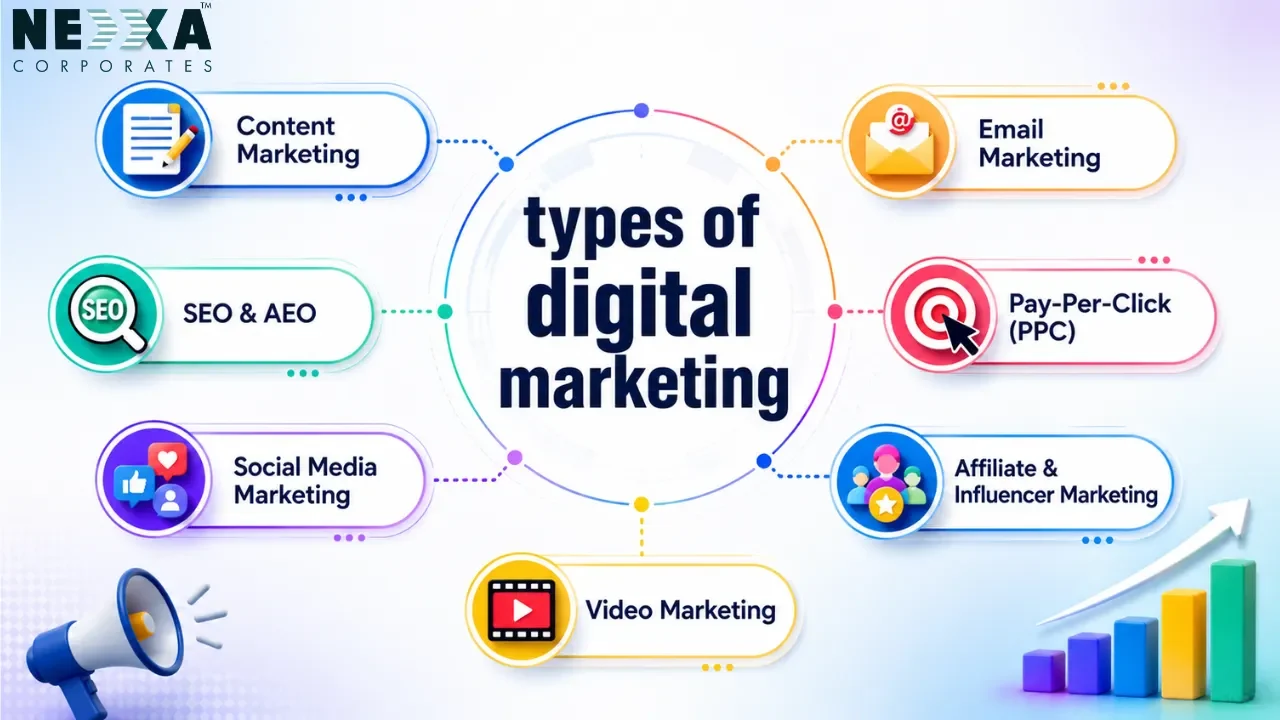
Here are the main 7 types of digital marketing

1. Search Engine Optimization (SEO)
2. Content Marketing
3. Social Media  Marketing
4. Email Marketing
5. Pay Per Click(PPC) Advertising
6. Affiliate Marketing
7. Influence Marketing

1. Search Engine Optimization(SEO)

Search Engine Optimization is the process of improving the quality of website traffic to a website or a web page from search engines.
SEO is important because it brings free and organic traffic to your website. When your site ranks high, more people visit, trust your brand, and buy your products. It helps build credibility, brand awareness, and long-term online growth.
On-page SEO, Content SEO, Technical SEO, Off-page SEO and Local SEO are the types of SEO.

2. Content Marketing

Content marketing means creating useful and interesting content and sharing it to attract and connect with people. The main aim of content marketing is to build trust and give valuable information. It is done through blogs, social media posts, and email.
It helps to increase website traffic, build a strong relationship with customers, and build your brand. Good content makes visitors good customers.
Blog posts, videos, social media posts, email post letters, and podcasts are types of content marketing.

3. Social Media Marketing(SMM)

Social Media Marketing is the action of creating content to promote your business and products on various social media platforms such as Twitter, Facebook, and Instagram.
Your unique content should be tailored to the specific platforms its being shared on to help you boost conversions and increase brand awareness.
Facebook, Instagram, Twitter, and YouTube are examples of social media marketing.

4. Email Marketing

Email Marketing means sending a friendly email to customers to share offers, updates, and introduce our new product. It helps to build a strong relationship with the customers and stay connected with customers.
Email marketing helps to connect easily with customers directly in their inboxes. It helps increase sales, build trust with customers.
Newsletter emails, promotional emails, welcome emails, and customer retention emails are types of email marketing.

5. Pay Per Click(PPC) Advertising

Pay-Per-Click advertising, also called PPC, is a type of online marketing where you pay only when someone clicks on your ad. These ads usually appear on Google, YouTube, Facebook, or other websites. It’s a fast and effective way to get instant traffic to your website.
PPC helps businesses reach the right audience at the right time. It’s perfect for quick results, brand visibility, and targeted marketing. You can choose who sees your ad based on location, interest, or age group.
Search ads, display ads, video ads, shopping ads, social media ads, and remarketing ads are the types of PPC.

6. Affiliate Marketing

Affiliate Marketing is a type of online marketing where you earn money easily by promoting other companies’ products and earn a commission. The company gets sales and you can earn money by promoting it.
It is the easiest way to earn money at a low cost. It helps brands reach.
Unattached affiliate marketing, Related affiliate marketing, Involved affiliate marketing, and Influence affiliate marketing are the types of affiliate marketing.

7. Influencer Marketing

Influencer marketing means promoting your brand and products with influencers on social media like Instagram and YouTube.
It helps brands reach a larger and more trusted audience. People connect more with real faces than with normal ads. It builds brand awareness, trust, and quick engagement.
Sponsored posts, Giveaways, contests, and product reviews are types of influencer marketing.

In 2025, digital marketing has become a must for every business and entrepreneur. The scope of digital marketing is growing faster than ever, giving brands the power to reach customers all around the world.

When we look at the advantages and disadvantages of digital marketing, it’s clear that the benefits are far greater. It helps businesses build trust, improve brand awareness, and connect with people directly through different online channels.
Choosing digital marketing today means choosing a creative, flexible, and smart way to grow your business. From SEO and content marketing to email and influencer campaigns, the 7 types of digital marketing offer countless ways to promote products and services effectively.
Yes, digital marketing has a few challenges — like high competition and the need for continuous updates — but its advantages such as low cost, wide reach, and real-time performance tracking make it a powerful tool for long-term success.
In simple words, understanding the advantages and disadvantages of digital marketing helps every business make smarter decisions, adapt to trends, and build a strong online presence in 2025 and beyond.

FAQ

1. What is digital marketing?

Digital Marketing is the process of promoting products or servicesand a brand through digital channels. It includes the internet, mobile phones, and other digital media.

2. What are the main 5 advantages of digital marketing?

1. Global reach
2. Cost-efficient marketing
3. Targeted audience selection
4. Result monitoring
5. Higher customer engagement

3. How is digital marketing helpful for business?

Digital marketing helps businesses increase online visibility, build brand awareness, generate leads, and drive sales by reaching and engaging target audiences through online channels like websites, social media, and email.

4. How can I develop my brand using digital marketing?

create a unified brand identity and strategy, understand your audience, and use multiple channels like social media, content marketing, and email to engage them.

5. What is the role of digital marketing in business?

Digital marketing’s role is to attract and engage customers, build brand awareness, and drive sales by using online channels like websites, social media, and email.

Digital Marketing for Dentists

Digital Marketing for Dentists

Digital Marketing for Dentists: 10 Proven Strategies That Work

digital marketing for dentists

In today’s competitive world, digital marketing for dentists is required to grow a dental practice.Unlike traditional marketing techniques, digital marketing offers targeted and cost-effective ways to reach patients and build a strong, lasting connection with them. By creating a strong online presence, the visibility of the dental practice will increase, and it will also attract more patients, and it will establish them in their communities as reliable healthcare providers.

A strong digital marketing strategy for dentists allows dentists to show up in local searches, on social media, engage with patients, and build authority through quality and informative content. A well-structured and designed website performs as the base of an online presence, provides information, promotes products or services, easy to book an appointment, and connects with a large number of audience.

Selecting the best and right digital marketing agency for dentists is important because it impacts on growth of the dental clinic, online visibility, and return on investment. A good agency offers experience, customised strategies, and the latest technology to boost brand awareness and generate leads, while a bad choice can waste resources and delay growth.

Why dentists need digital marketing

The need for digital marketing for dentists to attract new patients, build credibility, trust, and continue to compete in a market where a wide range of people search online. Most patients mainly focus on the facility of the practice as their primary factor, therefore, your local presence is the first impression that determines whether to choose you or scroll to your competitor.

First of all audience will check the online/local reviews and testimonials, which builds trustworthy among the patients. Social proof of the patient, such as videos, podcasts, also builds trust and encourages them to select your practice. In the digital age, many patients search for dental clinics and research about it before they choose one, so maintaining an online presence is essential. In the competitive market, to achieve growth and stand out from competitors, digital marketing for dentists is required.

The Best 10 Digital Marketing Strategy for Dentists

digital marketing for dentists

The best strategies of digital marketing for dentists are :

1. Create a Dental Website

2. Local SEO

3. Google Ads

4. Content Marketing

5. Patient Testimonials

6. Social Media Marketing

7. Email Marketing

8. Make Use of WhatsApp 

9. Reputation Management System

10. Track results

Below, you can find more information on strategies of digital marketing for dentists.

1. Create a Dental Website That Converts Patients

A website is one of the most important tools for any dental clinic today. It helps you show your services, build trust, and attract new patients online. Your website works like your digital clinic, it’s open 24/7 and gives people all the information they need before visiting you. A dental website usually includes details about your treatments, photos of your clinic, patient testimonials, and even appointment forms. This makes it easy for patients to understand what you offer and book a visit anytime.

Having a well-designed website increases your online visibility, builds trust with new patients, and shows your professional expertise. In today’s world, patients often check a clinic’s website before making an appointment — so a strong, updated site can make a big difference in growing your dental practice.

Having a mobile-friendly website is very important because most of the audience uses mobile devices to browse the internet, it makes sure that your website can be easily accessed and used on mobile devices.

2. Increase your clinic's visibility through local SEO

digital marketing for dentists

Local SEO means improving a dental clinics online presence so the audience can find it easily in local searches. Local SEO focuses on specific locations, such as cities, districts where the dental clinic is situated. The audience can find the online presence by searching nearby dental clinic, dental clinic in Thrissur.

It means making your dental clinic easy to find online. You can do this by keeping your Google Business Profile up to date, adding your dental clinic name and details on local websites, maps, and directories, and asking happy customers to leave genuine reviews. This helps more people nearby find and trust your dental clinic. Get featured in local roundups by having your dental clinic included on local websites or social media posts that talk about the best dental services in your area.

3. Google Ads: Increase visibility and Conversions through targeted Ads

digital marketing for dentists

Google Ads is a powerful tool of digital marketing for dentists and dental clinics to reach people who are actively searching for dental treatments such as teeth cleaning, braces, or dental implants. It helps you show your clinic’s ads at the right time when potential patients are looking for services you offer. With Google Ads, you can promote your dental practice, bring more visitors to your website, and increase appointments easily.

You have full control over your ad budget, keywords, and timing, so you only pay when someone clicks your ad. It also shows clear reports to help you understand which ads are working best. Using Google Ads builds trust and visibility for your dental clinic online, helping you grow faster and connect with the right patients.

For a dental clinic or dentist, choosing the right keywords, understanding your target patients, and improving your ad performance are the keys to success with Google Ads. The right dental-related keywords, like “best dentist near me” or “teeth whitening clinic,” help your ads show up when people are searching for dental services. Knowing your target audience, such as families, professionals, or students, ensures your message reaches those most likely to book an appointment. By regularly checking and improving your ad performance, you can save money, attract more patients, and get the best results for your dental practice.

4. Build Trust Through Content Marketing.

Content marketing is a smart and planned way to grow your dental clinic. It uses helpful and interesting content like text, images, and videos to attract the right people. The goal is to build trust, keep your audience engaged, and guide them from learning about your clinic to becoming loyal customers. By sharing useful, exact, and honest information, you show your expertise and trustworthiness. Good content marketing focuses on giving real value, not just selling, so your audience sees your clinic as reliable and credible.

Sharing blogs, videos, images, and posters is a powerful way to grow a dental clinic through content marketing. Blogs can share useful dental tips and answer patient questions, showing your knowledge and care. Videos make your clinic feel real and friendly, helping people trust your dentists. Images and posters make your services look professional and clear. When you post this content regularly, it builds trust with patients, improves your online presence, and helps your clinic appear in Google search results more frequently.

5. Patient Testimonials

Testimonials are real experiences from happy customers that help build trust and show your dental clinic is genuine. They work as social proof, telling new customers that your product or service is worth choosing. When the audience shares real experiences, it proves your dental clinic is trusted and delivers results. You can show testimonials as short quotes, video reviews, or even social media posts, all help your website rank better and attract more audience.

6. Social Media Marketing

Social media marketing is one of the best strategies of digital marketing for dentists and all other business services or products to promote them. Social media marketing platforms such as Facebook, Instagram, LinkedIn, and Twitter are used, among others.

Running paid ads is one of the best ways to grow your dental clinic online. It helps increase your clinic’s awareness, so more people know about your products or services. Paid ads can drive targeted traffic to your website, bringing audiences who are actually interested in what you offer. This not only helps create quality leads but also turns them into loyal customers. By using data and clear strategies, paid ads show that your clinic is active, trustworthy, and focused on giving value, which makes strong online credibility and supports long-term growth.

7. Stay Connected With Email Marketing

Email marketing is also a fine strategy of digital marketing for dentists, in which marketers use email to promote products or services, build brand awareness, and maintain relationships with customers.

Promoting special offers, following up after visits, and using automation tools can help to build trust and improve patient experience. Special offers attract new audiences and encourage repeat visits, showing that your clinic values its audience. Following up after visits helps create strong relationships and shows care for the audience’s satisfaction. Using automation tools saves time, reduces errors, and keeps communication consistent.

8. More Conversions through WhatsApp Marketing

WhatsApp marketing means using WhatsApp to promote a dental clinic, its products, and services. It helps dental clinics connect with audiences in a direct and personal way by sending updates, offers, and support using chat.

Using WhatsApp marketing tools for dental clinics helps build strong customer trust and better results. It allows quick and personal communication, which leads to high patient engagement as the audience feels more connected and valued. This direct connection also helps increase conversion rates, as customers can easily ask questions, get instant replies, and make faster decisions. With easy support and live chat, customer satisfaction also improves because people get quick help and feel cared for.

9. Reputation Management System

Reputation management means keeping a close eye on what patients say about your clinic and working to build a positive image. It helps show your expertise through professional dental care, your experience through real patient stories and successful treatments, your authority by sharing trusted dental information online, and your trustworthiness by responding kindly to feedback and reviews may be positive or negative.

Monitoring online mentions will keep you engaged with the audience, and it will bring you more leads and conversions. And create valuable content related to the clinic. By managing your online reputation, your audience will choose your clinic over competitors.

10. Track Results to Improve Performance

There are several methods and tools used to measure or track your performance marketing efforts. The methods are :

  • Click Through Rate (CTR): Measures the percentage of the audience who click on the Ad after seeing it. A higher percentage of CTR shows that your ad is engaging to your audience.
  • Conversion Rate:  This method shows the number of audience who take a desired action, such as making an appointment booking or submitting a form after clicking an advertisement. 
  • Cost Per Click (CPC): This metric represents the amount you pay for each click on your ad. Monitoring CPC helps you manage your budget and optimize ad spend. 
  • Cost Per Acquisition (CPA): It shows how much does it costs to get a new customer or lead. 
  • Return On Investment (ROI): By tracking this, you can see which promotions bring more patients and which ones need improvement. This helps you invest wisely, reduce waste, and grow your dental practice with confidence and trust.

The tools used to track marketing  performance are:

  • Google Analytics: Google Analytics is a free tool that helps dental clinics understand how people find and use their website. It shows what works well and what needs improvement, helping you make smart marketing decisions.
  • Google Search Console: Google Search Console helps your dental clinic track website performance on Google. It shows which keywords attract patients, finds website issues, and improves your visibility in search results
  • Google Ads Manager: This tool gives your dental clinic clear and simple reports on how your ads are performing including click-through rate (CTR), cost per click (CPC), and conversion rates. It also comes with campaign optimization tools as well as an opportunity to manage your ad spend.
  • Facebook Ads Manager: Facebook Ads Manager helps your dental clinic track ad performance on Facebook and Instagram. It shows reach, engagement, and conversions, helping you attract more patients and improve results.

Things to be noted while choosing a digital marketing agency

How to choose a digital marketing agency in Kerala for your dental clinic: look for experience and expertise, such as Nexxa Corporates, a digital marketing agency in Thrissur, in working with dental clients. An agency that understands the dental field knows how to attract the right patients and promote your services effectively. Their past results and industry knowledge build trust and show they can handle your marketing needs with care and skill.

Also, choose an agency that values clear communication and transparency. Check their reviews and reputation to see what other dental professionals say about them. Make sure they use the latest tools and technology to keep your clinic ahead of competitors. A trustworthy agency keeps you informed, uses smart strategies, and helps your practice grow with confidence.

Coclusion

Digital marketing for dentists is not just about being online it’s about building trust, visibility, and meaningful connections with patients. By following the right strategies of digital marketing for dentists, such as SEO, social media, Google Ads, and reputation management, dental clinics can attract more patients and stand out from local competitors. A strong digital presence helps you appear where your patients are searching, builds confidence in your services, and ensures stable growth for your dental practice. In today’s world, investing in digital marketing for dentists is one of the smartest ways to grow your clinic, strengthen your brand, and earn long-term patient loyalty.

FAQ

1. Why should I care about digital marketing services for dentists in India?

Get more patients by targeting the right audience. You will get a genuine and right audience through digital marketing campaigns.

2. Which dental marketing idea will give me the fastest growth?

Video content about your clinic specifications. Creating a ‘before and after’ patient experience video. Make offers like referrals and get discounts. Creating offers like this, you’ll be surprised how many patients become your unpaid marketers when they get anything in return.

3. What are some common errors that should be avoided when using digital marketing services for dentists?

Not paying attention to mobile optimization. Most of the audience is using mobiles for scrolling. If your website takes more time to load, they will bounce by not reading a single word.

Ignoring Local SEO, patients nearest to your practice can’t find you online, and they will choose competitors

Neglecting Patient Reviews, Potential patients may hesitate to trust your services if your practice lacks reviews or fails to manage them properly. 

Benefits of Internet Marketing

Benefits of Internet Marketing

Top 10 Benefits of Internet Marketing for Business Growth in 2026

benefits of internet marketing

Internet marketing is the process of promoting your products and services through search engines, social media, email marketing, and influencer marketing, etc. to reach a wider audience, drive traffic, and improve your business or brand, and also connect with your audience anywhere, anytime. Internet marketing is very different from traditional marketing, as traditional marketing uses TV, newspapers, and posters to attract customers, whereas internet marketing happens online, where most customers spend time today.

Internet marketing is more effective than traditional marketing to attract customers and grow your business or brand. Internet marketing is cost-effective compared to traditional marketing. with the growing scope of e marketing in India business have even greater opportunities to reach their target audiences and increase sales. By using the benefits of internet marketing, you can grow your brand or business to increase sales, attract more customers, etc.

Why Internet Marketing Is Important Today

Nearly all consumers spend a substantial amount of time online in today’s digital age, looking for information, comparing items, reading reviews, and making purchases. A company’s brand becomes more prominent, and consumers actively seek out the goods or services it provides as it expands through the use of internet marketing tools.

This helps you establish trust in addition to drawing in new clients. These advantage of internet marketing help you expand your audience, reach, and business through influencer marketing, social media marketing, email marketing, and SEO.  One of the most important benefits of internet marketing is its worldwide reach. Your brand may reach consumers worldwide with the aid of internet platforms like Google, Facebook, and Instagram. 

You can also target specific locations, languages, or interests to make your marketing more effective. It will help you get more audience, leads, and a much larger customer base.  This is made feasible by internet marketing, which provides a variety of channels for direct communication and interaction with your audience via online chat, social media, and email.

You are able to communicate with your audience and promptly address their demands.  You can better understand your customers through internet marketing. You may quickly establish a positive relationship with your customers using internet marketing. Additionally, learning about the benefits of digital marketing for the students can help young professionals understand these strategies early and prepare them for future business or career opportunities in the digital world.

Here are some important benefits of internet marketing that help you grow your business or brand in 2026

Top 10 Benefits of Internet Marketing

Which course is best for fuyure

1. Global reach & brand visibility

Internet marketing provides unlimited audience reach through the use of Google channels, like social media, search engines, and websites, to connect with a global customer base. In the past, businesses depended on TV, print ads, and local events to attract attention. But today, with the power of the internet, you can utilize the benefits of internet marketing to get global reach, attract new customers.

Different types of digital marketing such as, SEO, content marketing, social media marketing help achieve this goal. Search engines like Google, Yahoo, Bing, and Yandex play a major role in expanding your brand reach. One of the greatest advantages of internet marketing is that it helps your website to show up whenever potential customers search for your product or services using search engines.

Understanding the benefits of e marketing also helps businesses to reach a wider audience and increase online visibility. Social platforms like Facebook, Instagram, YouTube, and LinkedIn also give your brand or business the ability to have a global reach through social media. These platforms allow you to try and reach your customers through posting stories or posts about your brand/business, in real time, to help get customers in the door. As your followers grow, your reach also grows organically, through shares, likes, and recommendations.

2. Local reach

Local visibility is one of the benefits of internet marketing, which helps small and medium-sized businesses stand out in local searches. Using tools like Google Business Profile, local SEO, and location-based ads. It makes it easier when local customers to find when they search online for products or services in their area.

Whenever a user searches for information related to your services or products, your business will show up at the top of the search results in conjunction with directions, reviews, photos, and your contact information. Online advertising also creates opportunities for more customer engagement because you can communicate via social media,Review, instant messaging, making your communication faster and more personal. Over time, these interactions help you build community trust as customers see your brand as an active, reliable, and part of their local area.

3. Cost-effective compared to traditional marketing

Internet marketing is more cost-effective than traditional marketing methods like print ads, TV commercials, etc. One of the key benefits of Internet marketing is that it offers lower advertising costs, allowing businesses of any size to promote their product or services without spending a fortune. Another big advantage is that internet marketing provides a measurable  ROI( Return on Investment).

Through internet marketing, you can track every click, review, and sale in real time. Internet marketing provides long-term value because your website, content, seo efforts continue to attract customers even after the initial investment. Traditional marketing stops once the ad ends. But internet marketing keeps working for you- it makes it one of the smartest and suitable benefits of internet marketing. this clearly highlights the difference between traditional marketing vs digital marketing.

4. Competitive advantages

Internet marketing gives your business a clear competitive advantage. Additionally, it enables you to build your customer base with different methods to attract new customers who are truly interested in your products or services. Understanding the advantages and disadvantages of internet marketing helps businesses choose the right strategy to grow effectively and connect with their audience. Internet marketing enhances customer engagement via digital media and email, as well as through interactive forms of content, to engage your customers directly and build rapport with them. When individuals feel connected with your brand, they enjoy purchasing your product, which increases your sales builds your business.

5. Brand awareness

One of the most powerful benefits of internet marketing which helps build strong brand awareness through using different internet strategies. With the use of the right digital strategies, you can attract new customers who may have heard of your brand before. Creating a strong online position developed from internet marketing – i.e., a website, social media, search engine, etc.- is beneficial because it provides the brand with visibility and a wider reach, builds trust and credibility with customers. Each time a consumer sees your internet content, logo, and advertisements, your brand is promoted, and they retain recognition of you. When it is time for a purchase, that recognition will help them remember you.

6. Multiple strategies

The advantage of internet marketing is the variety of marketing methods available to reach a target audience by using methods like content marketing, SEO, email marketing, and social media marketing as part of digital marketing strategy. the benefits of internet marketing include increased engagement, improved conversion rates, and ultimately better  return on investment. This allows you to get better results by receiving more traffic, increasing conversion rate, and creating strong brand awareness.

7. Drive success through social media

Using social media networks for online marketing is more efficient to enable potential clients, enhance brand recognition, build trust and communication with clients, and increase traffic to your website. Additionally, it allows you to engage your customers regularly. You can reply to people’s individual messages and questions and build rapport with your audience. On the other hand, social media marketing increases brand awareness by sharing your content in a general way to expose your content to a broader audience through likes, shares, and comments. Digital media connects, interacts, and successfully grows your organization, which is a useful benefit of internet marketing.

8. Internet marketing helps you get more leads

It helps you get more leads in different ways, like search engine, social media, email marketing, and content marketing. It will help your business reach people on different platforms at the same time. it also shows how businesses use social media to connect with customers, building relationships and engagement online.  When you understand why choose digital marketing, you realize how effective these online methods are in reaching the right audience and growing your business faster.

Internet marketing also gives you a higher conversion rate through creating ads, offers, or content that attract people who are already interested in your product and services. Another big benefit of internet marketing is targeted audience reach, you can show your messages or offers who are interested in your product or services based on their location, interest, or behavior.

9. Build brand authority and trust

Internet marketing helps you create trust among customers and strong brand authority. You may naturally enhance your brand’s reputation by sharing helpful information, answering their comments, and maintaining an active online presence. when you understand the benefits of internet marketing you realize how it can assist you in drawing new clients by offering your goods or services at a fair price.  In addition, internet marketing makes your brand more visible online through social media, digital advertisements, and search engines.

10. Helps to build customer relationships

Through using a digital platform, understanding your customer needs, and providing products and services as per the customer’s needs show the benefits of internet marketing. And also providing good services, when they want to make a purchase, it will help you create a positive relationship with them. Customers are likely to remain loyal and be retained when they are satisfied with your product and service. Providing stories, updates, and a personal message on social media or email can help build an emotional connection with your audience.

Which course is best for fuyure

Conclusion

Internet marketing provides different types of powerful tools to expand your business or reputation. the benefits of internet marketing include using platforms like social media, digital marketing, email marketing, and online video to make it easier for customers and clients to find  you.

FAQ

1. What is internet marketing?

 Ans- Internet marketing is the use of the internet and digital devices to promote your products and services, build brand awareness, and connect with customers.

2. benefits of internet marketing for students?

 Ans – It helps students build creative problem-solving skills and communication. They can also earn money through starting their own business or working as a freelancer, gaining the benefits of internet marketing.

3. Internet marketing types?

 Ans – search engine marketing, or SEO.
  Marketing with content
  Marketing through affiliates
  Email advertising
  Influencer advertising
  PPC, or pay-per-click advertising

4. What are the advantages and disadvantages of internet marketing?

   Ans – Internet marketing has many benefits, like fast communication, easy tracking, target marketing, low cost, etc. Also, internet marketing has disadvantages like high competition, technical problems, and the need for regular updates, etc.

5. Which is the best method of internet marketing used for brand awareness?

Ans – the best internet marketing methods that are used for brand awareness are social media marketing, search engine optimization, and content marketing to reach a wide audience.

6. Why choose digital marketing?

Ans – These days, digital marketing is one of the industries with the fastest growth. Every company must have an internet presence. You can work from anywhere, and it’s flexible and creative.